 GST : 01BMXPM3774R1Z2
 Write a Review
Our Products
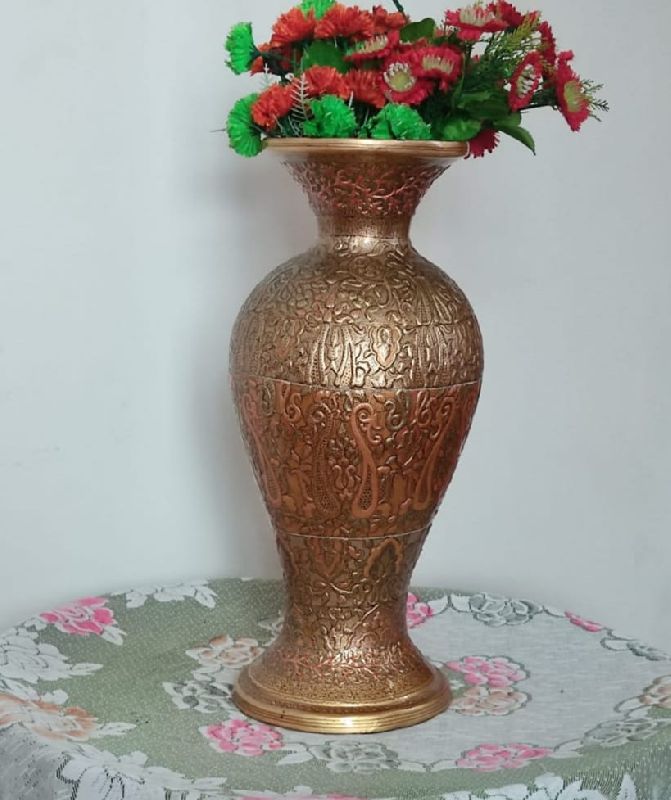
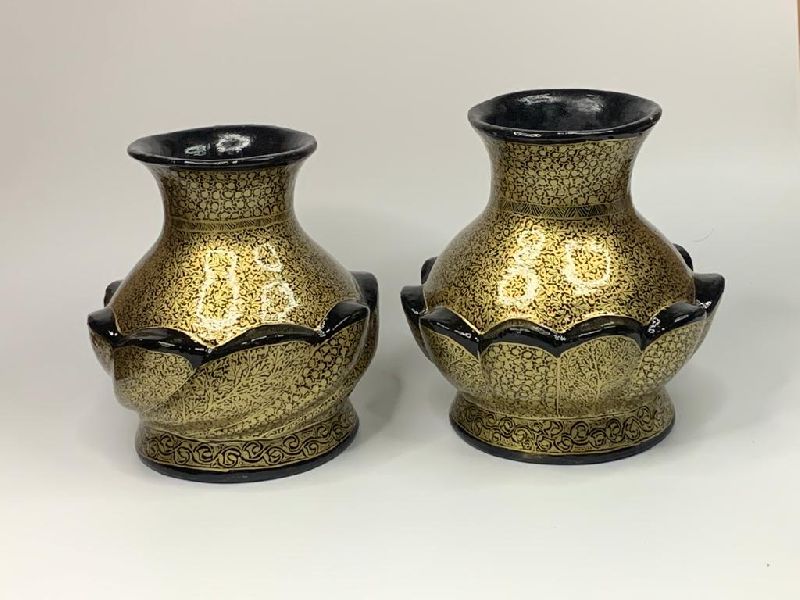
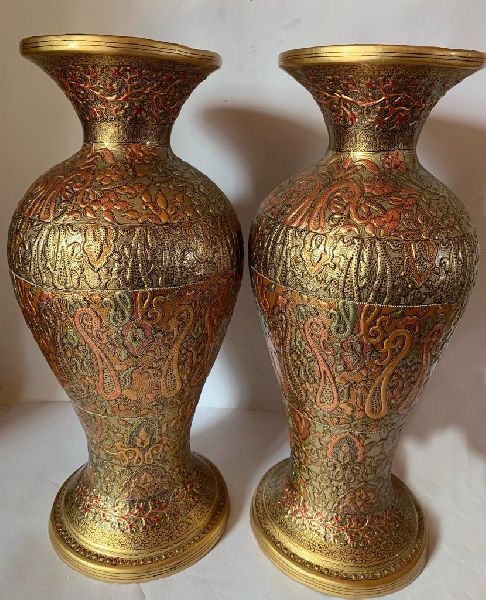
Leading Manufacturer, Supplier & Retailer of Kashmiri Paper Mache Flower Pots.
Paper mache was introduced to India in the 14th century by the Persian mystic Mir Syed Ali Hamdani. He was visiting the Kashmir region from Persia, and brought along skilled artisans and craftsmen.The Persian method of making paper mache melded with similar art forms from Central Asia, and a unique branch of the art of paper mache was born. Over time, Kashmiri artisans added their own flourishes to the art form, bringing attention to their creations from all around the world.
There are two important aspects of Kashmiri paper mache- Sakhtsazi and Naqashi. The first step, Sakhtsazi, involves making the foundation of the paper mache figurine or object with the paper pulp, while Naqashi is the final step of painting and decoration.
In the Sakhtsazi stage of making a Kashmiri paper mache item, the paper pulp is soaked in water for three or four days. It is then put in a stone mortar and ground so that all of the paper is uniform in its consistency. The pulp gets left in the sun to dry before being mixed with atji, a kind of rice glue.
A mold made of clay or wood allows the artist to shape the paper and glue mixture around it. The paper is taken off the mold before it is completely dry, and then shaped and lacquered to make the outside smooth. After the item has gone through the smoothing process, a thin layer of butter paper protects the outside and will eventually keep the outer layer of paint from cracking off the finished product.
During the Naqashi stage, a base coat of paint is applied. Then the artist makes their design by hand on the outside of the paper mache object, which means no Kashmiri paper mache item is the same. Traditional artists often use colors derived from minerals, organic, or vegetable bases.
Common themes that appear on Kashmiri paper mache products include flowers, box patterns, jungle motifs, and Kashmiri symbols like almonds and the chinar, a five-pointed leaf.
 Mr. Wajahat Hassan (QASIM AND SONS - An Exporter of Kashmiri Handicrafts)
 Iddgah, Masjid Mustafa, Ganderpora, Srinagar, Jammu & Kashmir - 190002
 Share us via



 View Contact Number