Our Products
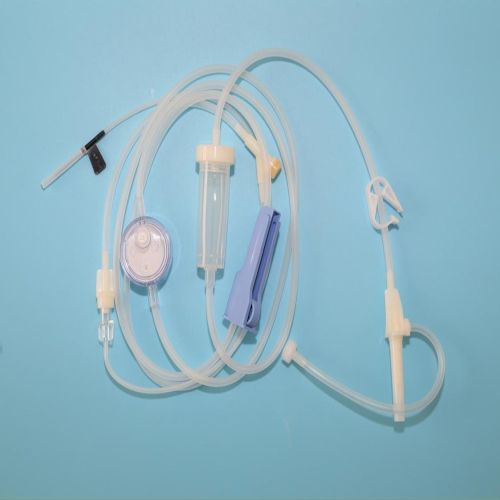
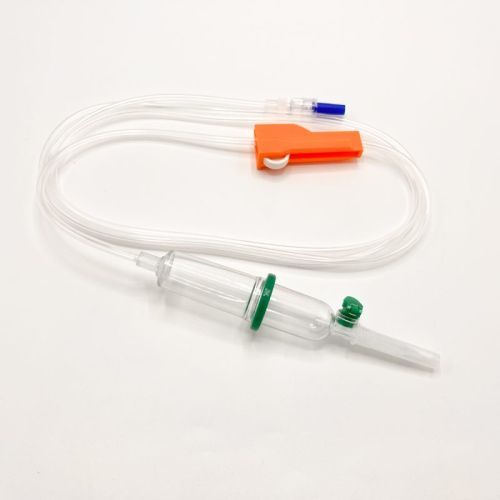
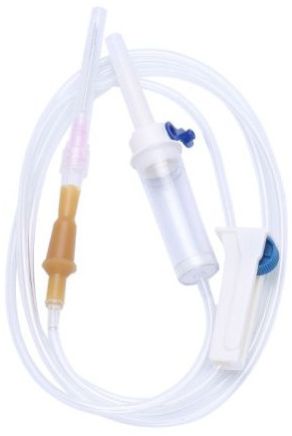
We offer a complete product range of IV Set Infusion Set and Disposable Feeding Tube
Infusion Sets For IV therapy
•About Infusion Sets (Based on Industry Standards)
-Infusion sets are essential medical devices used to deliver fluids and medications directly into a patient’s vein through gravity flow or pumps.
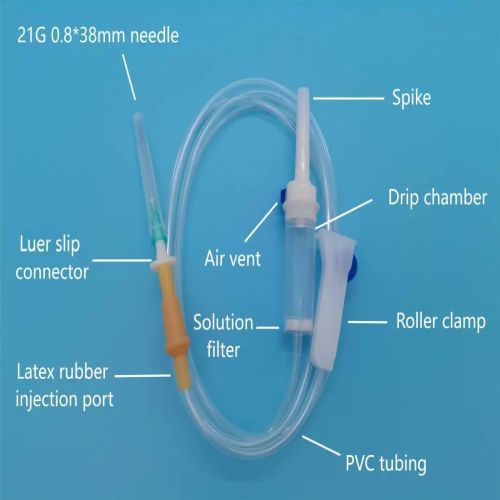
Key Components & Their Roles:
•Spike & Protective Cap: Pierces IV bags safely while maintaining sterility.
•Air Vent (Vented vs Non-Vented):
•Vented: Required for rigid containers like glass bottles.
•Non-vented: Ideal for flexible IV bags.
•Drip Chamber: Enables observation of infusion flow rate.
•Solution Filter: Filters out particulates and bacteria (down to 0.22–15 microns).
•Flow Regulator / Roller Clamp: Allows precise control or halting of fluid flow.
•Injection Site / Y-port: Enables the administration of additional medications mid-infusion.
•Luer Connector (Lock or Slip): Ensures leak-free connection between the set and needle or catheter.
•Tubing: Transparent PVC (DEHP-free options available) channels fluid; typically 150 cm
Disposable Feeding Tubes / Ryles Tubes Nutritional support
Disposable Feeding Tubes (also known as Ryles Tubes / Nasogastric Tubes) are medical devices inserted via the nose into the stomach to deliver nutrition, medication, or to aspirate gastric contents. They often feature:
•X-ray opaque lines or embedded markers for precise positioning under radiography.
•Multiple lateral eyes near the distal end to enhance fluid administration or aspiration efficiency.
•Fr markings and color-coded connectors for easy size identification and correct usage.
•Materials ranging from PVC (for short-term use) to polyurethane and silicone (more flexible and longer-lasting).
Clinical Significance
•Indications: Widely used in ICU or critical care for patients unable to swallow—commonly for short-to-medium term enteral feeding and gastric decompression.
Tube Types:
•Fine-bore tubes (less than 9 Fr): More comfortable, reduced irritation risk.
•Large-bore tubes: Used when gastric drainage is needed.
Usage Modes:
•Bolus feeding, intermittent, or continuous feeding—selected based on patient condition and tolerance
 Muhammad Huzaifa Rao (RaoMedix Global Pharma Pvt Ltd)
 97/4, Sector-9 Shastri Nagar, Meerut, Uttar Pradesh - 250004, India
 https://www.raomedixglobalpharma.com
 Share us via









 Write a Review