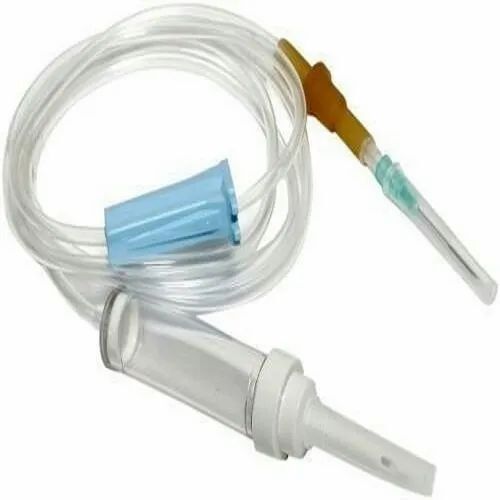
An IV (intravenous) set is a medical device used for delivering fluids, medications, or nutrients directly into a patient's bloodstream through a vein. It consists of several components:
IV Bag or Bottle: This holds the fluid, such as saline, glucose solution, or medication, that is to be administered.
Drip Chamber: A small, transparent chamber in the tubing that allows medical professionals to see the flow of fluid and ensure the proper amount is being delivered.
Tubing: A flexible plastic tube that connects the IV bag or bottle to the catheter or needle. It allows the controlled flow of fluids into the vein.
Roller Clamp or Slide Clamp: A mechanism used to control the rate of flow of the fluid by either squeezing the tubing or adjusting the clamp.
Needle or Catheter: The needle or catheter is inserted into the patient's vein, through which the fluids are delivered. The catheter is usually attached to the tubing and can remain in place for extended periods, whereas the needle is typically used for short-term use.
Injection Port: A small access point on the tubing where additional medications can be injected directly into the system without changing the IV set.
Sterile Covering: The parts of the IV set that come into contact with the patient are sterile to prevent infection.
IV sets are commonly used in hospitals, clinics, and emergency settings for fluid resuscitation, medication administration, and nutritional support.