
 GST : 09AAJCR0324E1ZN
 Write a Review
Our Products
We offer the best product range of Acacia Wood Pellets and Indonesian Wood Pellets.
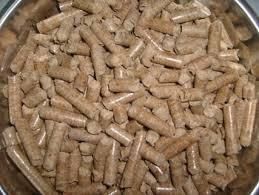
Raw Materials for Wood Pellets
Acacia used as Raw Materials for Wood Pellets Acacia also commonly known as mimosa, thorn tree or wattle, is a wide-ranging genus grow in open, tropical to subtropical areas. . Acacia wood is usually used for making furniture or other purposes in these places, however the acacia sawdust can be used to make acacia wood pellets.
How to Make Acacia Wood Pellets As to wood pellets making, building and labor requirements are relatively low, the important element for acacia wood pellets making is to choose the right equipment and capacity. Our company’s pellet production equipment and technology is advanced and cost effective. It is specially suitable for farms, agro-products processing industry, such as rice industry, sawdust, oil palm mill, wood processing factory, etc. Acacia wood pellets production line mainly includes wood crusher, drying machine, acacia pellet mill, acacia cooling equipment and packing machine.
Crushing Acacia needs to be crushed by crushing machine before drying process. The crusher is equipped with cutters and rotors to grind acacia. Acacia crusher is featured by stable performance and high working efficiency. Hammer mill is required to crush acacia into small particle sizes if the acacia do not reach the required size after crushing.
Drying In order to get high density acacia wood pellets, the moisture content of raw material should be contained at 8-12%. Moisture content of your raw material is very significant for the overall content of final pellets. Sawdust dryer can reduce moisture content level to your desired standard by blowing hot air over or through the acacia.
Pelleting Wood pellet mill is adopted in this process to compress acacia into biomass pellets. It has wide application, such as sawdust, forest understory, crop straw, agricultural residues, etc. Under high temperature and pressure condition, acacia can be squeezed into pellets.
Cooling Acacia wood pellets have high temperature and moisture content when they discharged from the pellet making machine, therefore cooling and drying is very necessary before they are ready for use and packing. With our specially modified cooling equipment, heat and moisture are removed, the final moisture content of acacia should not be higher than 8%.
Packing The last step for pellets making goes for packing. After packing acacia wood pellets would become easy to store and transport. In order to avoid deterioration, pellets should be kept in dry places.
Why use Acacia Wood Pellets? Compared with the consumption of coal, petroleum products and natural gas, every ton of pellets used can reduce CO2 emissions by about 1.5 tons, total emissions offset one year will be nearly 4.5 million tons of CO2. As the price of oil and gas are possibly to rise, wood pellets price are much more stable than any other forms of fuel, besides with the increased supply, the price is likely to fall, which would become even greater in the future. Compared with wood chips, cord wood and sawdust, wood pellets are an efficient source of heat which can offer better heating properties per unit volume for their low levels of moisture content and ash. In fact all of the feedbacks are burned and converted to heat.
As an unlimited fuel source, wood pellets are a biomass product made of wood wastes, logs, sawdusts, etc. It can realize locally produced due to its wide application. It can not only provide new ways to efficiently use raw material, but also increase overall profit.
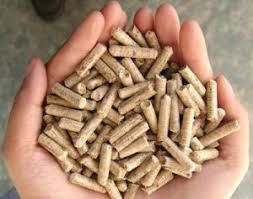
Biomass Potential in Indonesia for Wood Pellets Making Studies show that biomass resources in Indonesia are rice residues, rubber wood residues, sugar mill residues, palm oil residues, plywood and veneer residues, logging residues, sawn timber residues, coconut residues and other agricultural wastes, municipal solid wastes, etc. Nowadays, the developed pelletizing technology can convert each of these biomass materials into biopellets for heating and power generation. Let’s take palm oil tree wood as an example.
Market Potential for Indonesian Wood Pellets Wood pellets are becoming more and more popular, because of their higher energy density than wood chips, round shape which can make handle and storage easily, and their long durable of burning time, and environment friendly. Therefore the wood pellet market is increasing rapidly and in demand worldly. Wood pellets can be used in electric power generation, house heating, industrial plant etc, and the market is expanding.
Indonesian domestic biomass consumption for heat and power biomass consumption are growing. Biomass materials are mainly used in three fields, household, industrial power, and commercial. Among these, household take a great share. Firewood, forest and agricultural waste are the most common used biomass type by Indonesia households.
 Mr. Manish Singh (RSM LEO SATURN pvt. ltd)
 120 Rezimental Bazar, Mathura Cantonment, Uttar Pradesh - 281001, India
 Share us via