 GST : 27ABWPT4329C1Z8
 4.4/5
4.4/5
Our Products
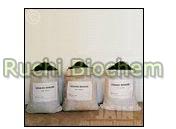
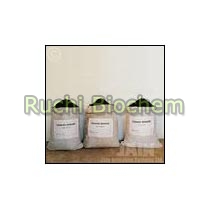
We offer a complete product range of Vermiwash and Vermicompost
Vermiwash is a watery extract of compost, the wash of earthworms present in the medium. Earthworm body is long tubular type Measure portion of this body is filled up with this Celomic fluid. Celomic fluid is always secreted from the body of earthworms and always keeps the body of wet. We can collect Celomic fluid of earthworms and this is called Vermiwash. This Celomic fluid helps earthworms in respiration. Atmospheric Oxygen while it passes through this fluid is purified with the help of fluid and finally absorbed in the body of the earthworms. Celomicites, Granulocites and Limphoidocites cells are present in the Celomic fluid. This helps in healing of wounds of earthworms and gives imitation power to earthworms. No pathogens can survive in this fluid, thereby protecting earthworms from the diseases caused due to pathogens. Soluble Nitrogen, Phosphorus and Potash are the main nutrients in Vermi wash. Hormones such as Cytokinins, Oxyn etc., Amino Acid, Vitamins, Enzymes, some other secretions and many useful microbes such as heterotrophic bacteria, fungi, actinomycetes including nitrogen fixers, phosphate solubilisers are present in the Vermiwash. The earthworm Vermiwash is rich in dissolved nutrients. Amino Acids in the Vermiwash are easily available for plants. Vermi Composting system is suitably designed for easy collection of Vermiwash. Vermiwash can be collected on polythene paper spread on the ground below the instrument or by keeping instrument on slopping platform. Used In
Chemical Composition
| Ph | 6.09 |
|---|---|
| Dissolved Oxygen | 1.14 PPM |
| Dissolved Nitrogen | 200 PPM |
| Total Phosphorous | 60 PPM |
| Total Potassium | 69 PPM |
| Magnesium | 158 PPM |
| Sodium | 122 PPM |
| Salts | 70 PPM |
| Chlorides | 110 PPM |
| Sulphates | 177 PPM |
| Calcium | 175 PPM |
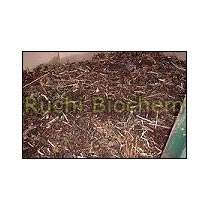
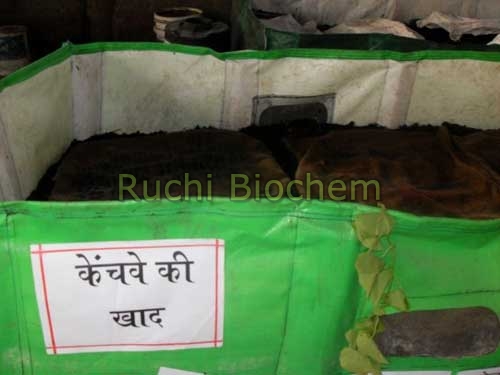
Vermicompost is an organic manure (bio-fertilizer) produced as the vermicast by earth worm feeding on biological waste material; plant residues. This compost is an odorless, clean, organic material containing adequate quantities of N, P, K and several micronutrients essential for plant growth. Vermicompost is a preferred nutrient source for organic farming. It is eco-friendly, non-toxic, consumes low energy input for composting and is a recycled biological product. The process allows for the safe conversion of waste into a valuable nutrient rich humus fertilizer i.e. Vermicompost.
Applications Soil
Plant growth
Economic
Environmental
Mid-scale worm bin (1Â m X 2.5Â m up to 1Â m deep), freshly refilled with bedding. Vermicompost can be mixed directly into the soil, or seeped in water and made into a worm tea by mixing some vermicompost in water, bubbling in oxygen with a small air pump, and steeping for a number of hours or days. The microbial activity of the compost is greater if it is aerated during this period. The resulting liquid is used as a fertilizer or sprayed on the plants. The dark brown waste liquid, or leachate, that drains into the bottom of some vermicomposting systems as water-rich foods break down, is best applied back to the bin when added moisture is needed due to the possibility of phytotoxin content and organic acids that may be toxic to plants. The pH, nutrient, and microbial content of these fertilizers varies upon the inputs fed to worms. Pulverized limestone, or calcium carbonate can be added to the system to raise the pH.
 Mahendra Shriram Thakur (Ruchi Biochemicals)
 Opposite D. P. Resort, Tirora Road, Kudwa, Gondia, Maharashtra - 441614, India
 https://www.ruchibiochemicals.in
 Share us via