Our Services
We offer the best product range of Property Mortgage Loan, Business Working Capital Loan, Home Loan Service, Loan Against Property and Business Loan Service.

LOAN AGAINST PROPERTY
A mortgage loan, also known as a loan against property, is a type of secured loan where the borrower pledges their property as collateral. If the borrower fails to repay the loan, the lender can take possession of the property and sell it to recover the loan amount. Mortgage loans are typically used for large expenses such as business funding, consolidating debt, or financing education.
Overview Of Mortgage Loan/ Loan Against Property
A mortgage loan can be helpful for many reasons, such as funding a business, consolidating debt, or financing education. One of the main benefits of a mortgage loan is that it typically offers the best ROI (return on investment) compared to other types of loans. This is because mortgage loans have lower interest rates and longer repayment periods, making the monthly payments more affordable and giving the lender the security of the property to back up the loan.
If you are looking for the Best ROI for Mortgage Loan? Then talk to our experts; they will guide you in achieving your financial goals while considering the risks and costs of a loan against property in Mumbai before applying.
What are The Eligibility for Mortgage Loan?
The parameters for mortgage loan eligibility are
The borrower must be a country resident and own a property.
The borrower must also have a stable source of income and a good credit score to demonstrate their ability to repay the loan.
The minimum age requirement for a mortgage loan is usually 21 years, and the maximum age limit is usually 60 to 65.
Documents Required
What is the Documentation Requirement?
The documentation requirements for a mortgage loan or loan against property in Mumbai may vary slightly from one lender to another. Still, generally, the following documents are required:
Proof of identity – PAN card, Aadhaar card, passport, etc.
Proof of address – Aadhaar card, passport, utility bills, etc.
Property documents – Sale deed, title deed, tax receipts, etc.
Income proof – Salary slips, bank statements, income tax returns, etc.
Employment proof – Employment certificate, business registration certificate, etc.
Factors To Consider Before Applying For Mortgage Loan
Before applying for a mortgage loan, the following factors should be considered:
Factors
Interest rate – Compare the interest rates offered by different lenders to choose the most affordable one.
Loan amount – The loan amount the lender offers should be sufficient for your needs.
Repayment period – The longer the repayment period, the lower the monthly payments, but it also means paying more interest over the long term.
Fees and charges – Check the processing fees, prepayment charges, foreclosure charges, and other fees and charges associated with the loan. You can also use an EMI calculator for mortgage loans, as it will help you plan your finances, compare loan options, and avoid any unpleasant surprises during the repayment period.
Property value – The loan amount that can be borrowed is usually limited to a percentage of the property’s market value, typically ranging from 60% to 70%. Check the property value to ensure it’s sufficient for your loan requirements.
Credit score – Since a high credit score reflects responsible credit behaviour and financial discipline, many lenders offer mortgage loans at lower interest rates to applicants with higher credit scores. Individuals with no or low credit scores can build/improve their credit scores. Contact our expert today to learn how to improve your credit score.

Working Capital
A Working Capital Loan Will Fund The Daily Or Short-term Operations Of Your Business. This Usually Covers Salaries, Wages, Management Of Your Inventory And Rent, Etc. This Loan Is Not Availed For Business Expansion And May Not Ensure Long-term Stability. Working Capital Loans Are Usually Only Applicable To Small And Medium Enterprises And The Usual Period Of The Loan Is 6-12 Months. There Are Various Types Of Working Capital Loan And You Can Avail Any Of Them, Depending Upon The Need Of Your Business. These Are:
Short-term loan:
This is a loan that comes with a fixed interest rate for 12 months. As long as the business has a good credit history, such loans can be obtained without the need of giving collateral. Such loans may also have a policy requirement like sales targets that you need to achieve.
Accounts Receivable loan:
An Account Receivable loan is a loan taken out by a business to fulfil sales orders that have already been placed. You need an excellent record to avail this loan. Lending institutions might be hesitant in providing this loan to new companies.
For self-employed professionals, the following documents are required:
Proof of both Identity and Residence
PAN Card
Passport
Voter ID
Driving License
Address Proof for both Office and Residence
Rental Agreement copy or
Lease Agreement
Electricity Bill
Ownership Proof
Agreement Copy or
Electricity Bill or
Maintenance Bill or
Municipal Tax Bill or
Share Certificate
Business Continuity Proof
Shop and Establishment Certificate
Tax Registration Certificate
Firm Constitution
MOA
AOA
Partnership Deed
GST Registration Certificate
Form 32
Financial Statements
Last 2 years audited financial statements
IT Returns for last 2 years
Last 3 years Tax Audit Report
Latest GST Returns
Last 1 year Bank Statement
Bank overdraft:
Also known as Cash Credit, a Bank Overdraft is a type of working capital loan as the bank allows the business to overdraft their account when needed. This means the amount you avail is a pre-approved limit that your lending institution allows you to use. The interest rate for such overdrafts is fixed and is usually higher than the prime rates of the bank.
Trade Creditor:
This type of working capital loan is extended to the business by the creditors of the business; usually, the suppliers. This facility is generally offered on placing bulk orders. However, trade creditors usually have strict policy parameters to be followed by the borrower.
Equity Funding:
Equity funded working capital loans are acquired through personal resources or investors, such as investment from friends or family. These working capital loans are mostly taken by start-ups and businesses with a less than ideal credit score. Of businesses that have a bad credit history or businesses that are just starting, hence having no credit history, this is the best option.
Factoring loan:
This type of loan works similar to accounts receivable loans. The difference lies with the credit in question. Factoring loans work of the credit towards the business. For example, where a business accepts credit for products sold, the payments are still due on the sold items.
salaried employee or a business professional can apply for this loan who are in the age range of 18 to 65 years. For salaried individuals, the following documents are required:
Proof of both Identity and Residence
PAN Card
Passport
Voter ID
Driving License
Proof of Income
Last 3 months’ Salary slips
Last 6 months’ Bank Statements
Latest Form-16
Last 3 years’ IT Returns


Every individual looks forward to having his/her own house. Today, buying a house is no more a luxury. With Rupas Capital Services, availing a home loan is hassle-free and easy. We help you make your dream into an affordable reality. A home loan or housing loan is a secured loan that you can borrow from any bank or lending institution for purchase, construction, extension or renovation of a residential/commercial property. The concerned property acts as a collateral against the loan, i.e. if the borrower fails to repay the loan, the bank or lending institution will retrieve the money by selling the concerned property. Home loan repayments are done through EMI (Equated Monthly Installments) and the amount typically depends on the amount of loan, tenure (number of years the loan is borrowed for) and the rate of interest charged by the bank or lending institution. HDFC started the trend of home loans in 1978. Before 2002, there were no regulations to deal with defaults on home loans. The introduction of the Securitisation and Reconstruction of Financial Assets and Enforcement of Security Interest Act (SARFAESI) in 2002 gave banks the power to deal with Home Loan defaults. This Act encouraged the banks to foray into the home loan sector.
Home Loans are of various types and one can choose the home loan as per your need and affordability. Mentioned below are different types of home loans:
Home Purchase Loan
This type of loan is typically borrowed to buy a residential property which includes flats and bungalows. Home Improvement Loan This type of loan is usually borrowed to enhance your home structurally i.e. renovate, repair or refurnish it.
Home Construction Loan
As the name suggests, this type of loan is borrowed to construct a new home on a piece of land.
Home Extension Loan
This type of loan is borrowed when an individual wants to extend or add more space to the house. Banks and lending institutions have their own set of eligibility criterions with which they can assess your repayment capacity as a borrower. Your monthly income is the basic factor which is considered to assess your repayment capability. If your monthly income is higher, you will be eligible for a higher home loan. These are some of the basic criterions for availing home loans:
Monthly income
Your monthly income is the most important consideration for the disbursement of home loan. The amount of home loan usually sums up to 60 times of your income. For example, if your salary is INR 20000 per month, you may be eligible for a home loan of up to INR 12 lacs.
Property Attributes
Banks typically provide 75% of your property value as the home loan amount. For example, if your property is worth 60 lacs, you can get up to 75% of the value as home loan which calculates to 45 lacs in this case.
Credit History
Your credit history plays a very important role in deciding the amount of home loan. CIBIL records your credit history based on all your loan transactions and a credit report is prepared. Based on your credit report, you are awarded with a CIBIL score, which is an important factor in deciding the home loan amount you can avail.
Age
Your age is a crucial determinant for home loan. You must be of a minimum of 18 years to apply for a loan and the maximum age may vary from 58 to 65 years depending on the income source of the individual. Your age is a deciding factor in the tenure (duration) and EMI of the loan. The interest rates in home loans are of two types – Fixed Rate of Interest and Floating Rate of Interest. They are explained as follows: Fixed Rate of Interest As the name suggests, the rate of interest charged on the home loan amount remains constant throughout the loan duration. This means that the EMI amount is fixed and not affected by fluctuations in the market. A fixed rate of interest is beneficial as it helps plan your finances better and in advance. However, it may turn out as a demerit if the market rates are lower than the fixed rate of interest.
Floating Rate of Interest
Here, the rate of interest on the home loan amount is not fixed. This means that the rate of interest keeps changing as per the market conditions and hence can increase or decrease every month. Hence it is called as floating rate of interest. It proves beneficial at times when the market trends are optimal and allow for lower rate of interest. However, with this type of rate of interest, financial planning becomes difficult as you may end up paying more or less than the previous EMI amount.
Documents Required
The documents required to apply for a home loan are:
Home Loan Application Form
You need to complete the home loan application form with your signature and passport size photographs.
Age Proof
You require to submit any one of the following as an Age Proof.
Aadhaar Card
PAN Card
Passport
Birth Certificate
SSC Marksheet
Bank Passbook
Driving License
Residence Proof
Any one of the following can be submitted as a Residence Proof.
Aadhaar Card
PAN Card
Passport
Bank Passbook
Voter’s ID Card
Ration Card
Telephone Bill, Electricity Bill, Water Bill, Gas Bill
Life Insurance Policy
Letter from a recognized Public Authority verifying customer’s address
Income Documents
There are two separate income documents required as per the category of individuals – Salaried Individuals and Self-Employed Individuals.
For Salaried Individuals, the income documents required are:
Form 16
Certified Letter from Employer
Payslip of last 3 months
Bank Statements of last 6 months
Increment or Promotion Letter
Income Tax Returns for past 3 years Any Investment Proofs (like Fixed Deposits, Shares, etc.)
For Self-Employed Individuals, the income documents required are:
Income Tax Returns for last 2 years
Balance Sheet and Profit & Loss Account Statement of the Firm
Business License Details
License of Professional Practice
Registration Certificate of Establishment
Proof of Business Address
Firm’s PAN Card and Address Proof (in case of Partnership Firm)
Property Documents
In addition to the above documents, these are some of the property documents required for home loan.
NOC from Builder
Cost of construction of the house
Registered Sales Deed, Sale Agreement, Allotment Letter
Occupancy Certificate
Property Tax Receipts, Maintenance Bills and Electricity Bills
Approved Copy of Building Plan
Possession Certificate
Bank Account Statements showing payments made to the Builder


LOAN AGAINST PROPERTY
A mortgage loan, also known as a loan against property, is a type of secured loan where the borrower pledges their property as collateral. If the borrower fails to repay the loan, the lender can take possession of the property and sell it to recover the loan amount. Mortgage loans are typically used for large expenses such as business funding, consolidating debt, or financing education.
Overview Of Mortgage Loan/ Loan Against Property
A mortgage loan can be helpful for many reasons, such as funding a business, consolidating debt, or financing education. One of the main benefits of a mortgage loan is that it typically offers the best ROI (return on investment) compared to other types of loans. This is because mortgage loans have lower interest rates and longer repayment periods, making the monthly payments more affordable and giving the lender the security of the property to back up the loan.
If you are looking for the Best ROI for Mortgage Loan? Then talk to our experts; they will guide you in achieving your financial goals while considering the risks and costs of a loan against property in Mumbai before applying.
What are The Eligibility for Mortgage Loan?
The parameters for mortgage loan eligibility are
The borrower must be a country resident and own a property.
The borrower must also have a stable source of income and a good credit score to demonstrate their ability to repay the loan.
The minimum age requirement for a mortgage loan is usually 21 years, and the maximum age limit is usually 60 to 65.
Documents Required
What is the Documentation Requirement?
The documentation requirements for a mortgage loan or loan against property in Mumbai may vary slightly from one lender to another. Still, generally, the following documents are required:
Proof of identity – PAN card, Aadhaar card, passport, etc.
Proof of address – Aadhaar card, passport, utility bills, etc.
Property documents – Sale deed, title deed, tax receipts, etc.
Income proof – Salary slips, bank statements, income tax returns, etc.
Employment proof – Employment certificate, business registration certificate, etc.
Factors To Consider Before Applying For Mortgage Loan
Before applying for a mortgage loan, the following factors should be considered:
Factors
Interest rate – Compare the interest rates offered by different lenders to choose the most affordable one.
Loan amount – The loan amount the lender offers should be sufficient for your needs.
Repayment period – The longer the repayment period, the lower the monthly payments, but it also means paying more interest over the long term.
Fees and charges – Check the processing fees, prepayment charges, foreclosure charges, and other fees and charges associated with the loan. You can also use an EMI calculator for mortgage loans, as it will help you plan your finances, compare loan options, and avoid any unpleasant surprises during the repayment period.
Property value – The loan amount that can be borrowed is usually limited to a percentage of the property’s market value, typically ranging from 60% to 70%. Check the property value to ensure it’s sufficient for your loan requirements.
Credit score – Since a high credit score reflects responsible credit behaviour and financial discipline, many lenders offer mortgage loans at lower interest rates to applicants with higher credit scores. Individuals with no or low credit scores can build/improve their credit scores. Contact our expert today to learn how to improve your credit score.

Business Loan: Overview, Tips, Comparison And More
Are you a business owner looking to expand your operations or invest in new equipment? You may need to hire more employees or launch a new marketing campaign. Whatever your needs, a business loan can be a great way to access the funds you need to achieve your goals.
Overview Of Business Loan
A business loan is a type of financing specifically designed for businesses. Unlike personal loans, intended for individuals, business loans are designed to help companies invest in their growth and development. Business loans in Mumbai can be used for various purposes, including purchasing inventory, expanding operations, investing in new equipment, hiring employees, and more
Tips To Get the Best ROI For Business Loan
When you’re looking for a business loan in Mumbai, it’s important to consider the ROI, or return on investment, that you’ll get from the loan. Here are some tips to help you get the best ROI for your business loan:
Look around for the best rates: Interest rates on business loans vary widely depending on the lender and your creditworthiness. Shop around and compare rates from multiple lenders to find the best deal.
Consider your repayment terms: The repayment terms of your loan will impact your ROI. Longer repayment terms may result in lower monthly payments, but higher overall interest costs.
Consider your business goals: When considering a business loan, consider how the funds will help you achieve your business goals. Will the investment result in increased revenue or cost savings that will offset the cost of the loan?
Check for hidden fees: Some lenders may charge hidden fees, such as origination or prepayment penalties. Read the fine print and ask about any potential fees before signing on the dotted line.
Business Loan Details
Business loans in Mumbai can help business owners access the funds they need to invest in their operations, expand their businesses, purchase new equipment or inventory, or otherwise grow and develop their companies. Here are some details about business loans:
Types of Business Loans
Term loans: These are traditional loans that are repaid over a fixed period of time, usually with a fixed interest rate.
Business lines of credit: These are revolving loans that allow business owners to borrow and repay funds as needed, up to a certain limit.
Equipment financing: These loans are specifically designed to help business owners purchase new equipment and are typically secured by the equipment itself.
Invoice factoring: This type of financing allows business owners to sell their unpaid invoices to a third-party company in exchange for cash.
Comparison Of Business Loans in India by banks
Many banks in India offer business loans to small and medium enterprises (SMEs) through the bank or a finance broker. Here is a comparison of some of the top business loan offerings from banks in India:
Business Loan Eligibility
Business loan eligibility refers to the criteria a business must meet to qualify for a loan. The specific requirements for eligibility can vary depending on the lender and the type of loan being offered but generally include factors such as the length of time the business has been in operation, its revenue and profitability, its credit score, and its collateral (if any).
Some lenders may also consider the industry in which the business operates, its management team, and its overall business plan when determining eligibility. Additionally, lenders may have specific requirements for the purpose of the loan and how the funds will be used.
To determine their eligibility for a business loan in Mumbai, business owners may be required to provide documentation such as financial statements, tax returns, business plans, and other relevant information. Business owners must carefully research lenders and loan options to ensure they meet the eligibility requirements before applying for a loan.
Eligibility Requirements
The specific eligibility requirements for business loans can vary depending on the lender and the loan type. However, some common eligibility requirements include the following:
Time in business: Lenders may require that a business has been in operation for a certain time, typically at least 1-2 years.
Revenue and profitability: Lenders may consider a business’s revenue and profitability when determining eligibility for a loan.
Credit score: A business’s credit score may be considered as part of the loan application process.
Collateral: Some loans may require collateral, such as property or equipment, in order to secure the loan.
Comparison Of Business Loans in India by banks
Many banks in India offer business loans to small and medium enterprises (SMEs) through the bank or a finance broker. Here is a comparison of some of the top business loan offerings from banks in India:


LOAN AGAINST PROPERTY
A mortgage loan, also known as a loan against property, is a type of secured loan where the borrower pledges their property as collateral. If the borrower fails to repay the loan, the lender can take possession of the property and sell it to recover the loan amount. Mortgage loans are typically used for large expenses such as business funding, consolidating debt, or financing education.
Overview Of Mortgage Loan/ Loan Against Property
A mortgage loan can be helpful for many reasons, such as funding a business, consolidating debt, or financing education. One of the main benefits of a mortgage loan is that it typically offers the best ROI (return on investment) compared to other types of loans. This is because mortgage loans have lower interest rates and longer repayment periods, making the monthly payments more affordable and giving the lender the security of the property to back up the loan.
If you are looking for the Best ROI for Mortgage Loan? Then talk to our experts; they will guide you in achieving your financial goals while considering the risks and costs of a loan against property in Mumbai before applying.
What are The Eligibility for Mortgage Loan?
The parameters for mortgage loan eligibility are
The borrower must be a country resident and own a property.
The borrower must also have a stable source of income and a good credit score to demonstrate their ability to repay the loan.
The minimum age requirement for a mortgage loan is usually 21 years, and the maximum age limit is usually 60 to 65.
Documents Required
What is the Documentation Requirement?
The documentation requirements for a mortgage loan or loan against property in Mumbai may vary slightly from one lender to another. Still, generally, the following documents are required:
Proof of identity – PAN card, Aadhaar card, passport, etc.
Proof of address – Aadhaar card, passport, utility bills, etc.
Property documents – Sale deed, title deed, tax receipts, etc.
Income proof – Salary slips, bank statements, income tax returns, etc.
Employment proof – Employment certificate, business registration certificate, etc.
Factors To Consider Before Applying For Mortgage Loan
Before applying for a mortgage loan, the following factors should be considered:
Factors
Interest rate – Compare the interest rates offered by different lenders to choose the most affordable one.
Loan amount – The loan amount the lender offers should be sufficient for your needs.
Repayment period – The longer the repayment period, the lower the monthly payments, but it also means paying more interest over the long term.
Fees and charges – Check the processing fees, prepayment charges, foreclosure charges, and other fees and charges associated with the loan. You can also use an EMI calculator for mortgage loans, as it will help you plan your finances, compare loan options, and avoid any unpleasant surprises during the repayment period.
Property value – The loan amount that can be borrowed is usually limited to a percentage of the property’s market value, typically ranging from 60% to 70%. Check the property value to ensure it’s sufficient for your loan requirements.
Credit score – Since a high credit score reflects responsible credit behaviour and financial discipline, many lenders offer mortgage loans at lower interest rates to applicants with higher credit scores. Individuals with no or low credit scores can build/improve their credit scores. Contact our expert today to learn how to improve your credit score.


MSME Business Loan: Benefits, Eligibility, Features And More
If you’re a small or medium-sized business owner, you know that securing funding can be a challenge. That’s where MSME loans come in. MSME loans, or Micro, Small, and Medium Enterprise loans are specifically designed to meet the financial needs of small and medium-sized businesses. These loans can help you to grow your business, purchase equipment or inventory, and cover other expenses.
If you’re interested in exploring MSME business loans In Mumbai, continue reading, this post is for you.
Overview Of MSME Business Loan In Mumbai
MSME business loans in Mumbai is designed to provide financial assistance to Micro, Small, and Medium Enterprises (MSMEs). These loans help entrepreneurs to establish and expand their businesses, purchase equipment and finance their day-to-day operations.
MSME business loans In Mumbai are available from various sources, including banks, non-banking financial institutions, and government schemes. Some of Mumbai’s most popular types of MSME business loans In Mumbai include working capital loans, machinery loans, equipment financing, and industrial plant purchase loans.
Industrial plant purchase loans are a type of MSME business loan In Mumbai specifically designed to help entrepreneurs purchase new machinery or equipment for their businesses. These loans are typically secured by purchased equipment or machinery and have a longer repayment term than other MSME loans. This makes them an excellent choice for businesses investing in new equipment to increase production or improve efficiency.
MSME business loans In Mumbai are essential for Mumbai’s entrepreneurs and small business owners. Whether you need working capital, equipment financing, or an industrial plant purchase loan, SME loan In Mumbai options are available to meet your needs. By doing your due diligence and finding the right loan for your business, you can take advantage of the opportunities that MSME business loans In Mumbai can provide and take your business to new heights.
Benefits Of Taking an MSME Loan In Mumbai
There are several benefits of an MSME loan, including:
Easy accessibility: MSME loans In Mumbai are easily accessible and require minimal documentation. As a result, the loan processing time is fast, and businesses can get the necessary funds quickly.
Low-interest rates: MSME business loans In Mumbai come with lower interest rates than other business loans, making it more affordable for small businesses to access financial assistance.
Flexible repayment options: MSME loans offer flexible repayment options, making it easier for small businesses to repay the loan amount without affecting their cash flow.
Collateral-free loans: MSME loans In Mumbai are provided without any collateral. This means that small businesses can get access to financial assistance without putting their assets at risk.
Boosts business growth: MSME loans can help small businesses expand their operations, increase their production capacity, and take advantage of new business opportunities.
Improves credit score: Timely repayment of MSME loans In Mumbai can help small businesses improve their credit score, making it easier for them to access future financial assistance.
In conclusion, MSME loans In Mumbai can provide small businesses the necessary financial assistance to grow and expand their operations. However, it is essential to carefully evaluate the loan terms and conditions before applying to ensure that it is the right fit for your business.
Features of MSME Loan / SME Loan In Mumbai
The features of MSME loan/SME loans In Mumbai may vary from lender to lender. Still, the following features may be included:
Loan amount: MSME loans/SME loans are offered in various amounts depending on the business’s requirements.
Interest rate: The interest rate for MSME loans/SME loans may be fixed or floating and vary based on the lender’s policies and the borrower’s creditworthiness.
Loan tenure: The loan tenure for MSME loans/SME loans may range from a few months to several years, depending on the borrower’s repayment capacity and the lender’s policies.
Eligibility criteria: Lenders may have specific eligibility criteria that businesses must meet to qualify for an MSME loan/SME loan. This may include business vintage, annual turnover, credit score, and profitability.
Documentation: Borrowers may need to submit a range of documents to apply for an MSME loan/SME loan, including business registration documents, financial statements, and tax returns.
Loan disbursement: Once the loan is approved, the loan amount may be disbursed in a lump sum or instalments, depending on the lender’s policies and the borrower’s requirements.
Prepayment and foreclosure: MSME loans/SME loans may allow prepayment or foreclosure of the loan amount, subject to the lender’s terms and conditions.
To apply for MSME loans/SME loans In Mumbai, there are no requirements for collateral like commercial mortgages in Mumbai or gold ornaments. However, it is essential to note that each lender may have different policies, and borrowers should carefully review the terms and conditions before applying for an MSME loan/SME loan In Mumbai. If you are concerned and are worried about which MSME loan in Mumbai suits best for your business, get in touch with our financial experts today.
The loan eligibility and documents required for an MSME business loan In Mumbai may vary slightly from lender to lender. However, in general, the following eligibility criteria and documents required to apply for an MSME business loan In Mumbai are the following:
Eligibility criteria:
The business must be registered as a sole proprietorship, partnership firm, private limited company, limited liability partnership, or legal entity.
The business must have a valid GST registration and a business bank account.
Depending on the lender, the business must have a minimum operational history of 6 months to 1 year.
The business should have a minimum annual turnover of Rs. 50 lakhs to Rs. 1 crore, depending on the lender.
The borrower must have a good credit score and a positive repayment track record.
Documents required:
PAN card of the business and the owners/partners/directors.
Aadhaar card of the owners/partners/directors.
Business registration certificate (GST registration, MSME registration, etc.).
Bank statements for the past 6 to 12 months.
Income tax returns (ITR) for the past 2 to 3 years.
Financial statements such as balance sheets, profit and loss statements, etc.
Business plan or project report outlining the utilisation of the loan amount.
Any other documents as requested by the lender.
It is important to note that these are general loan eligibility criteria and documents required. Lenders may have additional requirements or documentation based on their policies and the loan amount. It is advisable to carefully review the lender’s requirements and policies before applying for an MSME business loan In Mumbai.
Guide To Apply For MSME Business Loan
You can consider applying for an MSME business loan In Mumbai if you are a small business owner and need funds to grow your business. Here is a step-by-step guide on how to apply for an MSME business loan In Mumbai:
Determine the loan amount you need: Before applying for a loan, you should clearly know the amount you need. This will help you to choose the right lender and loan product that suits your needs.
Check your eligibility: Every lender has its own eligibility criteria for MSME loans In Mumbai. You need to check the eligibility criteria of various lenders to see if you qualify for a loan.
Gather required documents: You must have certain documents ready before applying for a loan. These may include your business plan, financial statements, tax returns, bank statements, and any other documents the lender requires.
Choose a lender: Once you have determined your loan amount and checked your eligibility, you can start researching and comparing lenders. You can check with banks, non-banking financial companies (NBFCs), and online lenders to see which offers the best terms and interest rates.
Fill out the loan application form: Once you have chosen a lender, you must fill out their application form. You may have to provide basic details about your business, personal details, and financial details.
Submit the required documents: After completing the loan application form, you must submit the documents to the lender. Make sure that you have all the necessary documents ready and that they are up-to-date.
Wait for approval: Once you have submitted the loan application form and required documents, you must wait for the lender to approve your loan. Depending on the lender, this may take a few days to a few weeks.
Receive the loan amount: Once approved, the lender will disburse the loan amount to your bank account. Make sure you use the loan amount wisely to grow your business.
In conclusion, applying for an MSME business loan In Mumbai can be a great way to grow your business. Just make sure that you follow these steps carefully to ensure that you get the best loan product with the best terms and interest rates. Or, if you have any queries about applying for MSME business loans In Mumbai, contact our experts, and we will assist you in the best way possible.

Every individual looks forward to having his/her own house. Today, buying a house is no more a luxury. With Rupas Capital Services, availing a home loan is hassle-free and easy. We help you make your dream into an affordable reality. A home loan or housing loan is a secured loan that you can borrow from any bank or lending institution for purchase, construction, extension or renovation of a residential/commercial property. The concerned property acts as a collateral against the loan, i.e. if the borrower fails to repay the loan, the bank or lending institution will retrieve the money by selling the concerned property. Home loan repayments are done through EMI (Equated Monthly Installments) and the amount typically depends on the amount of loan, tenure (number of years the loan is borrowed for) and the rate of interest charged by the bank or lending institution. HDFC started the trend of home loans in 1978. Before 2002, there were no regulations to deal with defaults on home loans. The introduction of the Securitisation and Reconstruction of Financial Assets and Enforcement of Security Interest Act (SARFAESI) in 2002 gave banks the power to deal with Home Loan defaults. This Act encouraged the banks to foray into the home loan sector.
Home Loans are of various types and one can choose the home loan as per your need and affordability. Mentioned below are different types of home loans:
Home Purchase Loan
This type of loan is typically borrowed to buy a residential property which includes flats and bungalows. Home Improvement Loan This type of loan is usually borrowed to enhance your home structurally i.e. renovate, repair or refurnish it.
Home Construction Loan
As the name suggests, this type of loan is borrowed to construct a new home on a piece of land.
Home Extension Loan
This type of loan is borrowed when an individual wants to extend or add more space to the house. Banks and lending institutions have their own set of eligibility criterions with which they can assess your repayment capacity as a borrower. Your monthly income is the basic factor which is considered to assess your repayment capability. If your monthly income is higher, you will be eligible for a higher home loan. These are some of the basic criterions for availing home loans:
Monthly income
Your monthly income is the most important consideration for the disbursement of home loan. The amount of home loan usually sums up to 60 times of your income. For example, if your salary is INR 20000 per month, you may be eligible for a home loan of up to INR 12 lacs.
Property Attributes
Banks typically provide 75% of your property value as the home loan amount. For example, if your property is worth 60 lacs, you can get up to 75% of the value as home loan which calculates to 45 lacs in this case.
Credit History
Your credit history plays a very important role in deciding the amount of home loan. CIBIL records your credit history based on all your loan transactions and a credit report is prepared. Based on your credit report, you are awarded with a CIBIL score, which is an important factor in deciding the home loan amount you can avail.
Age
Your age is a crucial determinant for home loan. You must be of a minimum of 18 years to apply for a loan and the maximum age may vary from 58 to 65 years depending on the income source of the individual. Your age is a deciding factor in the tenure (duration) and EMI of the loan. The interest rates in home loans are of two types – Fixed Rate of Interest and Floating Rate of Interest. They are explained as follows: Fixed Rate of Interest As the name suggests, the rate of interest charged on the home loan amount remains constant throughout the loan duration. This means that the EMI amount is fixed and not affected by fluctuations in the market. A fixed rate of interest is beneficial as it helps plan your finances better and in advance. However, it may turn out as a demerit if the market rates are lower than the fixed rate of interest.
Floating Rate of Interest
Here, the rate of interest on the home loan amount is not fixed. This means that the rate of interest keeps changing as per the market conditions and hence can increase or decrease every month. Hence it is called as floating rate of interest. It proves beneficial at times when the market trends are optimal and allow for lower rate of interest. However, with this type of rate of interest, financial planning becomes difficult as you may end up paying more or less than the previous EMI amount.
Documents Required
The documents required to apply for a home loan are:
Home Loan Application Form
You need to complete the home loan application form with your signature and passport size photographs.
Age Proof
You require to submit any one of the following as an Age Proof.
Aadhaar Card
PAN Card
Passport
Birth Certificate
SSC Marksheet
Bank Passbook
Driving License
Residence Proof
Any one of the following can be submitted as a Residence Proof.
Aadhaar Card
PAN Card
Passport
Bank Passbook
Voter’s ID Card
Ration Card
Telephone Bill, Electricity Bill, Water Bill, Gas Bill
Life Insurance Policy
Letter from a recognized Public Authority verifying customer’s address
Income Documents
There are two separate income documents required as per the category of individuals – Salaried Individuals and Self-Employed Individuals.
For Salaried Individuals, the income documents required are:
Form 16
Certified Letter from Employer
Payslip of last 3 months
Bank Statements of last 6 months
Increment or Promotion Letter
Income Tax Returns for past 3 years Any Investment Proofs (like Fixed Deposits, Shares, etc.)
For Self-Employed Individuals, the income documents required are:
Income Tax Returns for last 2 years
Balance Sheet and Profit & Loss Account Statement of the Firm
Business License Details
License of Professional Practice
Registration Certificate of Establishment
Proof of Business Address
Firm’s PAN Card and Address Proof (in case of Partnership Firm)
Property Documents
In addition to the above documents, these are some of the property documents required for home loan.
NOC from Builder
Cost of construction of the house
Registered Sales Deed, Sale Agreement, Allotment Letter
Occupancy Certificate
Property Tax Receipts, Maintenance Bills and Electricity Bills
Approved Copy of Building Plan
Possession Certificate
Bank Account Statements showing payments made to the Builder

Every individual looks forward to having his/her own house. Today, buying a house is no more a luxury. With Rupas Capital Services, availing a home loan is hassle-free and easy. We help you make your dream into an affordable reality. A home loan or housing loan is a secured loan that you can borrow from any bank or lending institution for purchase, construction, extension or renovation of a residential/commercial property. The concerned property acts as a collateral against the loan, i.e. if the borrower fails to repay the loan, the bank or lending institution will retrieve the money by selling the concerned property. Home loan repayments are done through EMI (Equated Monthly Installments) and the amount typically depends on the amount of loan, tenure (number of years the loan is borrowed for) and the rate of interest charged by the bank or lending institution. HDFC started the trend of home loans in 1978. Before 2002, there were no regulations to deal with defaults on home loans. The introduction of the Securitisation and Reconstruction of Financial Assets and Enforcement of Security Interest Act (SARFAESI) in 2002 gave banks the power to deal with Home Loan defaults. This Act encouraged the banks to foray into the home loan sector.
Home Loans are of various types and one can choose the home loan as per your need and affordability. Mentioned below are different types of home loans:
Home Purchase Loan
This type of loan is typically borrowed to buy a residential property which includes flats and bungalows. Home Improvement Loan This type of loan is usually borrowed to enhance your home structurally i.e. renovate, repair or refurnish it.
Home Construction Loan
As the name suggests, this type of loan is borrowed to construct a new home on a piece of land.
Home Extension Loan
This type of loan is borrowed when an individual wants to extend or add more space to the house. Banks and lending institutions have their own set of eligibility criterions with which they can assess your repayment capacity as a borrower. Your monthly income is the basic factor which is considered to assess your repayment capability. If your monthly income is higher, you will be eligible for a higher home loan. These are some of the basic criterions for availing home loans:
Monthly income
Your monthly income is the most important consideration for the disbursement of home loan. The amount of home loan usually sums up to 60 times of your income. For example, if your salary is INR 20000 per month, you may be eligible for a home loan of up to INR 12 lacs.
Property Attributes
Banks typically provide 75% of your property value as the home loan amount. For example, if your property is worth 60 lacs, you can get up to 75% of the value as home loan which calculates to 45 lacs in this case.
Credit History
Your credit history plays a very important role in deciding the amount of home loan. CIBIL records your credit history based on all your loan transactions and a credit report is prepared. Based on your credit report, you are awarded with a CIBIL score, which is an important factor in deciding the home loan amount you can avail.
Age
Your age is a crucial determinant for home loan. You must be of a minimum of 18 years to apply for a loan and the maximum age may vary from 58 to 65 years depending on the income source of the individual. Your age is a deciding factor in the tenure (duration) and EMI of the loan. The interest rates in home loans are of two types – Fixed Rate of Interest and Floating Rate of Interest. They are explained as follows: Fixed Rate of Interest As the name suggests, the rate of interest charged on the home loan amount remains constant throughout the loan duration. This means that the EMI amount is fixed and not affected by fluctuations in the market. A fixed rate of interest is beneficial as it helps plan your finances better and in advance. However, it may turn out as a demerit if the market rates are lower than the fixed rate of interest.
Floating Rate of Interest
Here, the rate of interest on the home loan amount is not fixed. This means that the rate of interest keeps changing as per the market conditions and hence can increase or decrease every month. Hence it is called as floating rate of interest. It proves beneficial at times when the market trends are optimal and allow for lower rate of interest. However, with this type of rate of interest, financial planning becomes difficult as you may end up paying more or less than the previous EMI amount.
Documents Required
The documents required to apply for a home loan are:
Home Loan Application Form
You need to complete the home loan application form with your signature and passport size photographs.
Age Proof
You require to submit any one of the following as an Age Proof.
Aadhaar Card
PAN Card
Passport
Birth Certificate
SSC Marksheet
Bank Passbook
Driving License
Residence Proof
Any one of the following can be submitted as a Residence Proof.
Aadhaar Card
PAN Card
Passport
Bank Passbook
Voter’s ID Card
Ration Card
Telephone Bill, Electricity Bill, Water Bill, Gas Bill
Life Insurance Policy
Letter from a recognized Public Authority verifying customer’s address
Income Documents
There are two separate income documents required as per the category of individuals – Salaried Individuals and Self-Employed Individuals.
For Salaried Individuals, the income documents required are:
Form 16
Certified Letter from Employer
Payslip of last 3 months
Bank Statements of last 6 months
Increment or Promotion Letter
Income Tax Returns for past 3 years Any Investment Proofs (like Fixed Deposits, Shares, etc.)
For Self-Employed Individuals, the income documents required are:
Income Tax Returns for last 2 years
Balance Sheet and Profit & Loss Account Statement of the Firm
Business License Details
License of Professional Practice
Registration Certificate of Establishment
Proof of Business Address
Firm’s PAN Card and Address Proof (in case of Partnership Firm)
Property Documents
In addition to the above documents, these are some of the property documents required for home loan.
NOC from Builder
Cost of construction of the house
Registered Sales Deed, Sale Agreement, Allotment Letter
Occupancy Certificate
Property Tax Receipts, Maintenance Bills and Electricity Bills
Approved Copy of Building Plan
Possession Certificate
Bank Account Statements showing payments made to the Builder
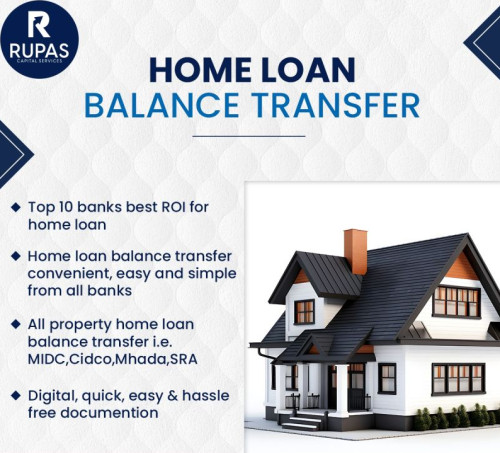
Every individual looks forward to having his/her own house. Today, buying a house is no more a luxury. With Rupas Capital Services, availing a home loan is hassle-free and easy. We help you make your dream into an affordable reality. A home loan or housing loan is a secured loan that you can borrow from any bank or lending institution for purchase, construction, extension or renovation of a residential/commercial property. The concerned property acts as a collateral against the loan, i.e. if the borrower fails to repay the loan, the bank or lending institution will retrieve the money by selling the concerned property. Home loan repayments are done through EMI (Equated Monthly Installments) and the amount typically depends on the amount of loan, tenure (number of years the loan is borrowed for) and the rate of interest charged by the bank or lending institution. HDFC started the trend of home loans in 1978. Before 2002, there were no regulations to deal with defaults on home loans. The introduction of the Securitisation and Reconstruction of Financial Assets and Enforcement of Security Interest Act (SARFAESI) in 2002 gave banks the power to deal with Home Loan defaults. This Act encouraged the banks to foray into the home loan sector.
Home Loans are of various types and one can choose the home loan as per your need and affordability. Mentioned below are different types of home loans:
Home Purchase Loan
This type of loan is typically borrowed to buy a residential property which includes flats and bungalows. Home Improvement Loan This type of loan is usually borrowed to enhance your home structurally i.e. renovate, repair or refurnish it.
Home Construction Loan
As the name suggests, this type of loan is borrowed to construct a new home on a piece of land.
Home Extension Loan
This type of loan is borrowed when an individual wants to extend or add more space to the house. Banks and lending institutions have their own set of eligibility criterions with which they can assess your repayment capacity as a borrower. Your monthly income is the basic factor which is considered to assess your repayment capability. If your monthly income is higher, you will be eligible for a higher home loan. These are some of the basic criterions for availing home loans:
Monthly income
Your monthly income is the most important consideration for the disbursement of home loan. The amount of home loan usually sums up to 60 times of your income. For example, if your salary is INR 20000 per month, you may be eligible for a home loan of up to INR 12 lacs.
Property Attributes
Banks typically provide 75% of your property value as the home loan amount. For example, if your property is worth 60 lacs, you can get up to 75% of the value as home loan which calculates to 45 lacs in this case.
Credit History
Your credit history plays a very important role in deciding the amount of home loan. CIBIL records your credit history based on all your loan transactions and a credit report is prepared. Based on your credit report, you are awarded with a CIBIL score, which is an important factor in deciding the home loan amount you can avail.
Age
Your age is a crucial determinant for home loan. You must be of a minimum of 18 years to apply for a loan and the maximum age may vary from 58 to 65 years depending on the income source of the individual. Your age is a deciding factor in the tenure (duration) and EMI of the loan. The interest rates in home loans are of two types – Fixed Rate of Interest and Floating Rate of Interest. They are explained as follows: Fixed Rate of Interest As the name suggests, the rate of interest charged on the home loan amount remains constant throughout the loan duration. This means that the EMI amount is fixed and not affected by fluctuations in the market. A fixed rate of interest is beneficial as it helps plan your finances better and in advance. However, it may turn out as a demerit if the market rates are lower than the fixed rate of interest.
Floating Rate of Interest
Here, the rate of interest on the home loan amount is not fixed. This means that the rate of interest keeps changing as per the market conditions and hence can increase or decrease every month. Hence it is called as floating rate of interest. It proves beneficial at times when the market trends are optimal and allow for lower rate of interest. However, with this type of rate of interest, financial planning becomes difficult as you may end up paying more or less than the previous EMI amount.
Documents Required
The documents required to apply for a home loan are:
Home Loan Application Form
You need to complete the home loan application form with your signature and passport size photographs.
Age Proof
You require to submit any one of the following as an Age Proof.
Aadhaar Card
PAN Card
Passport
Birth Certificate
SSC Marksheet
Bank Passbook
Driving License
Residence Proof
Any one of the following can be submitted as a Residence Proof.
Aadhaar Card
PAN Card
Passport
Bank Passbook
Voter’s ID Card
Ration Card
Telephone Bill, Electricity Bill, Water Bill, Gas Bill
Life Insurance Policy
Letter from a recognized Public Authority verifying customer’s address
Income Documents
There are two separate income documents required as per the category of individuals – Salaried Individuals and Self-Employed Individuals.
For Salaried Individuals, the income documents required are:
Form 16
Certified Letter from Employer
Payslip of last 3 months
Bank Statements of last 6 months
Increment or Promotion Letter
Income Tax Returns for past 3 years Any Investment Proofs (like Fixed Deposits, Shares, etc.)
For Self-Employed Individuals, the income documents required are:
Income Tax Returns for last 2 years
Balance Sheet and Profit & Loss Account Statement of the Firm
Business License Details
License of Professional Practice
Registration Certificate of Establishment
Proof of Business Address
Firm’s PAN Card and Address Proof (in case of Partnership Firm)
Property Documents
In addition to the above documents, these are some of the property documents required for home loan.
NOC from Builder
Cost of construction of the house
Registered Sales Deed, Sale Agreement, Allotment Letter
Occupancy Certificate
Property Tax Receipts, Maintenance Bills and Electricity Bills
Approved Copy of Building Plan
Possession Certificate
Bank Account Statements showing payments made to the Builder

Every individual looks forward to having his/her own house. Today, buying a house is no more a luxury. With Rupas Capital Services, availing a home loan is hassle-free and easy. We help you make your dream into an affordable reality. A home loan or housing loan is a secured loan that you can borrow from any bank or lending institution for purchase, construction, extension or renovation of a residential/commercial property. The concerned property acts as a collateral against the loan, i.e. if the borrower fails to repay the loan, the bank or lending institution will retrieve the money by selling the concerned property. Home loan repayments are done through EMI (Equated Monthly Installments) and the amount typically depends on the amount of loan, tenure (number of years the loan is borrowed for) and the rate of interest charged by the bank or lending institution. HDFC started the trend of home loans in 1978. Before 2002, there were no regulations to deal with defaults on home loans. The introduction of the Securitisation and Reconstruction of Financial Assets and Enforcement of Security Interest Act (SARFAESI) in 2002 gave banks the power to deal with Home Loan defaults. This Act encouraged the banks to foray into the home loan sector.
Home Loans are of various types and one can choose the home loan as per your need and affordability. Mentioned below are different types of home loans:
Home Purchase Loan
This type of loan is typically borrowed to buy a residential property which includes flats and bungalows. Home Improvement Loan This type of loan is usually borrowed to enhance your home structurally i.e. renovate, repair or refurnish it.
Home Construction Loan
As the name suggests, this type of loan is borrowed to construct a new home on a piece of land.
Home Extension Loan
This type of loan is borrowed when an individual wants to extend or add more space to the house. Banks and lending institutions have their own set of eligibility criterions with which they can assess your repayment capacity as a borrower. Your monthly income is the basic factor which is considered to assess your repayment capability. If your monthly income is higher, you will be eligible for a higher home loan. These are some of the basic criterions for availing home loans:
Monthly income
Your monthly income is the most important consideration for the disbursement of home loan. The amount of home loan usually sums up to 60 times of your income. For example, if your salary is INR 20000 per month, you may be eligible for a home loan of up to INR 12 lacs.
Property Attributes
Banks typically provide 75% of your property value as the home loan amount. For example, if your property is worth 60 lacs, you can get up to 75% of the value as home loan which calculates to 45 lacs in this case.
Credit History
Your credit history plays a very important role in deciding the amount of home loan. CIBIL records your credit history based on all your loan transactions and a credit report is prepared. Based on your credit report, you are awarded with a CIBIL score, which is an important factor in deciding the home loan amount you can avail.
Age
Your age is a crucial determinant for home loan. You must be of a minimum of 18 years to apply for a loan and the maximum age may vary from 58 to 65 years depending on the income source of the individual. Your age is a deciding factor in the tenure (duration) and EMI of the loan. The interest rates in home loans are of two types – Fixed Rate of Interest and Floating Rate of Interest. They are explained as follows: Fixed Rate of Interest As the name suggests, the rate of interest charged on the home loan amount remains constant throughout the loan duration. This means that the EMI amount is fixed and not affected by fluctuations in the market. A fixed rate of interest is beneficial as it helps plan your finances better and in advance. However, it may turn out as a demerit if the market rates are lower than the fixed rate of interest.
Floating Rate of Interest
Here, the rate of interest on the home loan amount is not fixed. This means that the rate of interest keeps changing as per the market conditions and hence can increase or decrease every month. Hence it is called as floating rate of interest. It proves beneficial at times when the market trends are optimal and allow for lower rate of interest. However, with this type of rate of interest, financial planning becomes difficult as you may end up paying more or less than the previous EMI amount.
Documents Required
The documents required to apply for a home loan are:
Home Loan Application Form
You need to complete the home loan application form with your signature and passport size photographs.
Age Proof
You require to submit any one of the following as an Age Proof.
Aadhaar Card
PAN Card
Passport
Birth Certificate
SSC Marksheet
Bank Passbook
Driving License
Residence Proof
Any one of the following can be submitted as a Residence Proof.
Aadhaar Card
PAN Card
Passport
Bank Passbook
Voter’s ID Card
Ration Card
Telephone Bill, Electricity Bill, Water Bill, Gas Bill
Life Insurance Policy
Letter from a recognized Public Authority verifying customer’s address
Income Documents
There are two separate income documents required as per the category of individuals – Salaried Individuals and Self-Employed Individuals.
For Salaried Individuals, the income documents required are:
Form 16
Certified Letter from Employer
Payslip of last 3 months
Bank Statements of last 6 months
Increment or Promotion Letter
Income Tax Returns for past 3 years Any Investment Proofs (like Fixed Deposits, Shares, etc.)
For Self-Employed Individuals, the income documents required are:
Income Tax Returns for last 2 years
Balance Sheet and Profit & Loss Account Statement of the Firm
Business License Details
License of Professional Practice
Registration Certificate of Establishment
Proof of Business Address
Firm’s PAN Card and Address Proof (in case of Partnership Firm)
Property Documents
In addition to the above documents, these are some of the property documents required for home loan.
NOC from Builder
Cost of construction of the house
Registered Sales Deed, Sale Agreement, Allotment Letter
Occupancy Certificate
Property Tax Receipts, Maintenance Bills and Electricity Bills
Approved Copy of Building Plan
Possession Certificate
Bank Account Statements showing payments made to the Builder
 Mr. Sanjay Uballe (Rupas Capital Services)
 B/1:1606, SM Road, Complex, Mumbai, Swadeshi Mills RD, Chunabhatti, Sion, Maharashtra - 400022, India
 https://www.rupascapitalservices.in
 Share us via










