 GST : 27AAWPW9374P1Z1
 Write a Review
Our Product / Services
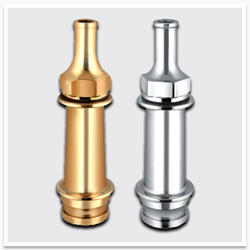
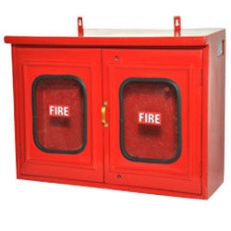
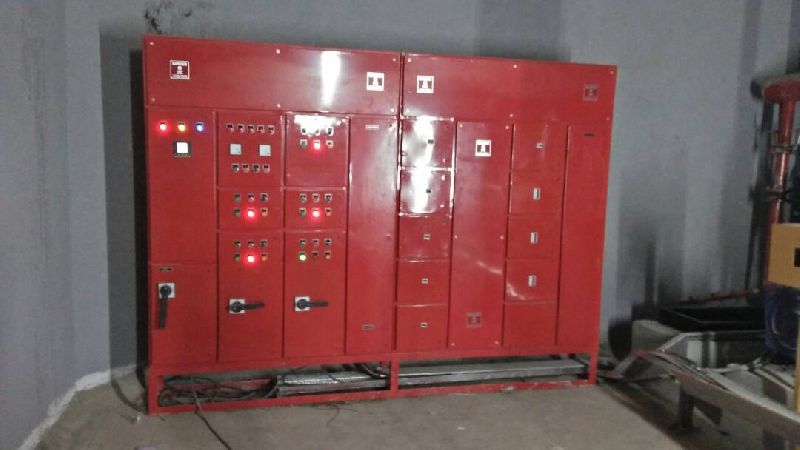
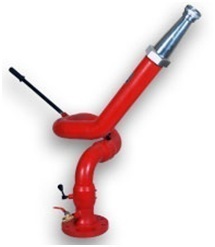
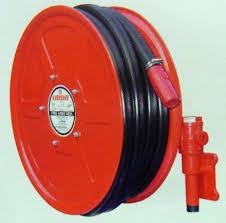
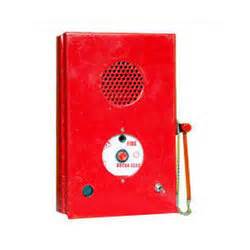
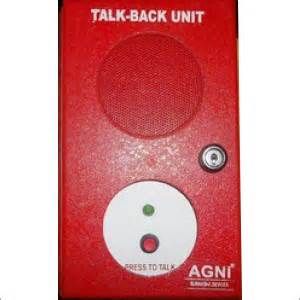
Our product range contains a wide range of Fire Hydrant System and Fire Alarm System
Being one of the oldest but yet the most effective and common fire fighting solutions , as well designed and laid out Hydrant system forms the backbone of the entire fire fighting system.
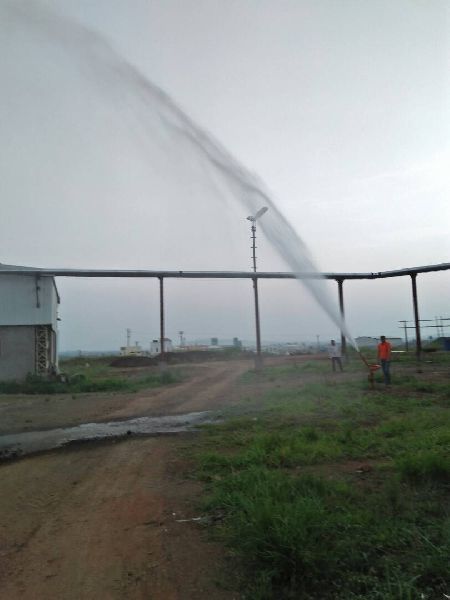
We are highly acknowledged as the best Service Provider of Hydrant System Fire. It is highly demanded in various buildings or premises, widely used for fire fighting solutions and helps in controlling fire during an emergency. This system is designed to suppress the fire and provide a readily available source of water to any point. Under the supervision of our team of well-trained professionals, the offered system is installed by using the modern tools & techniques and quality-tested components. Apart from this, we are offering the Hydrant System Fire in different specifications at affordable prices.
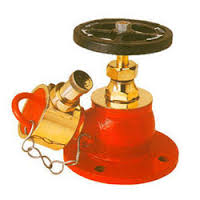
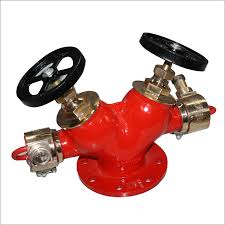
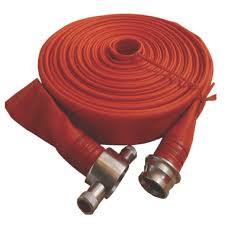
The fire hydrant systems are access points that allow fire authorities to connect hoses and quickly disperse large amounts of water to extinguish flames.
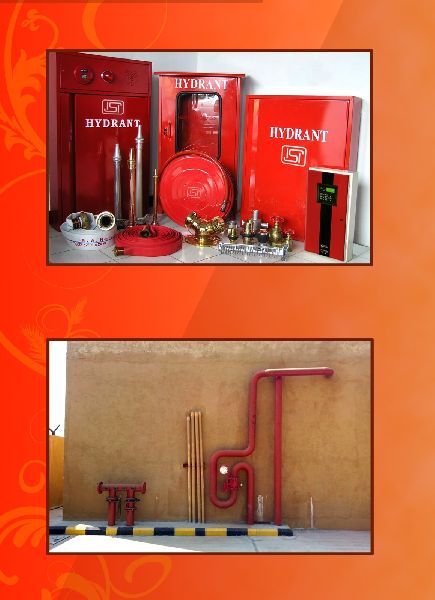
The system mainly consists of by a number of components & accessories like Fire pumps ( Jockey Pump, Electric Driven Pump, & Stand-by Diesel driven pump) Fire pumps are usually housed in a pump room very close to the fire tanks. The key thing is that the pumps should be located at a level just below the bottom of the fire tank, so that all the water in the tanks can flow into the pumps by gravity.
Like all important systems, there must be backup pumps in case the main pump fails. There is a main pump that is electric, a backup pump that is electric, and a second backup pump that is diesel-powered, in case the electricity fails, which is common. Each of these pumps is capable of pumping the required amount of water individually - they are identical in capacity.
There is also a fourth type of pump called a jockey pump. This is a small pump attached to the system that continually switches on to maintain the correct pressure in the distribution systems, which is normally 7 Kg/cm2 or 100 psi. If there is a small leakage somewhere in the system, the jockey pump will switch on to compensate for it. Each jockey pump will also have a backup., The capacity of the pumps is decided by considering a number of factors, some of which are:the area covered by hydrants / standpipes and sprinklers
Dry Rising Main (Dry Riser). A vertical pipe installed in a building for fire fighting purposes, fitted with inlet connections at fire engine access level and landing valves on various floors, which is normally dry but is capable of being charged with water usually by pumping from fire engine pumps. Dry rising mains are basically dry water pipes. The empty mains need to be charged with water through the breeching inlets by fire appliance. The dry rising mains should not exceed 60m to avoid excessive pumping pressure.
Wet Rising Main (Wet Riser). A vertical pipe installed in a building for fire fighting purposes and permanently charged with water from a pressurized supply, and fitted with landing valves on various floors. Wet rising mains are constantly charged with water that provide the required flow rate and pressure for fire fighting and equipped with water storage capacity for a given duration of 60 minutes. The breeching inlets, which are usually provided at ground level, are meant for replenishing the water tank.
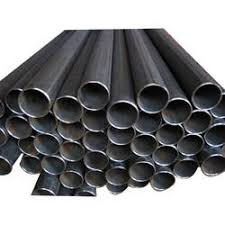
The distribution system consists of steel or galvanised steel pipes that are painted red. These can be welded together to make secure joints, or attached with special clamps. When running underground, they are wrapped with a special coating that prevents corrosion and protects the pipe. External (Stand Post Type Or Underground Type – Sluice Valve, Water Monitor)
The amount of water in the fire storage tanks is determined by the hazard level of the project under consideration. Most building codes have at least three levels, namely, Light Hazard (such as schools, residential buildings and offices), Ordinary Hazard (such as most factories and warehouses), and High Hazard (places which store or use flammable materials like foam factories, aircraft hangars, paint factories, fireworks factories). The relevant building code lists which type of structure falls in each category. The quantity of water to be stored is usually given in hours of pumping capacity. In system with a capacity of one hour, the tanks are made large enough to supply the fire with water for a period of one hour when the fire pumps are switched on. For example, building codes may require light hazard systems to have one hour’s capacity and high hazard 3 or 4 hours capacity.
The water is usually stored in concrete underground tanks. It is essential to ensure that this store of water always remains full, so it must have no outlets apart from the ones that lead to the fire pumps. These tanks are separate from the tanks used to supply water to occupants, which are usually called domestic water tanks. Designers will also try and ensure that the water in the fire tanks does not get stagnant and develop algae, which could clog the pipes and pumps, rendering the system useless in a fire.
Guidelines and approval for hydrant system are available from various national and international organizations like NBC, NFPA, TAC, IS, FM & Local Authorities.
Fire Alarm System
It is an integral part of any fire protection system. It is said that the first five minutes of fire are most important than the next five hours. Fire can be extinguished when it is in an incipient stage. Moreover people can be warned of fire hazards and evacuation of the buildings becomes easy. The heat & smoke detectors detect fire and actuate the alarm system. The system helps evacuation of the premises and to bring fire fighting facilities into action as quickly as possible. The Fire alarm systems are provided in the residential buildings with heights above 15 m and industrial and commercial buildings with height above 24 m. If the height of building is above 35 m. It is necessary to have provision of heat & Smoke Detectors.
 Mr. Sachin Wakchaure (S.R. Enterprises)
 D301, Tirupati campus phase 1, Vishrantwadi, Pune, Maharashtra - 411015, India
 Share us via