My ExportersIndia

For Buyer

For Seller

For Help

Whole Spices

Our Complete range of products are Fenugreek Seeds, Nutmeg, Dried Red Chilli and Turmeric Finger.

Fenugreek Seeds

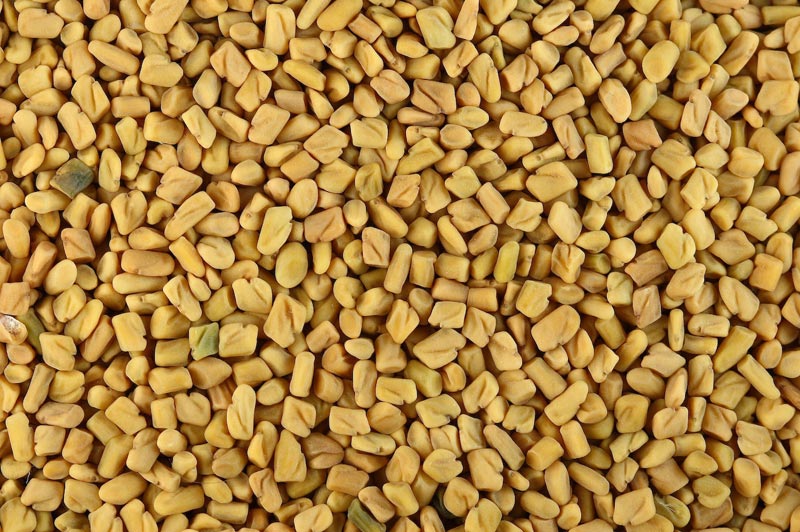
The company is exporting and supplying the superior quality Fenugreek Seed that is the ripe fruit of an annual herb. This robust herb has light green leaves, is 30-60 cm tall and produces slender, beaked pods, 10-15 cm long, each pod contains 10-20 small hard yellowish brown seeds, which are smooth and oblong, about 3mm long, each grooved across one corner, giving them a hooked appearance. Fenugreek Seeds are a native of South Eastern Europe and West Asia, now cultivated in India, Argentina, Egypt and Mediterranean countries (Southern France, Morocco and Lebanon). In India Fenugreek Seed is grown extensively in Rajasthan, Gujarat, Madhya Pradesh, Uttar Pradesh, Maharashtra and Punjab. Fenugreek Seed is a cold season crop and is fairly tolerant to frost and very low temperature. It is best suited to tracts of moderate to low rainfall and is sown in all types of soil but perform better in loam and clayey loam with proper drainage. Fenugreek Seed can also be grown on black cotton soils. Growing sesame is during October and February and is grown in Gujarat, Rajasthan, Uttar Pradesh and Tamil Nadu. The major importers of Indian fenugreek are Saudi Arabia, Japan, Malaysia, USA, The UK, Singapore and Sri Lanka. Specifications
  • Purity - 97% /98%/ 99%
  • Odour - Celery and bitter
  • Colour - Caramel to light yellow
  • Moisture - 5% to 7% max
  • Green Seeds - 2% max
  • Total ASH - 10% max
  • Acid insuluble ASH - 1.25% max
  • Flavour - Aromatic sweet
  • Salmonella - Absent/25 gms
Types : Machine Cleaned / Machine cleaned Sortexed
View Complete Details

Nutmeg

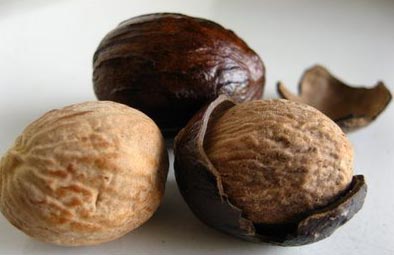
The company is engaged in exporting and supplying the top class Nutmeg. We procure this Nutmeg from the reliable vendors of the industry, who meet the international quality standards for processing Nutmeg. The Nutmeg, we offer, is a spice consists of the seed Myristica fragrans, a tropical, dioecious evergreen tree native to the Moluccas or Spice Islands of Indonesia. This Nutmeg is widely demanded in Food Industry due to its high nutritional value. Botanical Name : Myristica fragrans Family : N.O. Myristicaceae Hindi Name : Jaiphal Geographical SourcesThe nutmeg tree, Myristica fragrans, is indigenous to the Moluccas in Indonesia but has been successfully grown in other Asian countries and in the Caribbean, namely Grenada. Banda Islands, Malayan Archipelago, Molucca Islands, and cultivated in Sumatra, French Guiana. CompositionNutmeg and mace contain 7 to 14 percent essential oil, the principal components of which are pinene, camphene, and dipentene. Nutmeg on expression yields about 24 to 30 percent fixed oil called nutmeg butter, or oil of mace. Dried kernel of the seed. VarietiesWhole nutmegs are grouped under three broad quality classifications :
  • Sound : Nutmegs which are mainly used for grinding and to a lesser extent for oleoresin extraction. High quality or sound whole nutmegs are traded in grades which refer to their size in numbers of nutmegs per pound: 80s, 110s and 130s (110 to 287 nuts per kg), or 'ABCD' which is an assortment of various sizes.
  • Substandard : Nutmegs which are used for grinding, oleoresin extraction and essential oil distillation. Substandard nutmegs are traded as 'sound, shrivelled' which in general have a higher volatile oil content than mature sound nutmegs and are used for grinding, oleoresin extraction and oil distillation; and 'BWP' (broken, wormy and punky) which are mainly used for grinding as volatile oil content generally does not exceed 8%.
  • Distilling : Poor quality nutmegs used for essential oil distillation.Distilling grades of nutmegs are of poorer quality: 'BIA' or 'ETEZ' with a volatile oil content of 8% to 10%; and 'BSL' or 'AZWI' which has less shell material and a volatile oil content of 12% to 13%.
Method of ProcessingWhen fully mature it splits in two, exposing a crimson-coloured aril, the mace, surrounding a single shiny, brown seed, the nutmeg. The pulp of the fruit may be eaten locally. After collection, the aril-enveloped nutmegs are conveyed to curing areas where the mace is removed, flattened out, and dried. The nutmegs are dried gradually in the sun and turned twice daily over a period of six to eight weeks. During this time the nutmeg shrinks away from its hard seed coat until the kernels rattle in their shells when shaken. The shell is then broken with a wooden truncheon and the nutmegs are picked out. Dried nutmegs are grayish-brown ovals with furrowed surfaces. Large ones may be about 1.2 inches long and 0.8 inch in diameter. Traditional Ethnic UsesIt is used to flavour many kinds of baked goods, confections, puddings, meats, sausages, sauces, vegetables, and such beverages as eggnog. The spices in their ground form are mainly used in the food processing industry, principally in the seasoning of meat products; they are also used in soups, sauces, baked goods and spice mixes Both spices have similar taste qualities; mace is more popular because of its light orange colour in light coloured foods. Nutmeg, in general, tends to be sweeter and more delicate. These products are also used in the perfumery and pharmaceutical industries. Taste and Aroma : Nutmeg has a characteristic, pleasant fragrance and slightly warm taste. Adulteration : Insects that attack nutmegs only extract the fat oil. They do not interfere in any way with the essential oil.

View Complete Details

Dried Red Chilli

We are the prominent Exporter and Supplier of Dried Red Chilli that is the most common spice cultivated in India. The Dried Red Chilies are valued principally for their high pungency and color. The Dried Red Chilli growing states are Andhra Pradesh (46%), Karnataka (15%), Maharashtra, Madhya Pradesh, Orissa, West Bengal, Rajasthan and Tamil Nadu. Indian Dried Red Chilli can be grown during the entire year at one or the other part of the country. However, the major arrival season extends from February to April. The crop planting starts from August and extends till October. While, the harvesting begins from December with 5% of the arrivals usually reported in this month. The peak arrivals are reported in February to March. There are several varieties of Dried Red Chilli and the most popular among these are Sannam, 334, 273, Byadgi, Wonder Hot, Mundu, Teja, Yellow Chilies & Tomato Chilies. India is the largest consumer of Dried Red Chilli in the world. Around 90% of India's production is consumed within the country. India exports around 80000 100000 tons of chilies a year. India exports Chilies in the form of Dried Red Chilies, Chilli Powder, Picked Chilies and Chilli oleoresin. We mainly export this Dried Red Chilli to USA, Sri Lanka, Bangladesh, the Middle East and the Far East. Factors Influencing Chilli Markets
  • The commodity displays high volatility, with the prices heavily dependent on season, production in different producing tracts spread across the country, demand from exporters and the stock available at the cold storages.
  • The prices of the major chilli varieties sold in the country are correlated with each other. As a result, the players in other varieties can also hedge their risks through this single variety.
In our dry red chilies, the total aflatoxin is <0.5 ug/ kg. Limit of quantification of aflatoxin is 0.5 ug/ kg. So our chilies are cleared for export to all countries Types of Dried Red Chilli
  • Sannam S4 best
  • Teja Best
  • Byadige
  • Wrinkle 273
  • LAC 334
  • 341
  • Wonder Hot
  • Tomato Chili
  • Mundu
  • Yellow Chili
  • Whole Chili with Stem
  • Whole Chili without Stem
  • Grounded Chili Powder
  • Chili oleoresin
  • Chili meal

  • Specifications
    • Color - Bright Red
    • Length - As per grade
    • Pods without stalk - 8% max
    • Moisture - 12.5% max
    • Foreign material - 2% max
    • Broken chilies - 7% max
    • Loose seeds - 2% max
    • Damaged and discolored pods - 6% max
    Packing : New thin jute bags in 8/9/10/25/50 Kgs
    View Complete Details

    Turmeric Finger

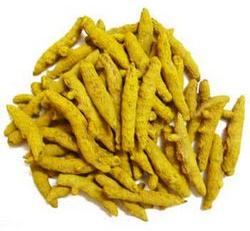
    We are the reliable Exporter and Supplier of high quality Turmeric Finger, which is known as Rajapuri and produced in Sangli, Maharashtra. Masala manufacturers mainly use it due to its saffron colour. The second main quality is Salem Gattha which is produce in Salem, Tamil Nadu and that is why its name is pronounced as Salem Gattha. India is the largest producer and exporter of Turmeric Finger. Bangladesh, Pakistan, Taiwan, Srilanka, Burma are other significant producers of Turmeric Finger. US is the largest exporter of turmeric FInger, India provides 90 % of the US demand, followed by Dubai, Saudi Arabia, Sri Lanka & Bangladesh. Rajapuri Quality is also a known quality and attracts the Masala manufacturer besides the Salem variety. But production of this quality is low at 2lakh bags. Both Rajapuri and Salem quality fetch higher prices. Third quality is produced in Messur, Karnataka and called as Godal Patte. It is considered slightly inferior in quality to the former 2. The fourth quality the Finger quality gets its name from its shape - which looks like human finger. Tamil Nadu, AP, Maharashtra, Karnataka, Orissa, Meghalaya, Bihar and Assam are the main turmeric producing areas. Moreover, Erode, Selam and Rajapur are the main trading place. Other producing countries are Myanmar and China. Total production of these states is around 2.50 lakh bags in which Meghalaya production is higher at around 100000 bags while the other states contribute for 50000 bags each. Sowing starts in July while main arrival time is February. Specifications
    • Flexibility - Hard
    • Broken pieces (fingers<15mm) - 5 %
    • Foreign matter - 1 %
    • Defectives - 3 %
    • Percentage of bulbs by weight - 4 % Starch content, max, w/w: 60 %
    • Curcumin content - 4 - 5 %
    • Moisture - 10%
    • Total ash - 7%
    • Lead as PPB - 2.5
    • Chromate test - Negative
    • Acid insoluble ash - 2.5%
    Types : Finger/Bulbs - Polished or Unpolished
    View Complete Details
    Tell Us What are you looking for? Will call you back

    Contact Us