
My ExportersIndia

For Buyer

For Seller

For Help

Our Products

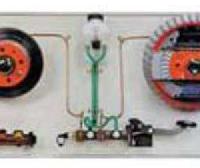
  1. Automotive Brakes

    1 Products available
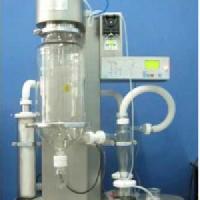
  2. Dryers

    1 Products available
  3. Others Products 90 Products available

Our Products

Our Complete range of products are Flow Meter Demonstration Apparatus Model FM 18, orifice-meter set up, Fluid Statistics & Manometry Apparatus Model FM 56, pressure distribution venturi nozzle apparatus and Electrostatic Precipitator (ESP) Trainer Model Env 003.

Flow Meter Demonstration Apparatus Model FM 18

85,000 / Piece Get Latest Price
  • Min. Order (MOQ) 1 Piece
  • Country of Origin India
  • Warranty 3yrs
  • Type Fluid Mechanics Lab Equipments
  • Application Education
  • Condition New
  • Brand Name Sci-tech

Various devices are available to measure the fluid flow rate. Majority of these devices use the Bernoullis theorem which states that the sum of pressure head, velocity head and the potential head is constant along a stream line for a steady, in viscid and incompressible flow of fluid. Measurement of fluid flow rate is important to the students of mechanical, chemical, civil and several other branches of engineering.

The Sci-tech Flow Meter Demonstration Apparatus Model FM 18 is a mobile bench top unit and has been designed to demonstrate the working of the venture meter, orifice plate and the turbine flow meter. The apparatus consists of a piping network with flow meters located suitably and instrumented with static pressure taps. Provision is made to calibrate and determine the co-efficient of discharge of venture meter and orifice plate. The turbine flow meter is used as a reference. The flow meters are calibrated by static pressure measurements using manometers and actual flow measurements using graduated measuring tank of the hydraulic bench. Wall pressure tapings are provided along the converging and diverging portions of the venture-meter to measure the static pressure distribution. Multi-tube manometer having a manifold with an air bleed valve is supplied to make static pressure measurements. The manometer is pressurized by a hand pump.

Water is supplied by a hose connection to the inlet and flow rate is varied by a valve at the outlet. The complete unit is manufactured from corrosion resistant materials. The FM100 Hydraulic Bench or any other standard hydraulic bench models can be used to supply water.

Specifications:

1. Piping system, 25mm nominal bore, and stainless steel.

2. Venturi meter, transparent, made of clear Acrylic and having convergent and divergent portions, throat diameter: 15mm, maximum diameter: 31.75mm, upstream taper: 210, downstream taper: 140. No. of static pressure taps: 7.

3. Orifice plate, 20mm nominal diameter.

4. Turbine flow meter, 2 - 20 liters/min, max. flow rate.

5. Multi-tube manometer, 0-440 mm water column, No. of tubes: 8 with hand pump.

Options:

1. Other types of water flow measuring devices such as (a) Sudden Enlargement, (b) Elbow (c) Variable Area Rotameter (d) Nozzle and (e) Pitot-tube with necessary pressure instrumentation can be included in the apparatus to suit the requirements of the user on request.

Experiments:

1. Familiarization with static pressure measurements.

2. Familiarization with flow measurement techniques.

3. Determination of co-efficient of discharge of orifice plate.

4. Determination of co-efficient of discharge of venturimeter.

5. Demonstration of continuity equation.

6. Demonstration of Bernoullis theorem.

7. Study of static pressure variation along the venturi at different flow rates.

8. Study of working and calibration of turbine flow meter.

Measurements:

1. Static pressures along the venturi meter.

2. Static pressures across orifice plate.

3. Flow rate using turbine flow meter.

4. Actual volume flow rate using Hydraulic Bench or graduated tank.

Additional Information:

Payment Terms : T/T

Delivery Time : 8 weeks

View Complete Details

Orifice-meter Set Up

65,000 / Piece Get Latest Price
  • Min. Order (MOQ) 1 Piece
  • Brand Name Sci-tech
  • Condition New
  • Application Education
  • Number Of Flower Fluid Mechanics Lab Equipments
  • Total Carbohydrate 3yrs
  • Country of Origin India

Sci-tech Orifice-meter, Venturi-meter & Rota-meter set up Model FM 46 is self-sufficient unit to study the characteristics of Orifice meter, Venturi-meter & Rota-meter. The calibration of these meters can be study by comparing with actual flow measured in measuring tank. The orifice & Venturi is made of clear acrylic material to understand its operation phenomenon. Venturimeter & Orifice meter is mounted in such fashion that at a time we can select one of them & conduct the experiment. Rotameter is placed in supply line of pump to operating table.

Pressure tapings are provided at appropriate location for measurement of differential pressure with Mercury U tube manometer. Variable flow can be achieved for various reading set. For the particular flow we can compare the reading.

The Test set up of the Trainer can be used along with the Sci-tech Hydraulic Bench FM 100. The test set up system will be supplied with orifice meter, venturimeter, rotameter, Base for these unit and all essential accessories.

LIST OF EXPERIMENTS

  • Calibration of Flow meters.
  • Flow measurement using venturimeter, orifice meter, variable area flow meter like Rotameter
  • Demonstration of use of different flow meter & its comparisons
  • Determination of flow coefficient.
  • Comparison of pressure drops across venturimeter & Orifice meter.
  • Study of Coefficient of Orifice Cv, Cd, Cc

SYSTEM COMPONENTS

Orifice plate meter flowmeter:

- :14mm

- Measuring nozzle: 18.5mm

- Made of transparent plastic / perplex / plexi - glass.

Venturi tube:

- A=84338mm2

- Angle at the inlet:10.50

- Angle at the outlet:40

- inlet and outlet diameter 25 mm NB

- Made of transparent plastic / perplex / plexi - glass.

Rota meter:

- Variable area with capacity 180-1800 LPH.

Measuring ranges

Pressure: 6x0390mmWC

1. Different methods of flow rate measurement

2. Measuring instruments: orifice plate flow meter/measuring nozzle, venturi nozzle and rotameter

3. 6 tube manometers to determine the pressure distribution in venturi nozzle, orifice plate flow meter and measuring nozzle

4. measurement of the total pressure with pitot tube

5. flow rate determined by base module for experiments in fluid mechanics

OPTIONAL ACCESSORIES

  • Sci-Cal Data Acquisition System for Fluid Mechanics Experiments
  • Multimedia computer based training package on Flow meters
  • Cut sections of valves & pumps
  • Transparencies & Slides

Additional Information:

Payment Terms : T/T

Delivery Time : 4 weeks

View Complete Details

Fluid Statistics & Manometry Apparatus Model FM 56

75,000 / Piece Get Latest Price
  • Min. Order (MOQ) 1 Piece
  • Brand Name Sci-tech
  • Condition New
  • Application Education
  • Number Of Flower Fluid Mechanics Lab Equipments
  • Total Carbohydrate 3yrs
  • Country of Origin India

Sci-tech Fluid Statistics & Manometry Apparatus Model FM 56 provides an introduction to the behavior of liquids under hydrostatic conditions (fluid at rest) and the application of these principles to pressure measurement using manometers. The trainer is designed to demonstrate the properties of fluids and their behavior under hydrostatic conditions (fluid at rest). This allows students to develop an understanding and knowledge of a wide range of fundamental principles and techniques, before studying fluids in motion. These include the use of fluids in manometers to measure pressure and pressure differences in gases and liquids.

Designed to demonstrate the properties of Newtonian fluids and their behavior under hydrostatic conditions (fluid at rest).

This enables students to develop an understanding and knowledge of a wide range of fundamental principles and techniques, before studying fluids in motion.

These include the use of fluids in manometers to measure pressure and pressure differences in gases and liquids. Some simple exercises are included to show how the behavior of a fluid changes when flow is involved and the relevance of concepts such as frictional losses.

The apparatus is constructed from PVC and clear acrylic, and consists of a vertical reservoir containing water that is connected to a series of vertical manometer tubes. These tubes can be used individually or in combination for the different demonstrations of hydrostatic principles and manometry.

One tube includes changes in cross section to demonstrate that the level of a free surface is not affected by the size or the shape of the tube.

The right-hand manometer tube is separate from the other tubes and incorporates a pivot and indexing mechanism at the base that enables this tube to be inclined at fixed angles of 5, 30, 60 and 90 (vertical).

The reservoir incorporates a hook and point gauge with Vernier scale, mounted through the lid, that enables large changes in level to be measured with better precision than a simple scale.

Technical Specifications

  • Liquid Reservoir (incorporates a hook and point gauge with Vernier scale): 100 mm Diameter, 600 mm Height
  • U tube Manometer
  • Vertical parallel tubes 2 Nos.
  • Vertical tube with varying cross section
  • Vertical piezometer tube with pivot allowing operation at three different inclinations, including incline from 5, 30, 60 and 90 (vertical).

Experiment Possibilities

Demonstrating the behavior of liquids at rest (Hydrostatics)

Showing that the free surface of a liquid is horizontal and independent of cross section.

Measuring small changes in liquid level using a micro-manometer.

Measuring changes in liquid level using a Vernier hook and point gauge

Using a single piezometer / manometer tube to measure head

Using manometer tubes to measure differential pressure

Using an inclined manometer to measure small pressure differences

Using a U tube manometer to measure pressure differences in a gas (air over liquid)

Using an inverted pressurized U tube manometer to measure pressure differences in a liquid

Using liquids with different densities to change the sensitivity of a U tube manometer

Additional Information:

Payment Terms : T/T

Delivery Time : 8 weeks

View Complete Details

Pressure Distribution Venturi Nozzle Apparatus

65,000 / Piece Get Latest Price
  • Min. Order (MOQ) 1 Piece
  • Country of Origin India
  • Total Carbohydrate 3yrs
  • Number Of Flower Fluid Mechanics Lab Equipments
  • Application Education
  • Condition New
  • Brand Name Sci-tech

The sum of pressure head and velocity head is constant along a horizontal stream line in a steady, inviscid and incompressible flow of fluid. The Sci-tech Pressure Distribution in Venturi Nozzle Model FM 26 Apparatus is a bench top unit and has been designed to measure the variation of static pressure and flow velocity in pipe flow having venturi and nozzle. The apparatus consists of transparent venturi tube and nozzle mounted in a horizontal pipe line. Wall pressure tapings are provided along the converging and diverging portions of the venturi and nozzle surface to measure the static pressure variation. Pitot probes are provided at suitable locations along the centre line of the venturi and nozzle to measure total head. Static and total pressures are measured using multi-tube manometer having a manifold with an air bleed valve. Manometer can be pressurized by a hand pump. Flow meter is provided to measure flow rate.

rn

This apparatus can also be used to conduct laboratory experiments to (a) demonstrate continuity and Bernoullis equations and (b) determine the co-efficient of discharge of venturi and nozzle to use as flow measurement devices. The FM00 Hydraulic Bench or any other standard hydraulic bench models can be used to supply water. Water is supplied by a hose connection at the inlet and controlled by a valve at the outlet. The complete unit is manufactured from corrosion resistant materials.

rn

rn

OPTION:

rn

Sci-Cal Computer based learning software is included to enable students understand and conduct experiments, tabulate results and plot graphs. The Sci-tech Pressure Distribution in Venturi Nozzle Apparatus is an important experimental set-up for any Fluid Mechanics and Hydraulics Laboratory of an educational institution.

rn

rn

Following is the list of experiments that can be carried out using the Bernoullis Theorem Demonstration Apparatus:

rn

rn
    rn
  1. Familiarization with static and total pressure measurements.
  2. rn
  3. Demonstration of continuity equation.
  4. rn
  5. Demonstration of Bernoullis theorem.
  6. rn
  7. Measurement static pressure variation along the venture and nozzle at different flow rates.
  8. rn
  9. Study of flow velocity variation along the venturi and nozzle.
  10. rn
  11. Determination of Hydraulic Gradient Line and Energy Gradient Line.
  12. rn
  13. Determination of co-efficient of discharge of the venturi and nozzle.
  14. rn
  15. Study of venturi and nozzle as flow measurement devices.
  16. rn
rn

rn

rn

Measurements:

rn

rn
    rn
  1. Static pressures along the venturi.
  2. rn
  3. Total pressures along the venturi.
  4. rn
  5. Volume flow rate from Hydraulic Bench or flow meter.
  6. rn
rn

rn

rn

rn

rn

Important Features and Specifications:

rn

rn
    rn
  1. Venturi, transparent, made of clear Acrylic and having convergent and divergent portions, throat diameter: 12.0mm, maximum diameter: 25mm, upstream taper: 150, downstream taper: 60.
  2. rn
  3. No. of static pressure taps in venturi: 7.
  4. rn
  5. No. of Pitot probes in venturi: 7.
  6. rn
  7. Nozzle, transparent, made of clear acrylic, throat diameter: 12.0mm, maximum diameter: 25mm.
  8. rn
  9. No. of static pressure taps in nozzle: 4.
  10. rn
  11. No. of Pitot probes in nozzle: 4.
  12. rn
  13. Flow meter
  14. rn
  15. Multi-tube manometer, 0-300 mm water column, No. of tubes: 8.
  16. rn
rn

rn

Option: A self contained unit of Pressure Distribution in Venturi Nozzle Apparatus mounted on a mobile platform with a flow controlled closed circuit water circulation unit consisting of centrifugal pump, flow meter, corrosion resistant sheet metal measuring tank and a sump tank will be supplied on request.

Additional Information:

Payment Terms : T/T

Delivery Time : 4 weeks

View Complete Details

Electrostatic Precipitator (ESP) Trainer Model Env 003

5.50 Lakh / Set Get Latest Price
  • Min. Order (MOQ) 1 Set
  • Number Of Flower Electrostatic Precipitator
  • Country of Origin 220V
  • Application Education
  • Brand Name Sci-tech

Sci-tech Electrostatic Precipitator (ESP) Trainer Model ENV 003 uses the induced electrostatic charge to remove the particles from the flow air stream. This system is designed to give the students an understanding of the electrostatic precipitator system.

The apparatus comprises of a laboratory scale electrostatic precipitator unit, dust feeding system and a digital weighing meter. A venturi type flow meter is provided to measure the incoming air flow rates.

This ESP is a plate type precipitator. It contained of a row of thin wires and followed by a stack of large flat metal plate. The air flow will flow through the thin wires and passes though the metal plate. High negative voltage is applied between the wires and plates. The ESP has a dimension of 600x1000x600mm with a fan. The operating voltage for the ionizer is about 7000 VDC while for collector is about 8000 VDC.

Air flow rates can be varied by controlling the fan speed. Dust tank is provided to inject the dust into the system. Digital weighing meter is provided to measure the dust collection by the ESP.

EXPERIMENTS CAPABILITIES

Understanding of electrostatic precipitator system

Demonstration of basic separation

Effect of input velocity against separation efficiency

Effect of particle size on separation efficiency

Effect of input charge (ionization strength) on the separation efficiency

TECHNICAL DATA

Experiment Test: Electrostatic Precipitator (ESP) System

Apparatus Frame: Epoxy coated steel frame

ESP type: Plate type

ESP size: 600x1000x600mm

Fan rating: 1/4hp TEFC motor & drive

Operating voltage: 7000VDC (ionizer); 8000VDC (collector)

Voltage Gradient: 11, 158VDC/inch (Ionizer) & 24, 768 VDC/inch (Ionizer)

Air flow meter: Digital anemometer

Hand held Anemometer range: Air velocity: 0 - 2m/s; Temperature: 0 - 65oC

Dust tank: Plexi-glass container

Digital Analytical balance: weighing capacity: 50 kg; resolution: 0.5 g;

Digital Instrumentation with (optional) sensors for digital indicators & air velocity transmitter.

Optional:

Sci-Cal Computer Control Software & Interface

EXPERIMENTS CAPABILITIES

Understanding of electrostatic precipitator system

Demonstration of basic separation

Effect of input velocity against separation efficiency

Effect of particle size on separation efficiency

Effect of input charge (ionization strength) on the separation efficiency

Additional Information:

Payment Terms : T/T

Delivery Time : 16 weeks

View Complete Details

Air Flow Studies Apparatus Model FM 34

2.50 Lakh / Piece Get Latest Price
  • Min. Order (MOQ) 1 Piece
  • Country of Origin India
  • Total Carbohydrate 3yrs
  • Number Of Flower Fluid Mechanics Lab Equipments
  • Application Education
  • Condition New
  • Brand Name Sci-tech

Fluid mechanics is an important subject and has applications in several areas including air conditioning, aerospace, automobile, and industrial air distribution systems. Study of air flows and its measurement is important for understanding the basic principles of fluid mechanics. Sci-tech Air Flow Studies Apparatus Model FM 34 is important equipment for laboratories in certificate level, diploma and degree level courses of mechanical, civil, chemical, aeronautical, environmental and related branches of engineering of any educational institutions. Sci-tech Air Flow Studies Apparatus Model FM 034 is a self-contained and compact unit designed to demonstrate the basic fluid mechanics principles by conducting measurements of important characteristics associated with a typical industrial air distribution system. The apparatus will enable students to study the principles of fluid mechanics by analysing the flows in ducts and jets. The apparatus consists of a long smooth walled stainless-steel pipe with a bell mouth entry connected to the suction side of the centrifugal fan. The bell mouth entry prevents flow separation from the walls of the pipe at the entrance. The turbulence in the pipe is reduced because of the use of suction fan. Flow straightening vanes are provided to minimize formation of vortices resulting in reduction of turbulence in the test pipe. The fan discharge pipe terminates in a flow control damper (for closed circuit operation) or a plate containing an aperture to obtain a jet for measurements. Two nozzles and an orifice plate are provided to measure flow rate by differential static pressure measurements. Static pressure taps are provided along the length of the pipe at equal intervals to measure pressure gradient along the pipe. A bend or mitered cascade elbow can be fitted at the inlet of the pipeline to measure the pressure loss. Provision is made to measure the boundary layer growth and the mean velocity profiles at six stations along the pipe length by traversing the Pitot probe. Arrangement is provided to study the characteristics of the jet flow by traversing the Pitot-static probe in the jet flow. The probe can be traversed in two perpendicular directions at several stations along the length of the jet to study the jet spread or dispersion. Pressures are measured using a 15-tube inclined manometer. The inclined manometer is provided to make sensitive pressure measurements. The complete equipment is mounted on a steel frame having the provision for levelling. Specifications 1. Centrifugal fan, capacity about 250 LPS at STP. 2. Velocity in pipe: 35 m/s (max.) 3. Pipe inlet diameter: 80 mm.(approx.) 4. Length of pipe: 2.5m 3m. 5. Bell mouth entry. 6. Interchangeable nozzles (2 Nos.): dia. 50 and 80mm. 7. Orifice plate ID: 50mm. 8. Jet discharge pipe dia.: 30mm. 9. Jet traverse range: 160mm X 600mm. 10. Multi-tube inclined manometer, 15 tube, 0.6m long. 11. Manometer fluid: Kerosene. 12. Bend and mitred cascade elbow. 13. Pitot probe. 14. Pitot-static probe. 15. Probe traverse for duct flow measurements. 16. Probe traverse for jet flow measurements. 17. Support system. Technical Specifications A. Centrifugal fan, with speed control: Max. volumetric flow rate: 1800 m/h. Max. motor power: 750 W. B. It includes a plate with one orifice at the discharge side of the fan to carry out air jet dispersion practical exercises, orifice diameter: 30 mm. C. Long smooth test pipe, inner diameter 81.4 mm; length: 2500 mm approx. It includes: Deflector in the inlet to prevent air-separation from the wall of the pipe and reduce the formation of vortices. Ten pressure tappings to measure the pressure gradient along the pipe A. Five stations to use the transverse Pitot tube and to determine the boundary layer growth and the development of velocity profile. B. Two Pitot tubes: Pitot tube located at the discharge of the fan, attached and properly protected

Additional Information:

Payment Terms : T/T

Delivery Time : 12 weeks

View Complete Details

Sedimentation Tank Model Demonstrator Model FM 66

1.25 Lakh / Piece Get Latest Price
  • Min. Order (MOQ) 1 Piece
  • Brand Name Sci-tech
  • Condition New
  • Application Education
  • Number Of Flower Fluid Mechanics Lab Equipments
  • Total Carbohydrate 3yrs
  • Country of Origin India

Features

Solid/liquid separation in a sedimentation tank

Visualisation of flow conditions.

Includes Suspension Flow meter

Sci-tech Sedimentation Tank Model Demonstrator Model FM 66 is designed to investigate the factors influencing the separation process in sedimentation tanks. In sedimentation tanks, solids are separated out of suspensions under the influence of gravity. For this, the density of the solid particles must be greater than that of the liquid. First a suspension of water and precipitated calcium carbonate is prepared in a tank. A pump delivers the suspension to the sedimentation tank. In the inlet area of the sedimentation tank the suspension intermingles with fresh water. The mixture flows over an inlet weir. On their way through the sedimentation tank the solids sink to the bottom. The treated water flows out by way of the weir at the sedimentation tank outlet.

The solid concentrations at the sedimentation tank inlet and outlet are determined by means of two Imhoff cones. The mass separated in the sedimentation tank can be determined from the difference between them. The flow rates of the suspension and the fresh water are adjusted by valves and indicated by flow meters. This enables the mixing ratio and thus the solid concentration of the mixture - to be adjusted. In order to ensure a uniform mix of the suspension and prevent premature sedimentation, a portion of the suspension is fed back into the suspension tank by way of a bypass. To investigate the flow conditions, ink can be added with a piston burette to the fresh water stream as a tracer substance. To provide enhanced observation of the flow conditions and settling processes, the sedimentation tank is made of transparent material.

A baffle plate can be positioned in the sedimentation tank to impede the flow. Its horizontal and vertical positioning in the sedimentation tank is adjustable. This enables the flow conditions and the efficiency of the separation process to be influenced.

Detailed Operation & Maintenance Manual is provided along with the trainer.

Specifications

  • Sedimentation tank: LxWxH: 1000x400x230 mm, Capacity: approx. 80L, Material: Clear Acrylic
  • Sump Tank: 120 Ltrs.
  • Flow Meters: Mains water flow meter range 0.5 - 5.0 litres/ min; slurry flow meter range 0 - 2 litres/min.
  • A dye injection system is incorporated to allow hydraulic tracer and flow visualization studies.
  • Measuring flow regimes using a dye tracer and comparison of these with idealized flow models.
  • Effect of variables such as flow rate and baffle position on flow regimes.
  • Measurement of sediment removal efficiencies
  • Settling tank: 1000 x 400 x 200mm
  • Sediment sump tank capacity: 120 litres
  • Water flow meter range: 0.5-5 l/min
  • Sediment suspension low meter range: 0-2 l/min
  • Pump flow rate: 25 l/min at 5m head
  • Motor: 0.1kW

Experiment Capabilities

Learning the fundamental principle of separation of solids from suspensions in a sedimentation tank.

Measuring flow short-circuiting and dead space using a tracer.

Comparison of real flow regimes with idealized flow models.

Effect of flow rate and baffle position on dispersion.

Measuring sediment removal efficiencies and relating these to the hydraulic characteristics.

Additional Information:

Payment Terms : T/T

Delivery Time : 8 weeks

View Complete Details

Rainfall Simulator Model FM 47

4.50 Lakh / Piece Get Latest Price
  • Min. Order (MOQ) 1 Piece
  • Country of Origin India
  • Brand Name Sci-tech
  • Condition New
  • Application Education
  • Type Fluid Mechanics Lab Equipments
  • Warranty 3yrs

Features

  • Ability to take many measurements quickly without having to wait for natural rain.
  • Ability to work with constant controlled rain, thereby eliminating the erratic and unpredictable variability of natural rain
  • Sci-Cal Data Acquisition System as an optional accessory.

Sci-tech Rainfall Simulator Model FM 47 consists of a metal stand which is used to support spray head assembly which consists of Water sprinklers. The unit is used with its accessory tray for laboratory experiments which is enclosed with Sight Glass. In use, water is pumped from the holding tank through control valve& flow meter to the Water sprinklers. The Water circulating pump is used to feed the water into the nozzle assembly through the pipe. For use in laboratory electrical and water supplies are required.

LIST OF EXPERIMENTS

  • The relative protection afforded by different plant densities
  • Studies of relative Soil Erosion
  • Studies of soil infiltration characteristics
  • Erosion and runoff from up and down slope row crops.

SYSTEM SPECIFICATIONS

A self-contained floor standing apparatus for hydrology and fluvial geomorphology

demonstrations, comprising:

(a) SS catchment sand tank choices: 1mx1m/2mx1m/3mx2m/6mx2m; Depths from 400mm to 700mm.

Stainless steel tank, tiltable using a single or dual linked jacking system, optionally with hydraulic jack.

(b) 4 or 6 or 8 stainless steel spray nozzles mounted on an adjustable height gantry

(c) A stilled tank providing a formed flow river inlet

(d) Two flow meters (3L/min & 5L/min) to measure and adjust the inlet flows

(e) Circulating centrifugal pump: 0.5HP 2HP, 1Ph or 3Ph, 2 to 8 Bar, Pressure head 6m to 12m @ flow rate 1800LPH 2400.

(e) Acrylic outlet tanks allowing measurement of water and sediment flow

(f) Two French drains, two well points and 10 to 20 manometer tapping points linked to a manometer bank

(g) SS sump tanks connected to recirculating pump

(h) Fine grade 2mm to 5mm sand (Not usually supplied other than special request, to be procured locally)

SYSTEM COMPONENTS

Metal stand.

Water Sprinklers.

Water Circulating Pump.

Water Storage Tanks.

Horizontal tray placed on metal stand.

Flow meter & control valve.

Optional

  • DAQ version is available with instrumentation to measure both water and sediment run-off

in real time. The package includes 4 flow Sensors, 8 Level Sensors, Data logger, LabView 14.0 educational software, (requires a PC).

  • Sci-Cal Computer Control Software & Interface (Check separate specifications sheet)

Additional Information:

Payment Terms : T/T

Delivery Time : 8 weeks

View Complete Details

Basic Hydrology Apparatus Model FM 39

4.50 Lakh / Piece Get Latest Price
  • Min. Order (MOQ) 1 Piece
  • Country of Origin India
  • Total Carbohydrate 3yrs
  • Number Of Flower Fluid Mechanics Lab Equipments
  • Application Education
  • Brand Name Sci-tech
  • Condition New

Sci-tech Basic Hydrology Apparatus Model FM 39 is a self-contained unit for studying basic hydrology. It consists of a large stainless steel rectangular tank with adjustable tilting mechanism. The tank is filled with a granular medium. Two separate sets of four spray nozzles above the tank simulate rain fall on the catchments. The tank upper walls are transparent. Valve control of the nozzles varies the lag time on the hydrograph to simulate a moving storm. The compartments at each end of the tank are connected to the catchment area by wire mesh to allow flow between the compartment and the catchment. Two wells with valve control are also provided at the middle of the tank. Twenty pressure tappings along the orthogonal axes of the tank to measure water table profile by a manometer bank.

Technical Specifications

Tank: Stainless steel 100 cm wide x 200 cm long x 19 cm high.

Inclination: 0-3%.

End compartments: 2 ea.

Wells: 2 ea.

Spray nozzles: 8 nozzles with separate shutoff valves.

Flow measurement

- Rainwater: Variable area flow meter.

- Run off: Calibrated weir.

Manometer: 8 Tube Manometer.

Upper walls: Clear acrylic.

Accessories: - Rectangular ring, circular ring, confined aquifer, cylindrical pier.

Optional Sci-Cal Computer Control Software & Interface

Experiment possibilities

  • Investigation of rainfall/runoff relationships for dry, saturated and impermeable catchments of various slopes for surface runoff.
  • Effect of interflow on outflow hydrograph.
  • Simulation of multiple and moving storms.
  • Cone of depression for single well and interaction of cones of depression for two adjacent wells.
  • De-watering of excavation sites by use of wells.
  • Flow from a well in a confined aquifer.
  • Demonstration of watersheds for a simulated island with rainfall and well flows.
  • Sediment transport and meanders in simulated rivers.
  • A metal frame supports the tank and houses a storage tank.
  • Water is drawn from the storage tank by a pump and separately supplied to the overhead nozzles and/or the two end compartments via a flow meter and piping with valve control.

Additional Information:

Payment Terms : T/T

Delivery Time : 12 weeks

View Complete Details

Rainfall Hydrographs Demonstrator Model FM 69

3.50 Lakh - 6.50 Lakh / Piece Get Latest Price
  • Min. Order (MOQ) 1 Piece
  • Brand Name Sci-tech
  • Condition New
  • Application Education
  • Number Of Flower Fluid Mechanics Lab Equipments
  • Total Carbohydrate 3yrs
  • Country of Origin India

Sci-tech Rainfall Hydrographs Demonstrator Model FM 69 is designed to study rainfalls in

laboratory. The unit consists of a tank filled with gravel. Water is supplied by overhead nozzles & water flow is controlled by a flow control valve. Transparent curtains are provided around the tank to avoid water spillage. To collect the runoff a measuring unit is located at one end of the tank. The measuring unit consists of motor driven traversing vessel with 17 storage compartments. An electronic console is controls the traversing vessel. Water collected in the vessel provides an immediate histogram of runoff as a function of time.

The trainer is supplied with following accessories -

  • Polythene sheet for impermeable catchment

Four plastic containers for reservoir storage

  • Permeable pipe for tile drain

Detailed Operation & Maintenance Manual is provided along with the trainer.

Specifications

A self-contained facility for study of flow through permeable media.

Tank

- Length: 1.2m

- Width: 0.6m

- Height: 0.2m

Flow meter range: 0.4 - 4.4 litres/min

Runoff collector: 17 x 0.5 l compartments

Overall Dimensions

- Length: 1.58m

- Width: 0.9m

- Height: 1.05m

Optional

  • DAQ version is available with instrumentation to measure both water and sediment run-off

in real time. The package includes 4 flow Sensors, 8 Level Sensors, Data logger, LabView 14.0 educational software, (requires a PC).

  • Sci-Cal Computer Control Software & Interface (Check separate specifications sheet)

OPTIONAL ACCESSORIES

  • Digital sensors & indicators for Flow, Pressure
  • Data logging software

Ordering Specifications

  • A unit designed to obtain catchment rainfall and runoff values as functions of time.
  • Comprising a bench- or floor-standing tank with two overhead square pattern spray nozzles
  • supplying water via a flow control valve, flow meter and solenoid valve.
  • A motor driven traversing vessel with seventeen compartments is moved by timer beneath the
  • outlet at a preselected rate to collect the runoff and provide an immediate display of the
  • hydrograph.
  • The tank is 1.2m in length x 0.8m wide x 0.2m deep.
  • The flow range is 0.4 to 4.4 litres/minute.
  • A comprehensive user manual is included in the supply.

Experiment Capabilities

  • Storm hydrographs from single or multiple storms
  • Storm hydrograph from a previously saturated catchment
  • Storm runoff from an impermeable catchment
  • Effect of a moving storm on flood hydrograph
  • Effect of reservoir storage on flood hydrograph
  • Effect of land drains on flood hydrograph

Additional Information:

Payment Terms : T/T

Delivery Time : 12 weeks

View Complete Details

Flow Over Weirs & Notches Apparatus Model FM 02

45,000 / Units Get Latest Price
  • Min. Order (MOQ) 1 Units
  • Country of Origin India
  • Total Carbohydrate 3 Years
  • Number Of Flower Educational Trainer
  • Certification CE Certified
  • Brand Name Sci-tech
  • Condition New

Weirs are generally used in rivers and other open channels to regulate and measure the flow rate.

Weirs have various cross sections and the flow rate depends on the water levels both upstream and down stream of the weir. A sharp edged notch cut out of a metal plate is a form of a weir more suitable for flow measurements. The cut outs may be of any shape, however rectangular and V-shaped notches are commonly used. Study of the flow over weirs is an important experiment for students of Hydraulics Engineering and Fluid Mechanics.

The Sci-tech Flow over Weirs & Notches Apparatus Model FM 02 has been designed to demonstrate the characteristics of flow over rectangular and V-notches and to determine the coefficient of discharge. The apparatus can be used with the FM100 Hydraulic Bench or any other standard makes of Hydraulic Benches having a channel and a provision to fix the notch for studies.

Notches are fixed to the weir carrier at the end of the channel in the Hydraulic Bench. Water is fed into the channel section and is allowed to flow over the weir. Special delivery nozzle and two stilling baffles are located in the channel of the Hydraulic Bench to provide smooth flow upstream of the weir. A vernier hook and point gauge is provided to measure the overflow height.

OPTION

Sci-Cal Computer based learning software is included to enable students understand and conduct experiments, tabulate results and plot graphs. The Sci-tech Flow over Weirs & Notches Demonstration Apparatus is an important experimental set-up for any Fluid Mechanics and Hydraulics Laboratory of an educational institution

Experiments

1. Demonstration of the flow over the rectangular notch.

2. Demonstration of the flow over the V-notch.

3. Study of discharge Vs head over the notch characteristics.

4. Determination of the co-efficient of discharge of weirs.

Measurements:

1. Overflow height or head over the notch.

2. Volumetric flow rate from measuring tank of the Hydraulic Bench.

Important Specifications

1. Wear Plates, PVC, 6 Nos., Overall size, 260mm X 160mm X 4mm. with the following

notch geometry: (a) Rectangular, width: 50mm, height: 80mm. (b) V-notch, 900 inclusiveangle, width across top: 50mm. (c) V-notch, 450 inclusive angle, width across top: 50mm. (d) V-notch, 1200 inclusive angle, width across top: 50mm. (e) Trapezoidal weir 30mm (f) Trapezoidal weir 50mm (g) Dog bone weir

2. Hook and Point Gauge, range: 0-160mm, accuracy: 0.1mm.

Options:

1. The overall dimensions of the wear plates can be modified to suit the existing Hydraulic Bench

2. Different types of notches will be supplied on request.

3. A self-contained unit of Flow over Weir Apparatus mounted on a mobile platform with a flow controlled closed circuit water circulation unit consisting of centrifugal pump, flow meter, corrosion resistant sheet metal measuring tank and a sump tank will be supplied on request.

Additional Information:

Payment Terms : T/T

Delivery Time : 4 weeks

View Complete Details

Venturi-meter Model FM40

55,000 / Piece Get Latest Price
  • Min. Order (MOQ) 1 Piece
  • Country of Origin India
  • Number Of Flower Fluid Mechanics Lab Equipments
  • Brand Name Sci-tech
  • Warranty 3yrs
  • Application Education
  • Condition New

Sci-tech Venturi-meter Model FM40 is self-sufficient unit to study the characteristics of Venturi-meter. The calibration of the meter can be study by comparing with actual flow measured in measuring tank. The Venturi is made of clear acrylic material to understand its operation phenomenon. Pressure tapings are provided at appropriate location for measurement of differential pressure with Mercury U tube manometer.

Variable flow can be achieved for various reading set. For the particular flow we can compare the reading.

The Test set up of the Trainer is integrated with the Sci-tech Hydraulic Bench FM 100. The test set up system will be supplied with venture-meter.

Specifications

Venturi tube: inlet and outlet diameter 26 mm NB, made of transparent plastic / perplex / plexi glass base.

Centrifugal Pump: H.P.

Sump Tank (50Ltrs).

Measuring tank and electronic level measurement system with digital stop watch.

U tube manometer: having graduated screen of height 400 mm approx.

Pipe and fittings made of PVC / corrosion resistant plastic.

M.S. Stand with FRP Top

Technical Specifications

Maximum flow rate: Nominally 27 L. min

Inside diameter of Venturi inlet: 26 mm

Inside diameter of Venturi throat: 16 mm

Inside diameter of Venturi outlet: 26 mm

  • Pressure tappings: 11 Manometer tube range: 0 to 400 mm
  • Accessories: Outlet tubing, pipe clips

OPTIONAL ACCESSORIES

  • Multimedia computer-based training package on Flow meters
  • Cut sections of valves & pumps
  • Transparencies & Slides
  • Data Acquisition System for Fluid Mechanics Experiments

Experiment possibilities

Calibration of Flow meter.

Flow measurement using Venturi-meter.

Demonstration of use of flow meter & its comparisons.

Determination of flow coefficient.

Comparison of pressure drops across venture-meter.

Study of Coefficient of Discharge Cd

Additional Information:

Payment Terms : T/T

Delivery Time : 8 weeks

View Complete Details

Hydrostatic Pressure Test Apparatus

55,000 / Piece Get Latest Price
  • Min. Order (MOQ) 1 Piece
  • Country of Origin India
  • Number Of Flower Educational Trainer
  • Condition New
  • Brand Name Sci-tech

Study of net force due to pressure on a submerged surface and the concept of center of pressure are of importance in fluid mechanics and hydraulics engineering. This understanding is important for the design of several structures and hydraulic equipment such as dams, ship building, maritime structures and other underwater bodies. The Sci-tech Hydrostatic Force & Center of Pressure Apparatus Model FM 08 demonstrates various principles of hydrostatics and is an important experimental set-up necessary for any Fluid Mechanics and Hydraulics Laboratory of an educational institution.

The Sci-tech Hydrostatic Force & Center of Pressure apparatus Model FM 08 has been designed to enable students measure the net hydrostatic force and the center of pressure on a submerged plane surface. The apparatus consists of a quadrant fixed to the balance arm. The balance arm is pivoted at the knife edge on the centerline of the quadrant. The quadrant is immersed in the Perspex water tank having an integral flat base.

The base of the water tank has levelling screws for accurate leveling. The balance arm is placed above the water tank and the quadrant is balanced by the adjustable counter- balance such that the rectangular end face of the quadrant is always vertical.

When the quadrant is submerged in water, the arrangement is such that only the forces acting on the rectangular end face produces a moment around the knife edge axis. The system of beam level indicator, balance pan and the adjustable counterbalance on the balance arm provide the necessary arrangement for the measurement of the resultant hydrostatic force and the center of pressure on the rectangular end face of the quadrant.

Water can be poured into the tank and may be drained through the drain cock at the base of the tank. Water level scale is provided on the side face of the quadrant. Experiments can be carried out for both partially and fully submerged cases by varying the water level in the tank. The FM100 Hydraulic Bench or any other standard hydraulic bench models can be used to supply water

The Sci-tech Hydrostatic Force & Center of Pressure apparatus is an important experimental set-up for any Fluid Mechanics and Hydraulics Laboratory of an educational institution

OPTION:

Sci-Cal Computer Based Learning Software is included to enable students understand and conduct experiments, tabulate results and plot graphs.

List of Experiments:

1. Measurement of hydrostatic force on a fully and partially submerged vertical plane surface.

2. Determination of center of pressure on a fully and partially submerged vertical plane surface.

3. Comparison of experimental results with principles of hydrostatics.

Specifications:

1. Water tank, Perspex, Internal Size: 350Lmmx350Dmmx180mmW; Capacity: 20 liters with level adjustment support screws at the base.

2. Quadrant, 120mm internal radius, 200mm outer radius, 75mm width.

3. Balance arm.

4. Balance pan.

5. Beam level indicator.

6. Adjustable counter-balance.

7. Distance between balance pan and knife edge: 285mm.

8. Set of standard weights: 4 x 100gr; 1 x 50gr; 5 x 10gr; 1 x 5gr

9. Two Spirit levels.

10. Optional, Computer based DAQ learning software.

Additional Information:

Payment Terms : T/T

Delivery Time : 4 weeks

View Complete Details

Pressure Distribution Nozzle Performance Study Apparatus Model FM 51

1.65 Lakh / Piece Get Latest Price
  • Condition New
  • Number Of Flower Fluid Mechanics Lab
  • Total Carbohydrate 3yrs
  • Country of Origin India

Features

* Pressure distribution in convergent and divergent nozzles1* Three nozzles with different contours1* Speed of sound and shock wave

Convergent nozzles are used in the subsonic range. Velocities in the supersonic range can be achieved in de Laval nozzles; their nozzle geometry is a combination of convergent and divergent contours. De Laval nozzles are used in supersonic wind tunnels, steam turbines, jet engines and rocket technology. Pressure curves are a good way of representing the different velocity ranges in the nozzle, such as subsonic, supersonic and shock wave.The experimental unit Sci-tech Pressure Distribution Nozzle Performance Study Apparatus Model FM 51 is used to measure pressure curves in convergent and convergent-divergent nozzles (de Laval nozzles) and to study the actual flow of compressible fluids. In addition, the "choking effect " is demonstrated, where the mass flow rate stops increasing upon reaching the critical pressure ratio. Air is used as a compressible fluid.In the experiment, the air flows through a nozzle and is thus accelerated. The pressure curve is recorded in the direction of flow over several measuring points. The air pressure upstream and downstream of the nozzle can be adjusted.Three interchangeable nozzles are available to study the pressure and velocity ratios: one convergent contour and two de Laval nozzles with different length nozzle extensions.The measured values for temperatures, pressures and mass flow rateare recorded.The well-structured instructional material sets out the fundamentals and provides a step-by-step guide through the experiments.

Optional Sci-Cal Computer Control Software & Interface in LabVIEW

Specifications

[1] Nozzle pressure distribution in actual flow of compressible fluids[2] Three nozzles with pressure measurement points: 1 convergent nozzle, 1 short and 1 long de Laval nozzle[3] Compressed air regulator for adjusting the pressure downstream of the nozzle[4] Needle valve on the flow meter for adjusting the back pressure[5] Instruments: manometer and digital temperature display upstream and downstream of the nozzle as well as rotameter

Technical Specifications

Air consumption of the experimental unit- compressed air: max. 10bar- air consumption: approx. 5g/s3 nozzles, brass- 1 x de Laval nozzle, short nozzle extension- 1 x de Laval nozzle, long nozzle extension- 1 x convergent nozzleCompressed air regulator- control range: 0.8, 6bar

Measuring ranges- temperature: 0.100C- pressure: 2x 0.10bar, 8x 1.9bar- mass flow rate: 0, 7.8, 3g/s

Sci-Cal Computer Control Software & Interface in LabVIEW.

Additional Information:

Payment Terms : T/T

Delivery Time : 8 weeks

View Complete Details

Deep Bed Filter Column Model FM 65

3.50 Lakh / Piece Get Latest Price
  • Min. Order (MOQ) 1 Piece
  • Brand Name Sci-tech
  • Condition New
  • Application Education
  • Number Of Flower Fluid Mechanics Lab Equipments
  • Total Carbohydrate 3yrs
  • Country of Origin India

Sci-tech Deep Bed Filter Column Model FM 65 is designed to study the characteristics of a filter column. It consists of an acrylic unit with flanged end pieces to allow easy access. It consists of a column filled with Ballotini packing to ensure the good water distribution. Slotted pressure tapings are mounted on the column for measuring the pressure drop across the bed pe r unit length and staggered over an approximate 0.8 m depth. These tapings are connected to a differential manometer. These tapings can also be used for drawing the samples from the column and change in concentration of the suspension can be determined. The unit is complete with 2 Nos. of feed tanks. A centrifugal pump is provided to circulate the water through the column under 1 Atmospheric pressure. Water supplied to the column is regulated and controlled by Rotameter. The 10 kg bag of filter medium will be supplied with the set-up. Detailed Operation & Maintenance Manual is provided along with the trainer.

Optional: Sci-Cal Computer Control Software & Interface in LabVIEW

Specifications

The unit comprises the following main items:

Absorption Column

Filter column: Clear acrylic, 100mm internal diameter x 1350mm long

Typical media depth: 700mm

Gauze mesh size: 0.35mm

Sampling : 40 insertion points with valve for isokinetic sampling at 20 mm depth interval

Sump tanks: 2 - capacity 250 to 350 litres each

Control method : Flow controller, consist of rigid plastic tank with a polystyrene form and plastic float with stainless steel vertical spear valve

Flow meter range: 0.5 - 5.0 litres/min

Manometers: 21 tube to 41 tube multi-bank differential

Pump rating: 0.37Kw

Essential Equipment

Filter Media: Approx 10kg of a test medium is required to pack the column.

Suitable alternatives include well rounded quartz-grain sand BS16-30 mesh (1.0-0.5mm), anthracite, crushed flint or aluminum oxide.

Recommended Accessories

40 sample collectors (test tubes or bottles)

Turbidimeter or Spectrophotometer

Flexible tubing for drain connection etc. 1 metre rule

Air foot-pump and pressure tubing (2.5m)

Experiments

Measuring how fast total head loss increases with filtration run

Measuring pressure drop profiles through the filter bed

Measuring suspension concentration profiles through the filter bed

Demonstration of reversed flow fluidization and backwashing

The column may be readily adapted for absorption and ion Exchange studies.

Additional Information:

Payment Terms : T/T

Delivery Time : 12 weeks

View Complete Details

Orifice And Free Jet Flow Apparatus Model FM 17

65,000 / Piece Get Latest Price
  • Min. Order (MOQ) 1 Piece
  • Country of Origin India
  • Total Carbohydrate 3yrs
  • Number Of Flower Fluid Mechanics Lab Equipments
  • Application Education
  • Condition New
  • Brand Name Sci-tech

Orifice is a simple device used to measure fluid flow rate in pipes. The flow rate is obtained by measuring the pressure loss across the calibrated orifice. Calibration of the orifice plate consists of determining the co-efficient of discharge which is the ratio of the measured actual discharge through the orifice to the theoretical discharge obtained from calculations. Study of the trajectory profiles of water jets issuing from the orifice and comparison with the calculated profile shapes is an interesting exercise to the student of hydraulics and fluid mechanics. Sci-tech Orifice and Free Jet Flow Apparatus Model FM 17 has been designed to enable students to determine the co-efficient of discharge of sharp edged orifice and to study the trajectory profiles of water jets issuing from the orifice. It consists of a vertically mounted constant head transparent water tank. Water is supplied from the hydraulic bench or any closed circuit controlled water supply system. The orifice is installed with the axis horizontal on the wall at the base of the tank using special fittings flush with the inside surface. The head above the orifice is maintained constant using adjustable overflow pipe and the level is indicated by the level scale. The flow rate through the orifice can be varied by adjusting the level of the overflow pipe suitably and hence the head over the orifice. Water emerging from the orifice is collected in the measuring tank of the hydraulic bench to make actual discharge measurements. A jet trajectory tracing device with a plotting board and a number of depth gauge pins enables to plot the jet trajectory directly on the graph paper. The equipment is designed to fit into the FM100 Hydraulic Bench or any other standard hydraulic bench models. Adjustable feet are provided to permit accurate leveling of the equipment before use. The complete unit is manufactured from corrosion resistant materials. OPTION: Computer Based Learning Software is included to enable students understand and conduct experiments, tabulate results and plot graphs. The Sci-tech Orifice and Free Jet Flow Apparatus is an important experimental set-up for any Fluid Mechanics and Hydraulics Laboratory of an educational institution. Experiments Following is the list of experiments that can be carried out using the Orifice and Free Jet Flow Apparatus: 1. Determination of co-efficient of velocity for an Orifice. 2. Determination of co-efficient of discharge for an Orifice. 3. Study of the co-efficient of discharge of Orifice with flow under constant head and flow under varying head. 4. Study of co-efficient of discharge at various values of head over the Orifice to study the influence of flow Reynolds number. 5. Comparison of the measured trajectory of the jet with the trajectory calculated from simple theory. 6. Study of trajectory of jet at various values of head over the Orifice. 7. Comparison of results obtained for two different diameter orifices. Specifications: Sharp Edged Orifice, Two Nos., diameters: 3.0mm and 6.0mm. Quandrant Edge Orifice Sharp Edge Orifice Cylindrical methacrylate tank, clear transparent, 300mm diameter, 500mm height, Supported on tripod legs with provision for leveling. Maximum constant head: 420mm. Max. Flow rate: 14LPM. Jet Trajectory Tracing Device with silkscreen printed scale, No. of Jet trajectory probes: 8. Pitot tube, positioning unit and manometer to measure the actual head over the Orifice. Optional Computer Based Learning Software is included to enable students understand and conduct experiments, tabulate the results and plot graphs. (OPTION: Two Nozzles of standard dimensions and different geometries can also be supplied on request to enable conducting experiments for the determination of co-efficient of discharge and jet trajectory at various flow conditions. The nozzles can be mounted flush with the inside surface of the tank.) The manual describing the theoretical and practical aspects of the apparatus

Additional Information:

Payment Terms : T/T

Delivery Time : 8 weeks

View Complete Details

Cyclonic Separation Trainer Model Env 001

3.50 Lakh / Set Get Latest Price
  • Min. Order (MOQ) 1 Set
  • Brand Name Sci-tech
  • Model Number ENV 001

Sci-tech Cyclonic Separation Trainer Model ENV 001 is a method of removing particulates from an air stream through a vortex separation process. A high speed forced vortex rotating air flow is established within a cylinder called a cyclone. Cyclones are used widely in sawmills to remove saw dust from extracted air as well as oil refineries to separate oils and gases. This Cyclone Separation Trainer is used for demonstrating the basics of cyclonic vortex separation. The apparatus comprises of four main cyclones of different diameters, a dust feed system and an air supply blower. A venturi type flow meter is provided to measure the incoming air flow rates. Each cyclone is fitted with a particle collector for dust collection. Cyclones can be run individually or in series of any two. Air flow rates can be varied by controlling the air blower speed. A dust tank is provided to inject the dust into the system. Differential pressure measurement for individual cyclones is provided to measure the pressure drop across the cyclone and hence the velocity of air in the cyclone can be determined.

Sci-tech Cyclonic Separation Trainer Model ENV 001 trainer consists of three cyclone separators mounted on frame. Two cyclone separators are made of steel & one is made of glass. The cyclones can be arranged in such way that either one cyclone can be operated at a time, or two cyclones can be operated in series. A high-volume air blower which draws large volume of air through the cyclone separator. A hopper with control valve is used to feed dust particles into the stream of air. The air mixed with particles then enters tangentially at the top inlet in the separator. The dust particles are separated in the separator & collected in container at the bottom. The filtered air leaves the separator through the outlet at the top. A Variable Speed Drive is used to vary the velocity & flow of air through the separator.

Each cyclone separator has glands to for measuring pressure difference across the cyclone. A differential pressure gauge is used to measure the differential pressure across cyclone. The air flow is measured by a venturi meter with differential pressure gauge.

EXPERIMENTS CAPABILITIES

Understanding of air cyclone system.

Demonstration of basic cyclonic separation

Effect of input velocity against separation efficiency

Effect of particle size on separation efficiency

Cyclone diameter and conical construction on separation efficiency

Single and double cyclone operation effects

Comparison of pressure drop against input velocity

To verify the theoretical relationship between pressure drop and inlet velocity

TECHNICAL DATA

Air Blower

- Capacity 280 m3/hr @ 3400 RPM,

- 5 hp 3 phase 415 V AC, 50 Hz

- Static Pressure: 20 kPa

- Blower Speed Control: Frequency Inverter

Cyclone Material: Stainless Steel or Borosilicate glass 2 Nos, Borosilicate Glass -1 No.

Cyclone Separator: Diameter 100 mm 1 Nos.

Cyclone Separator: Diameter 200 mm 2 Nos.

Dust Collector: Acrylic tank

Dust Feeder

Air Flow Meter: Venturimeter with differential pressure gauge

No. of dust collector tank 3 Nos.

No. of differential pressure gauges 2 Nos.

Differential Pressure Range: 0-20 in of H2

Instrumentation: Pressure drop: Manometer; Air flow rate: Venturi meter; Inverter for blower speed control

Digital Instrumentation a) 2 units of digital indicators. b) 2 units differential pressure transmitter for flow pressure drop

Mobile Steel Structure

Control Console: Coated Stainless Steel

Optional

v Sci-Cal Computer Control Software & Interface (Please refer to Sci-Cal catalog)

v Sci-calVaq Sci-techs Virtual IoT based Data Acquisition system Please refer to Sci-CalVaq catalog)

Additional Information:

Payment Terms : T/T

Delivery Time : 14 weeks

View Complete Details

Fixed Mobile Bed Unit FM32F

4.50 Lakh / Piece Get Latest Price
  • Min. Order (MOQ) 1 Piece
  • Country of Origin India
  • Total Carbohydrate 3yrs
  • Number Of Flower Fluid Mechanics Lab Equipments
  • Condition New
  • Application Education
  • Brand Name Sci-tech

Study of open channel flows is a subject of interest in basic fluid mechanics and Hydraulics. A flow channel with a provision to control depth of flow over in the channel can provide a very useful tool to study several aspects of open channel flows. Adjustable Bed Flow Channel Unit is an essential equipment for fluid mechanics, hydraulics, civil, mechanical and related laboratories in science and engineering institutions. Sci-tech Fixed Mobile Bed Unit FM32F is a particularly useful unit to demonstrate the fluidization phenomenon in engineering. It makes it possible to study different situations of flow and mobile bed visualization related to civil engineering structures. This unit may be used mainly in two study fields. The first one is the investigation of mobile beds, which are related to water courses and civil engineering structures. The second one is related to the visualization of the flow in two dimensions. FM 32F consists of an horizontal channel through which a current of water flows slowly and at a constant depth. The working section is 2000 x 610 mm. Study with the channel is simple thanks to the installation of different models and structures in it, making the flow circulate around them. The unit is self-contained and it consists of an inlet tank with adjustable gate, channel with sand filters, discharge tank, water storage tanks, centrifugal pump, electromagnetic flow meter and set of models. The practical exercises with this unit are carried out by using water and sand. The sand bed can be placed on a polycarbonate sheet, which is located inside the flow channel. Specifications The Fixed Mobile Bed is mounted on a metallic structure. This unit is divided into three sections: inlet tank, working section (channel) and discharge tank. These sections are assembled through joints in order to get a complete assembly. There is a sand filter between the end of the channel and the discharge tank. Stainless steel inlet tank with adjustable gate. It is supplied with a control at the upper side of the tank which makes it possible to change the slope of such gate. Dimensions: 530 mm x 710 mm x 530 mm. Flow channel made of stainless steel, including a main rail with millimeter rulers (Longitudinal cross piece). A structure which includes a sub-rail (transversal crosspiece) is supported on the rail. It makes it possible to put a depth gauge to measure the water level and determine the outline of the sand bed during the development of the practical exercises. Dimensions: 2000 mm x 710mm x 350 mm. The working section is 2000mm x 610 mm, and max. water depth is 120 mm approx. The practical exercises with this unit are carried out by using water and sand. The sand bed can be placed on a polycarbonate sheet, which is located inside the flow channel. Discharge tank made of stainless steel with overflow. It is divided into two parts, the one closer to the channel enables the sedimentation of sand, whereas the second part enables the removal of the water which overflows from the first section. Dimensions: 850 mm x 710 mm x 530 mm Two storage tanks made of polyethylene of approximately 250 l. each one. It has a filter at the pump 's inlet to retain possible residues. Centrifugal pump: flow range: 7.2 - 18 m /h; height: 14.4 19.70 M.W.C. Electromagnetic flow meter: flow range: 10-70 l./min. Membrane valve. Two different size gates. A set of models included: Bridge piers models: 2 rectangular models. 4 cylindrical models. 4 square models. 2 profiled rectangular models. 2 rectangular models with rounded ends Triangular model. Asymmetrical aerofoil model. Six baffles to direct the water flow during the experimental tests. A set of 12 L shaped profiles. Three pairs of different angles to build additional models Diagram in the front panel with similar distribution to the elements in the real unit. Electronic console, including: Motor-pump starter. Flow meter measurement display. Cables and accessories, for normal operation. Manuals: Thi

Additional Information:

Payment Terms : T/T

Delivery Time : 16 weeks

View Complete Details

Hybrid Solar Cum Wind Energy Cum Ice Trainer Model Env 032

6.50 Lakh / Units Get Latest Price
  • Min. Order (MOQ) 1 Units
  • Country of Origin India
  • Total Carbohydrate 2Years
  • Number Of Flower Educational Trainer
  • Certification CE Certified
  • Condition New
  • Brand Name Sci-tech

Renewable energies are energy sources that are continuously being replenished by natural processes that occur on human timescales. In contrast, fossil fuels (coal, natural gas, oil) require millions of years of geological processes to form. Our resources of fossil and nuclear fuels (e.g. uranium) are limited. Regenerative energies, on the other hand, are virtually in exhaustible. Wind energy is a form of solar energy. Wind energy (or wind power) describes the process by which wind is used to generate electricity. Wind turbines convert the kinetic energy in the wind into mechanical power. A generator can convert mechanical power into electricity. Mechanical power can also be utilized directly for specific tasks such as pumping water. Wind power is the use of air flow through wind turbines to provide the mechanical power to turn electric generators. Wind power, as an alternative to burning fossil fuels, is plentiful, renewable, widely distributed, clean, produces no greenhouse gas emissions during operation, consumes no water, and uses little land. The net effects on the environment are far less problematic than those of nonrenewable power sources. Wind farms consist of many individual wind turbines, which are connected to the electric power transmission network. Onshore wind is an inexpensive source of electric power, competitive with or in many places cheaper than coal or gas plants. Offshore wind is steadier and stronger than on land and offshore farms have less visual impact, but construction and maintenance costs are considerably higher. Small onshore wind farms can feed some energy into the grid or provide electric power to isolated off-grid locations. Solar PV Cells energy (or Solar power) describes the process by which wind is used to generate electricity. Solar PV Cells converts the Solar energy into electrical power. DC to AC inverters are used to convert DC energy derived from PV Cells in AC energy or AC Power Supply. Solar power, as an alternative to burning fossil fuels, is plentiful, renewable, widely distributed, clean, produces no greenhouse gas emissions during operation, consumes no water, and uses little land. The net effects on the environment are far less problematic than those of non-renewable power sources. Solar farms consist of many individual PV Cells, which are connected to the electric power transmission network. Specifications for Wind Generator DC Motor Drive Control panel: - 2 pole 1 6A MCB of 230 V 50Hz. - 300V DC Voltmeter & 5A DC Ammeter - 0-200V Variable Armature Output and Fixed 200V Field Output DC Ammeter panel: - 3 Nos of 0-20A DC Ammeter DC Circuit Breaker panel: - 3 Nos of 1 16A MCB Circuit Breaker. Battery Bank Junction Panel: - 2 pole 1 16A ELCB Switch. Dump Load panel: - 0.5 /100W resistive load. Socket Panel: - 3 Nos of Screw Base Lamp Socket. - 2 Nos of 1 AC Electrical Socket. Switch Panel: - 1 Nos of 16A Cam operated rotary Horizontal Switch. - 1 Nos of 16A Cam operated rotary Vertical Switch. - 2 Nos of AC/DC switch. - 3 Nos of Stop (Toggle) Switch Bus Bar & Distribution Panel: - 12V DC bus bar - 12V DC Distribution bar Battery Charger Control Panel: - 3 Battery Charger with DC Energy Meter to measure DC parameter of Battery. 3 Phase Multifunction Meter - 1 Nos. of 3 Phase Multifunction Meter to measure AC voltage, current, power etc Energy Meter Panel: - 1 AC two wires static kWh Meter with 2 pole 1 16A ELCB Switch. Inverter Panel: - 900VA pure sine wave Inverter with AC Output Indicator. Battery Panel: - 12V, 100Ah Tubular Battery for storage. Wind Simulator: - Wind Simulator with DC Shunt Motor and 3 Al

Additional Information:

Payment Terms : T/T

Delivery Time : 16 weeks

View Complete Details

Advanced Hydrology System Trainer Model FM 59

7.50 Lakh / Piece Get Latest Price
  • Min. Order (MOQ) 1 Piece
  • Brand Name Sci-tech
  • Condition New
  • Application Education
  • Number Of Flower Fluid Mechanics Lab Equipments
  • Total Carbohydrate 3yrs
  • Country of Origin India

Sci-tech Advanced Hydrology System Trainer Model FM 59 demonstrates some of the major physical processes found in hydrology and fluvial geomorphology, including: rainfall hydrographs for catchment areas of varying permeability; the abstraction of ground water by wells, both with and without surface recharge from rainfall; the formation of river features and effects of sediment transport. Realistic results can be obtained from this small scale, floor standing apparatus, which can be conveniently located and requires no special services. The unit comprises a sand tank, made of stainless steel, measuring 2mtrs by 1mtr (Optionally available in any required dimensions: We have made up to 6mtrs by 2mtrs). Water may be input to the sand tank from spray nozzles located above the tank (simulating rainfall), from an inlet tank simulating a river flow or from two drains buried in the sand at either end of the tank. The water is output either from an outlet tank and flow measurement system located at the end of the main sand tank, from one or both of the two wells located in the tank, or one or both of the French drains. SS or plastic sump tanks are located under the sand tank. Ground water table levels (phreatic surface) are measured using eleven to twenty tapping points in the sand tank, configured, optionally in a cruciform pattern, and displayed on a manometer bank. Four to Eight stainless steel spray nozzles, depending on the tank size, are mounted on a gantry above the sand tank, positioned to give an even distribution across the tank surface. The height of the gantry can be easily adjusted. Each nozzle has an associated on/off valve, allowing a wide variety of moving rainfall patterns to be simulated. The river inlet tank uses glass balls to still the flow, and a shaped channel section to provide formed flow conditions into the sand tank. The subsurface flow inputs are via two drains, buried in the sand at either end of the tank. These French drains can optionally, extend the full width of the tank. Each drain can be configured as an inlet or an outlet to permit a wide variety of hydrological demonstrations. Variable area flow meters with integral adjusting valves are used to control and measure the various flows into the tank. The use of self-sealing quick release fittings allows the system to be configured in a variety of different ways, enabling a wide range of demonstrations. The two flow meters have different ranges, further enhancing the flexibility of the overall system. Pressure regulators (optional) and filters are incorporated in the water supply lines, minimizing system disturbances. The outlet tank is located at the end of the sand tank, and is used for hydrographs, run-off and river formation demonstrations. A stepped height weir is used to adjust the outlet conditions. (When performing water table demonstrations this stepped weir is replaced with a sealing plate.) The outlet tank comprises a sand trap, a water stilling system and a flow measurement device. The flow measurement is performed by measuring the height of the water flowing over the outlet weir, using a manometer. The sand trap is configured to allow the sediment to be collected in a sieve. In this way the amount of sediment collected can be measured. Optionally, additional instrumentation and a data logging system that is used to measure both the water flow and the sediment flow. This system works by measuring the weight of the sand and water collected in the outlet tank, and calculating the sediment flow rate from the rate of change of the weight. It comes complete with educational software, help texts, graph plotting, etc., and requires a user provided PC. An optional accessories of sets of shapes and models for use when investigating surface flow effects and run-off effects. Technical Specifications 1. A self-contained floor standing apparatus for hydrology and fluvial geomorphology demonstrations, comprising: (a) SS sand tank: Available from 1mx2m to

Additional Information:

Payment Terms : T/T

Delivery Time : 12 weeks

View Complete Details

Centrifugal Pump Testing Rig

1.15 Lakh / Piece Get Latest Price
  • Min. Order (MOQ) 1 Piece
  • Brand Name Sci-tech
  • Condition New
  • Application Education
  • Certification CE Certified
  • Country of Origin India

Centrifugal pumps are widely used for pumping liquids in several applications including domestic, industrial, irrigation and drainage. Energy is supplied to the pump by an electric motor and the potential energy of the liquid is increased by the action of the impeller rotating inside a volute casing. It is essential for students to understand the operation and performance characteristics of centrifugal pumps. The Sci-tech Centrifugal Pump Test Apparatus Model FM 13 is an experimental set-up necessary for any Fluid Mechanics and Hydraulics Laboratory of an educational institution.

The Sci-tech Centrifugal Pump Test Apparatus Model FM 13 has been designed to enable students to study the operation and performance characteristics of a typical centrifugal pump. The module consists of a variable speed centrifugal pump assembly having an independent discharge manifold interconnected by plastic tubing with quick release connectors. The pump is driven by a AC motor of adjustable speed. The motor is suspended and the driving torque is determined with a torque wrench. The motor speed and power consumption are digitally displayed on the control panel. The pump can be connected to the Sci-tech Hydraulic Bench FM 100 or any other hydraulic bench models to supply and re-circulate water. Bourdon tube pressure gauges are mounted at the inlet and exit of the pump to measure increase of head across the pump. The independent discharge manifold has a pressure gauge and a flow control valve upstream of the discharge pipe and the diffuser. The flow rate through the system is measured using the measuring tank of the hydraulic bench and can be checked independently by the water flow meter fixed in the discharge.

The Sci-tech Centrifugal Pump Test Apparatus is a compact unit and all components and instrumentation are placed in a robust and mobile frame.

List of Experiments:

1. Study of the operation and working of centrifugal pump.

2. Determination of power requirement of the pump.

3. Determination of the hydraulic power output of the pump.

4. Investigation of the performance and characteristics of centrifugal pump :

The effect of pump speed.

Head, discharge, speed, power and efficiency curves.

Non-dimensional performance curves.

Determination of specific speed.

Determination of net positive suction head.

Important Features and Specifications:

Important Features and Specifications:

1. Centrifugal pump size- 25.4 mm x 25.4 mm (Approx), Discharge: 15-30 lpm at 30 meter (Approx), Total head: 12 meter (Approx).

2. Driving Motor: HP, AC electric motor

3. Power Measurement

4. RPM Indicator with sensor, Range - 0 to 9999

5. Pressure Gauges: 5 Kg/ Sq. cm.

6. Vacuum Gauge: 760mm (approx)

7. Foot Valve: size: 1 (approx) Plastic

8. Energy meter

9. Stand: M.S. Structure with powder coating or Alumium profile structure.

Additional in case Hydraulic Bench not used:

10. Measuring Tank: 40 Liter non Corrosive PVC/Acrylic tank

11. Mechanical level measurement facility with scale.

12. Sump Tank: 100 Liter non Corrosive PVC/FRP tank

13. Stop Watch.

14. Piping & fittings & valves.

15. Flow measurement facility.

Measurements:

Power input to the motor.

Torque and power input to pump.

Pump rotational speed.

Pump suction and delivery pressures.

Flow rate.

Options:

1) Sci-Cal Computer based learning software is included to enable students understand and conduct experiments, tabulate results and plot graphs. The Sci-tech Centrifugal Pump Test Apparatus is an important experimental set-up for any Fluid Mechanics and Hydraulics Laboratory of an educational institution.

Additional Information:

Payment Terms : T/T

Delivery Time : 8 weeks

View Complete Details

Drainage And Seepage Tank Demonstrator Model FM 67

3.50 Lakh / Piece Get Latest Price
  • Min. Order (MOQ) 1 Piece
  • Brand Name Sci-tech
  • Condition New
  • Application Education
  • Number Of Flower Fluid Mechanics Lab Equipments
  • Total Carbohydrate 3yrs
  • Country of Origin India

Features

Self-contained unit designed for study of flow through permeable media.

Tank made from non-corrosive materials & has toughened glass at Front for better visualization.

Sci-tech Drainage and Seepage Tank Demonstrator Model FM 67 has been designed for experimental study & visualization of flow through permeable media. The trainer consists of a Tank with Toughened Glass at front & Aluminum panel at the back. The toughened glass is scratch resistant & permits clear visualization of the process. The tank has two adjustable overflows at each end for maintaining a constant level inside the tank. A dye injection system allows dye to be injected through tapping on the back aluminum panel for visualization for flow pattern through the bed. Water is supplied from the sump tank using a centrifugal pump.

Detailed Operation & Maintenance Manual is provided along with the trainer.

Specifications

A self-contained facility for study of flow through permeable media.

The tank has a toughened glass front and aluminium back to permit the insertion of pressure tappings as required. Six tapping points are provided.

The design of the side supports allows free access to the interior with minimum sight.

Supply includes sump tank, pump, starter and control valve. Also a dye injection system and a with Comprehensive instruction manual data sheets and student experiments.

Working Section 1500mm X 100mm X 600mm.

Basic Accessories - - - - -

- Foundation pressure plate

- Straight permeable membrane

- Curved permeable membrane

- Lateral pressure plate

- Tile drain

Overall Dimensions Length: 1.60m Width 0.60m Height: 1.45m

Optional:

- DAQ Computer interface & LabView Software

- Sci-Cal Computer Control Software & Interface

SomePracticalPossibilitiesoftheUnit:

1. Flownetconstruction

2. Flowlinevisualization.

3. VerificationofDarcysLaw.

4. Comparisonofexperimentalresultswithanalyticalsolutions.

5. Todetermineseepagerates.

6. Seepagethroughanearthdam

7. Seepageunderneathasheetpilewall.

8. Controlofseepagethroughpermeablesoils bysub-soildrainage.

9. Toreduceupliftpressureandlateralthrustbydrainage.

10. Distributionofupliftpressureonhydraulicstructures.

11. Behaviorandformationofquicksand.

12. Todrainanexcavationsiteusingwells.

13. Stabilityofanearthdam.

14. Comparisonofpermeabilityaccordingtothegrainsize.

15. Sheetpilewall:

Studyofthesoilpermeability.

Flowlinesvisualization.

Calculationof theequipotentiallines.

Pressuresdistribution.

16. Permeabilityofthephreaticlayer

Studyofthesoilpermeability.

Flowlinesvisualization.

Calculationoftheequipotentiallines.

Measurementof theinfiltrationspeed

VerificationoftheLawofDarcy.

17. Flowthroughan earthdam:

Studyofthesoilpermeability

Flowlinesvisualization.

Calculationof theequipotentiallines

Pressuresdistribution

Effectsofthelayer inclination

Experiment Capabilities

1. Determination of seepage beneath a structure

2. Construction of fl ow nets and determination of coefficient of permeability

3. Flow under a sheet pile and determination of critical seepage force at which piping occurs

4. Seepage flow under an impermeable dam

5. Flow through an earth dam with and without a toe drain

6. Drawdown in horizontal flow (simulation of ground water flow into a river or well)

7. Determination of uplift pressures on structures such as building foundations

8. General studies of seepage and drainage

9. Flow through a porous medium (Darcys law)

Additional Information:

Payment Terms : T/T

Delivery Time : 8 weeks

View Complete Details

Bio Ethanol Plant Model Pt 011

22.50 Lakh / Set Get Latest Price
  • Min. Order (MOQ) 1 Set
  • Certification CE Certified
  • Application Ethanol Processing, Education
  • Automatic Grade Automatic
  • Condition New
  • Driven Type Electric
  • Brand Name Sci-tech
  • Country of Origin: India Warranty: 36 months

In many the chemical and foodstuffs industries, ethanol (alcohol) is increasingly used as a fuel. Sci-tech Bio Ethanol Plant Model PT 011 can be used to conduct realistic experiments for the production of ethanol from starch-based raw materials such as potatoes. The experimental plant consists of three main components: a mash tank, a fermentation tank and a distillation unit.

A mixture of water, finely chopped potatoes and alpha-amylase (enzyme) is filled into the mash tank. To dissolve the tightly packed starch chains in the potatoes, heating steam is injected into the mixture via a nozzle (gelatinisation). This increases the flow resistance of the mash, which would prevent further processes. The alpha-amylase breaks up the starch chains (liquefying) thereby reducing the flow resistance. Gluco-amylase is used to convert the starch into sugar (saccharification). This enzyme requires lower temperatures and pH values. The temperature is reduced using the water cooling jacket around the mash tank, the pH value is adjusted by the addition of acid and caustic. After saccharification the mash is pumped into the fermentation tank. During the fermentation process in this tank, ethanol is produced. A water cooling system controls the temperature. After the fermentation process, the mash is pumped into the distillation unit. This is equipped with a bubble cap tray column for separation of the ethanol. Two tanks are available, one for the spent mash, the other for the distilled ethanol.

The experimental plant has comprehensive measurement, control and operating functions, which are controlled via aPLC or DAQ. An optional touch screen displays measured values and permits the operation of the system.

The steam supply occurs via laboratory network or an optionally available electrical steam generator Sci-tech Model BSG 010

Specifications

1. Batch conversion of starch-based raw materials into ethanol

2. Open mash tank with water-jacket cooling, steam injection and stirrer

3. Closed fermentation tank with stirrer and water-jacket cooling/heating

4. Distillation unit with 3 bubble cap trays, dephlegmator, condenser and stirrer

5. 2 pumps for delivering the mash

6. pH value control in the mash tank with acid and caustic delivered by metering pumps

7. Adjustment of the amount of injected heating steam, the cooling water flow rates and the head

temperature by means ofPID / DAQ controllers

8. System control using aPLC or DAQ; operated by optional touch screen

9. Sci-techsoftware for data acquisition viaUSBunder Windows 7, 8.1, 10

Technical Specifications

Mash tank: 40LFermentation tank: 50LProduct tank: 10LSpent mash: 30LDistillation unit

column: DxH: 220x1200mm

sump capacity: 45L

sump heater: 07500W

2 air-operated diaphragm pumps

drive pressure: 2bar

max. flow rate: 15L/min

max. head: 20m

max. solid lump size: 4mm

2 metering pumps (acid and caustic)

max. flow rate: each 2, 1L/h


Measuring ranges

temperature: 10x 0150C

water quantity mash tank: 020L

pH value: 210

pressure heating steam: 010bar

Accessories

PC with Windows (OPTIONAL)

1 set of enzymes etc., 1 set of accessories, 1 software + USB cable, 1 set of instructional material

Electrical steam generator 12kW (steam (10kg/h, min. 3bar)

Experiments:

Familiarization with the necessary individual steps and system components for production of

ethanol:

Gelatinisation by steam injection

Liquefaction by use of alpha-amylase

Saccharification by use of gluco-amylase

Fermentation: conversion of sugar into ethanol by yeast cultures under anaerobic

conditions

Distillation: separation of ethanol from the mash

Additional Information:

Payment Terms : T/T

Delivery Time : 24 weeks

View Complete Details

Aerobic Water Treatment Pilot Plant Model Env 018

6.50 Lakh / Piece Get Latest Price
  • Min. Order (MOQ) 1 Piece
  • Country of Origin India
  • Total Carbohydrate 3 Years
  • Certification CE Certified
  • Condition New
  • Brand Name Sci-tech
  • Driven Type Electric

Sci-tech Aerobic Water Treatment Pilot Plant Model ENV 018 is an activated sludge pilot plant consists of an oxidation reactor and of a settler according to the traditional diagram of single-stage sewage treatment process.

Biomass is oxidized in a reactor with agitator by the air blown by a compressor. The processed liquid is then sent to the settler.

The sludges settling on settler bottom are recycled by a recirculation pump into the oxidation tank.

The water flowing out of the settler is conveyed to a drain.

Data acquisition is carried out by a specific software.

Specifications

AISI 304 stainless steel framework with castors

Feed tank, 300 L capacity

Cylindrical oxidation reactor of transparent methacrylate, 60 L capacity, including an AISI 304 stainless steel

agitator with motor and air diffuser

Settler of transparent methacrylate, 30 L capacity

Peristaltic feed pump

Sludge recirculation peristaltic pump

Diaphragm compressor with body of stainless steel

Microprocessor-controlled board-type pH-meter, with range of 2 to 12 pH, 4 to 20 mA output signal

Microprocessor-controlled board-type rH-meter, with range of -1500 and +1500 mV, 4 to 20 mA output signal

Microprocessor-controlled board-type dissolved oxygen meter, with range of 0 and 20 ppm, 4 to 20 mA output

signal

Electronic flow-meter for measuring air flow rate to reactor

Optional

Sci-Cal DAQ software enables the operator to select the appropriate stage of the process and a mimic diagram with measured variables is displayed. The speed of the pump can be varied to meet the required flow rate.

Results are saved in a log, which can be viewed and manipulated with the Sci-Cal results viewer. Results can be printed or exported in a spreadsheet format, which can be opened in a wide range of packages for further analysis.

Experiments

The process unit enables to develop and analyze the following issues:

Purification efficiency versus the following parameters:

- composition of water to be treated

- residence time

- organic load

- pH in oxidation tank

- concentration of dissolved oxygen

Additional Information:

Payment Terms : T/T

Delivery Time : 14 weeks

View Complete Details

Anaerobic Water Treatment System Model Env 012

6.50 Lakh / Set Get Latest Price
  • Min. Order (MOQ) 1 Set
  • Certification Ce Certified
  • Usage/Application Education
  • Industrial Use Education
  • Condition New

Sci-tech Anaerobic Water Treatment System Model ENV 012demonstrates the biological anaerobic water treatment. The trainer consists basically of two units:- Stirring tank with secondary clarifier-UASBreactor

Both units can be used separately or in combination. This allows both a single stage and a dual stage operation mode. In the dual stage operation, a pump first transports the raw water into a stirred tank. In this tank the acidification of the organic substances dissolved in the raw water takes place. Here, anaerobic microorganisms convert the long-chain organic substances into short-chain organic substances. In a secondary clarifier the biomass discharged from the stirred tank is separated from the water. The separated biomass is pumped back into the stirring tank.

From the secondary clarifier the raw water pretreated in this manner reaches aUASBreactor (UASB: Upflow Anaerobic Sludge Blanket). Here the final step of the anaerobic degradation takes place. The previously formed short-chain substances are converted by special microorganisms into biogas (methane and carbon dioxide). Flow through theUASBreactor is from the bottom to the top. At the top of theUASBreactor there is a separation system. This separates the generated gas from the treated water. It also ensures that the biomass remains in the reactor. The gas can be discharged externally or collected. The treated water exits at the top end of the reactor and is collected in a tank.

To adjust the flow velocity in theUASBreactor a of the treated water can be re-circulated.

The temperatures in the stirred tank and theUASBreactor can be controlled. The pH value in the stirred tank is measured. In addition, the pH value in theUASBreactor can be controlled. A software and webcam are available for data acquisition and visual inspection.

Anaerobic biomass and analysis technology are required to perform the experiments. Recommended parameters are:COD(chemical oxygen demand), nitrogen and phosphor.

Specifications

1. Anaerobic degradation of organic substances

2. Stirred tank with secondary clarifier

3. UASBreactor with separation system

4. Separate supply unit with tanks for raw water and treated water

5. Single stage or dual stage operation mode

6. Temperatures in the stirred tank and theUASBreactor can be controlled

7. Control of the pH value in theUASBreactor

8. Software for data acquisition viaUSBunder Windows 7 (Optional)

9. Visual inspection with webcam (Optional)

Technical Specifications

Tanks

stirred tank: 30L

secondary clarifier: 30L

UASBreactor: 50L

tank for raw water: 180L

tank for treated water: 180L

Flow rates (max.)

raw water pump: 25L/h

return sludge pump: 25L/h

circulation pump: 100L/h

metering pumps: 2x 2, 1L/h

Measuring ranges

pH value: 014

temperature: 0100C

Optional:a) Sci-Cal SCADA Computer Control Software & Interface

Experiments:

Familiarization with anaerobic water treatment

Effects of temperature and pH value on anaerobic degradation

Functional principle of aUASBreactor

Comparison of single stage and dual stage operation mode

Monitoring and optimization of the operating conditions

Identification of the following influencing factors

o sludge loading

o volumetric loading

o flow velocity in theUASBreactor

Additional Information:

Payment Terms : T/T

Delivery Time : 16 weeks

View Complete Details

Biogas Plant Model Bsg 014

17.50 Lakh / Set Get Latest Price
  • Min. Order (MOQ) 1 Set
  • Country of Origin India
  • Usage/Application Education
  • Purity ï‚§ Two-stage Biogas Plant ï‚§ Extensive Biogas Analysis ï‚§ System Control Using A ‘Sci-CalR’ PLC, Touch
  • Brand Name Sci-tech

In a biogas plant, microorganisms biologically depredate the organic starting substances (substrate) under exclusion of light and oxygen. The product of this anaerobic degradation is a gas mixture, which primarily consists of methane. This gas mixture is called biogas. The experimental Sci-tech Biogas Plant Model BSG 014 serves to demonstrate the generation of biogas in a practical manner. The substrate is a suspension of shredded organic solids. It is hydrolyzed and acidified in the first stirred tank reactor. Here, anaerobic microorganisms convert the long-chain organic substances into short-chain organic substances. The biogas forms in the second stirred tank reactor in the last step of the anaerobic degradation. It contains mainly methane and carbon dioxide. This two-stage method enables the ambient conditions to be adjusted and optimized in both reactors separately. The digestate is collected in a separate tank. Temperature and pH value are controlled in both reactors. The resulting biogas is dried in a column. The column is filled with silica gel. Subsequently, the flow rate, humidity, methane content, carbon dioxide content and temperature of the biogas are measured. The system is controlled by means of aSci-CalR PLCwhich is operated via a touch screen. The measured values can be transmitted to a PC viaUSBand analyzed with thesoftware. The experimental plant enables both a continuous and a discontinuous (batch) operation mode. Anaerobic biomass from a biogas plant is required for the experiments. E.g. potatoes or maize can be used to produce the substrate. An inert gas (e.g. carbon dioxide) is required to flush the experimental plant. Specifications 1. Two-stage biogas plant (continuous or discontinuous operation possible) 2. 2 stirred tank reactors made of stainless steel with capacitive level sensors 3. Separate supply unit with substrate tank and feed pump 4. Control of temperature and pH value in the reactors 5. 2 metering pumps for acid and caustic 6. Heating water circuit with tank, heater, temperature controller and pump 7. Biogas is dried with silica gel 8. Biogas analysis: flow rate, methane content, carbon dioxide content, humidity and temperature 9. Control of the experimental plant using aSci-CalR PLC, operated by touch screen 10. Optional Software for data acquisition viaUSBunder Windows 7, 8.1, 10 Technical Specifications Tanks made of stainless steel Reactor (stage 1): approx. 20L Reactor (stage 2): approx. 70L Substrate tank: approx. 25L Digestate tank: approx. 25L Pumps 3 peristaltic pumps: each max. 25L/h 2 metering pumps: each max. 2, 1L/h Heating water pump: max. 480L/h Stirring machines Substrate tank: max. 200min-1 Reactors: each max. 120min-1Measuring ranges Methane content: 0100%, Carbon dioxide content: 0100% Flow rate (biogas): 030NL/h pH value: 2x 114 Humidity: 0100% Temperature (reactors and biogas): 3x 0100C Optional: Sci-Cal Computer Control Software & Interface Sci-Cal software & hardware has been designed for use with more than 200 Sci-tech trainers. Sci-Cal comes in a module that can be fitted or mounted on the Sci-tech trainers very easily. Sci-Cal box has 10 inches front HMI interactive panel, inside are i3 processor computer with its own hard drive & software processor with 16 to 32 analog and 16 to 32 digital signal data-loggers. The Labview processes the input signal with in-built data and formulae to tabulate results for the Sci-tech trainers. Sci-Cal box has HDMI output for connection to a projector or an electronic whiteboard or a monitor. Sci-Cal box has input ports for inputs from the Sci-tech trainer sensors. Sci-Cal eliminates requirement of external computer. Experiments: Achieving a stable operating state Influence of the following parameters on the biogas generation o temperature o substrate o volumetr

Additional Information:

Payment Terms : T/T

View Complete Details

Adjustable Bed Flow Channel Unit Model FM 32

3.50 Lakh / Piece Get Latest Price
  • Min. Order (MOQ) 1 Piece
  • Country of Origin India
  • Total Carbohydrate 3yrs
  • Number Of Flower Fluid Mechanics Lab Equipments
  • Condition New
  • Application Education
  • Brand Name Sci-tech

Study of open channel flows is a subject of interest in basic fluid mechanics and Hydraulics. A flow channel with a provision to control depth of flow over in the channel can provide a very useful tool to study several aspects of open channel flows. Adjustable Bed Flow Channel Unit is an essential equipment for fluid mechanics, hydraulics, civil, mechanical and related laboratories in science and engineering institutions.

The Sci-tech Adjustable Bed Flow Channel Unit Model FM 32is suitable for demonstrations and teaching of open channel flows. By closing the top of the channel, the unit can also be used to demonstrate duct flows. The complete unit is mounted on a mobile platform fixed on castor wheels. The apparatus is self sufficient with water recirculation system consisting of flow inlet tank, centrifugal pump, flow control valves, discharge tank, water flow meter and sump tank. The inlet tank consists of baffle plate and screens to reduce disturbances in the flow. The discharge tank consists of adjustable over flow weir which can be adjusted to control flow conditions in the working section. The working section is transparent and is made of clear acrylic. Other components of the unit are made of corrosion resistant materials. Experiments can be conducted in both open channel flow and duct flow modes. The channel consists of adjustable floor section which along with the transition section can be raised or lowered using suitable inserts. The combination of adjustable floor and upper boundary plate enable formation of various types of ducts to conduct experiments. Flow control valve is provided upstream of the inlet tank control flow rate. The mid-section of the upper boundary wall is made removable for fast changing and installation of models in the working section. Total pressure probes and static pressure tapings are provided at five locations along the working section. Total pressure probes can be moved vertically and fixed at different positions over the depth of the channel. Different models, such as hump, weirs etc., required to carryout studies mentioned in the list of experiments are supplied. Provision is made to fix models in the working section using suitable fixtures.

Specifications:

  1. Open channel flow and duct flow modes of operation.
  2. Self-contained unit consisting of diaphragm flow control valve, inlet tank with baffle plate and screens, centrifugal pump, flow meter, discharge tank with adjustable over flow weir and sump tank.
  3. Working section, clear acrylic, length: 4.7m, width: 50mm, height: 150mm.
  4. Transition section and adjustable floor section.
  5. Floor inserts for converging and converging-diverging duct flows.
  6. Upper boundary plate.
  7. Weirs (3 Nos).
  8. Models: hump, sluice gate.
  9. Model fixtures.
  10. Total pressure probes (3 Nos) with fixtures to vary position.
  11. Static pressure taps (3 Nos).
  12. Max. free surface depth: 150mm.
  13. Max. bed height above channel: 120mm.
  14. Max. pump flow: 2.liters/sec.

Options:

  1. Flow visualization system consisting of dye injection tank of 0.5 liters reservoir capacity, 5 Nos. dye injection needles with needle valves at exit can be supplied on request.
  2. Any other models required by the user can be supplied on request.

  1. Sci-Cal Computer Control Software & Interface

Experiments:

  1. Demonstration of open channel flows.
  2. Demonstration of duct flows.
  3. Demonstration of Bernoullis equation in converging flows.
  4. Energy losses in converging and diverging flows.
  5. Study of flow over weirs.
  6. Specific energy relationships for sub-critical and super-critical flows.
  7. Critical depth upstream water level studies.
  8. Flow over broad crested weirs.
  9. Flow under sluice gate.
  10. Study of hydraulic jump.
  11. Surface wave studies.
  12. Flow visualization and study of stream line patterns. (OPTIONAL)
  13. Demonstration of laminar and turbulent flow by flow visualization. (OPTIONAL)

Additional Information:

Payment Terms : T/T

Delivery Time : 12 weeks

View Complete Details

Flocculation Test Demonstrator

1.25 Lakh / Piece Get Latest Price
  • Min. Order (MOQ) 1 Piece
  • Brand Name Sci-tech
  • Condition New
  • Application Education
  • Number Of Flower Fluid Mechanics Lab Equipments
  • Total Carbohydrate 3yrs
  • Country of Origin India

Sci-tech Flocculation Test Demonstrator Model FM 61 is designed to conduct the coagulation and flocculation test in the laboratory. These tests are called as Jar Test which are routinely performed by the water treatment operators in the industry. This test indicates the optimum chemical dosages for removal of turbidity and colour present in water. It also indicates such auxiliary fact regarding pH adjustments and necessity for the supplemental use of activated carbon.

The laboratory scale unit of Flocculation test unit consists of 6 Nos. of Glass Flocculating vessels.

These are provided on a translucent base which is illuminated from bottom by a florescent lamp, fitted with a reflector. Each vessel is provided with a separate stirrer. A Paddle type SS Impeller is fixed on the stirrer shaft and the speed of the impellers can be regulated with the provided speed controller. All stirrers are driven with one variable speed motor. This paddle assembly can be easily removed for the cleaning purpose.

Detailed Operation & Maintenance Manual is provided along with the trainer.

Specifications

  • Six stirrers with stainless steel paddles, linked to a variable speed motor with electronic feedback speed control.
  • Stirrer speed range typically 25 to 240 rpm, with a digital speed display
  • Easily demountable stirrer assemblies to allow test vessels to be removed and cleaned
  • Digital timer, from 1 to 99 minutes
  • Two adjustable preset programs
  • Height: 0.46m
  • Length: 0.75m
  • Width: 0.21m

Experiment Capabilities

  • To determine the optimum coagulant dosage.
  • To determine the optimum pH.
  • To determine the effect of mixing time and intensity on aggregation.

Additional Information:

Payment Terms : T/T

Delivery Time : 8 weeks

View Complete Details

Adjustable Bed Flow Channel Unit Model FM 32/10M

12 Lakh / Piece Get Latest Price
  • Min. Order (MOQ) 1 Piece
  • Country of Origin India
  • Total Carbohydrate 3yrs
  • Number Of Flower Fluid Mechanics Lab Equipments
  • Condition New
  • Application Education
  • Brand Name Sci-tech

Study of open channel flows is a subject of interest in basic fluid mechanics and Hydraulics. A flow channel with a provision to control depth of flow over in the channel can provide a very useful tool to study several aspects of open channel flows. Adjustable Bed Flow Channel Unit is an essential equipment for fluid mechanics, hydraulics, civil, mechanical and related laboratories in science and engineering institutions.

rn

The Sci-tech 10M LONGAdjustable Bed Flow Channel Unit Model FM 32/10Mis suitable for demonstrations and teaching of open channel flows. By closing the top of the channel, the unit can also be used to demonstrate duct flows. The complete unit is mounted on a mobile platform fixed on castor wheels. The apparatus is self-sufficient with water recirculation system consisting of flow inlet tank, centrifugal pump, flow control valves, discharge tank, water flow meter and sump tank. The inlet tank consists of baffle plate and screens to reduce disturbances in the flow. The discharge tank consists of adjustable over flow weir which can be adjusted to control flow conditions in the working section. The working section is transparent and is made of clear acrylic. Other components of the unit are made of corrosion resistant materials. Experiments can be conducted in both open channel flow and duct flow modes. The channel consists of adjustable floor section which along with the transition section can be raised or lowered usingsuitable inserts. The combination of adjustable floor and upper boundary plate enable formation of various types of ducts to conduct experiments. Flow control valve is provided upstream of the inlet tank control flow rate. The mid-section of the upper boundary wall is made removable for fast changing and installation of models in the working section. Total pressure probes and static pressure tapings are provided at five locations along the working section. Total pressure probes can be moved vertically and fixed at different positions over the depth of the channel. Different models, such as hump, weirs etc., required to carryout studies mentioned in the list of experiments are supplied. Provision is made to fix models in the working section using suitable fixtures.

rn

Specifications for 10m Channel Flume:

rn
    rn
  1. Open channel flow and duct flow modes of operation.
  2. rn
  3. Self contained unit consisting of diaphragm flow control valve, inlet tank with baffle plate and screens, centrifugal pump, flow meter, discharge tank with adjustable over flow weir and sump tank.
  4. rn
  5. Working section, metal channel frame with clear acrylic/glass sides, length: 10m, width: 100mm, height: 300mm.
  6. rn
  7. Transition section and adjustable floor section.
  8. rn
  9. Floor inserts for converging and converging-diverging duct flows.
  10. rn
  11. Upper boundary plate.
  12. rn
  13. Weirs (3 Nos).
  14. rn
  15. Models: hump, sluice gate.
  16. rn
  17. rnrnrnrnrnrnrn
    rnrnrnrnrnrnrn
    rn
    rn

    rn
    rn
    rn
    rnModel fixtures.
  18. rn
  19. Total pressure probes (3 Nos) with fixtures to vary position.
  20. rn
  21. Static pressure taps (3 Nos).
  22. rn
  23. Max. free surface depth: 250mm.
  24. rn
  25. Max. bed height above channel: 220mm.
  26. rn
  27. Max. pump flow: 5.liters/sec
  28. rn
rn

List of Experiments:

rn

rn
    rn
  1. Demonstration of open channel flows.
  2. rn
  3. Demonstration of duct flows.
  4. rn
  5. Demonstration of Bernoullis equation in converging flows.
  6. rn
  7. Energy losses in converging and diverging flows.
  8. rn
  9. Study of flow over weirs.
  10. rn
  11. Specific energy relationships for sub-critical and super-critical flows.
  12. rn
  13. Critical depth upstream water level studies.
  14. rn
  15. Flow over broad crested weirs.
  16. rn
  17. Flow under sluice gate.
  18. rn
  19. Study of hydraulic jump.
  20. rn
  21. Surface wave studies.
  22. rn
  23. Flow visualization and study of stream line patterns. (OPTIONAL)
  24. rn
  25. Demonstration of laminar and turbulent flow by flow visualization. (OPTIONAL)
  26. rn
rn

Additional Information:

Payment Terms : T/T

Delivery Time : 16 weeks

View Complete Details

Adjustable Bed Flow Channel Unit Model FM 32 15M To 20M

19 Lakh - 30 Lakh / Piece Get Latest Price
  • Min. Order (MOQ) 1 Piece
  • Country of Origin India
  • Total Carbohydrate 3yrs
  • Number Of Flower Fluid Mechanics Lab Equipments
  • Condition New
  • Application Education
  • Brand Name Sci-tech

The Sci-tech Adjustable Bed Flow Channel Unit Model FM 32 - 15M to 20Mis suitable for demonstrations and teaching of open channel flows. By closing the top of the channel, the unit can also be used to demonstrate duct flows. The complete unit is mounted on a mobile platform fixed on castor wheels. The apparatus is self-sufficient with water recirculation system consisting of flow inlet tank, centrifugal pump, flow control valves, discharge tank, water flow meter and sump tank. The inlet tank consists of baffle plate and screens to reduce disturbances in the flow. The discharge tank consists of adjustable overflow weir which can be adjusted to control flow conditions in the working section. The working section is transparent and is made of clear acrylic. Other components of the unit are made of corrosion resistant materials. Experiments can be conducted in both open channel flow and duct flow modes. The channel consists of adjustable floor section which along with the transition section can be raised or lowered using suitable inserts. The combination of adjustable floor and upper boundary plate enable formation of various types of ducts to conduct experiments. Flow control valve is provided upstream of the inlet tank control flow rate. The mid-section of the upper boundary wall is made removable for fast changing and installation of models in the working section. Total pressure probes and static pressure tapings are provided at five locations along the working section. Total pressure probes can be moved vertically and fixed at different positions over the depth of the channel. Different models, such as hump, weirs etc., required to carry out studies mentioned in the list of experiments are supplied. Provision is made to fix models in the working section using suitable fixtures. Specifications for Channel Flume: General: Open channel flow and duct flow modes of operation. Self-contained unit consisting of diaphragm flow control valve, inlet tank with baffle plate and screens, centrifugal pump, flow meter, discharge tank with adjustable overflow weir and sump tank. Transition section and adjustable floor section. Floor inserts for converging and converging-diverging duct flows. Upper boundary plate. Weirs as per accessories list Models: hump, sluice gate, etc. Model fixtures as per accessories list. Pressure probes with fixtures to vary position. Static pressure taps. Specifications 1. Walls Toughened glass: 10 12mm thick 2. Bed exclusively fabricated from 1.5 2mm stainless steel 3. End Tanks FRP (Fiberglass Reinforced Plastic) 4. Sump tanks in SS & pipe network PVC (Polyvinyl Chloride) & PE (polyethylene) 5. Pump Close-coupled centrifugal 6. Flow regulation valve Hand wheel operated butterfly valve 7. Tilt parameters +ve slope 20 & -ve slope max 10 8. Flow meter Electromagnetic 9. Maximum flow rate 30 Litres/sec 10. Bed stability 1.0mm (typical) at 400mm water depth 11. Side wall stability 0.5mm (typical) at 400mm water depth 12. Width 0.3m Depth 0.45m 13. Electric supply 3Ph, 50Hz 14. Pitot tube and manometer 15. Culvert fitting, one edge square, one rounded 16. Flow splitters, central wall with various nose pieces 17. Free overflow spill complete with ski jump, sloping apron and bleed reverse curvature attachments 18. Syphon spillway and air regulated syphon 19. Differential pressure sensor for use with Pitot tube 20. Wave generator and wave absorbing beach 21. Comprises two beds of different roughness. Gravel Bed and Corrugated Bed.(Model 32RB). Each 2.5m long consists of three sections additional total 6 sections additional. 22. False floor sections for gradually varied profiles 23. Spirit level mounted on every 2.5m section 24. 2

Additional Information:

Payment Terms : T/T

Delivery Time : 24 weeks

View Complete Details

Permeability Tank Apparatus Model FM 44

2.50 Lakh / Piece Get Latest Price
  • Min. Order (MOQ) 1 Piece
  • Condition New
  • Number Of Flower Fluid Mechanics Lab Equipments
  • Total Carbohydrate 3yrs
  • Country of Origin India
  • Brand Name Sci-tech
  • Application Education

Sci-tech Permeability Tank Apparatus Model FM 44 is mounted on a fabricated steel frame fitted with castors and leveling feet. The front, back and ends of the tank are of clear toughened glass giving scratch free visibility without the risk of abrasion of the inner surfaces by the permeable medium. The base of the tank incorporates fourteen pressure tapings at 100 mm pitch, the tapings are specially designed to prevent the ingress of sand particles. Flexible tubes connect the tapings to 14 tube multi-tube manometer bank scaled 0 to 500 mm, for measurement of the water table height along the tank. Removable end baffles are used to contain the permeable medium within the central part of the tank, thus providing inlet and outlet header compartments. A speed controlled centrifugal pump circulates water from a sump tank to either or both of these header tanks. Adjustable overflow pipes in the header compartments allow the hydraulic gradient across the various models to be adjusted. An open top enables easy access for setting up the experimental models and for filling the tank with the permeable material. A removable trap and sand chute are provided to allow convenient removal of the sand. Foundation model, sheet piling and simulated dam models are manufactured from opaque pvc sheet and are fitted with seals which seal against the front and back of the tank. A dye injection system allows four dye lines to be generated which highlights visualization of flow lines and allows flow nets to be drawn for seepage analysis. Scales on the front panel assist in the preparation of models. An activated carbon de-colorizing filter is provided in the sump tank to prevent the progressive dis-coloration of the water by prolonged use of dye. Scales on the front panel assist in the preparation of models and in the preparation and recording of flow nets. Washed silica sand graded 0.2 mm to 1.0 mm should be used as the permeable medium which must either be ordered separately or supplied by the end user. Coarser material may also be used.

Specifications

- Framed glass tank, of internal dimensions 1900 mm long by 530 mm high and 130 mm front to back.

- 14 tube Manometer

- Dye injection system made is transparent acrylic

- Washed silica (Optional to be ordered)

Experiment Possibilities

Confirmation of Darcys Law and measurement of the Coefficient of Permeability

Drawdown in two-dimensional horizontal flow

Two-dimensional drainage test

Flow through a permeable earth dam, with and without toe-filter

Seepage flow under an impermeable embankment or dam

Seepage flow under sheet piling and foundation slabs

Stability of slopes Demonstration of piping in the development of quicksand conditions

Construction of flow net diagrams

Distribution of uplift and lateral pressures on walls and structures

Additional Information:

Payment Terms : T/T

Delivery Time : 8 weeks

View Complete Details

Series & Parallel Pump Test Apparatus Model FM 12

1.85 Lakh / Piece Get Latest Price
  • Min. Order (MOQ) 1 Piece
  • Country of Origin India
  • Number Of Flower Fluid Mechanics Lab Equipments
  • Application Education
  • Condition New
  • Brand Name Sci-tech
  • Warranty 3yrs

Pumps are connected in series and parallel to obtain the required flow rate and head in several applications including domestic, industrial, irrigation and drainage. Energy is supplied to the pumps by electric motors and the potential energy of the liquid is increased by the action of the impeller rotating inside a volute casing. It is essential for students to understand the operation and performance characteristics of centrifugal pumps operating in both series and parallel connection. The is an experimental set-up necessary for any Fluid Mechanics and Hydraulics Laboratory of an educational institution. The Sci-tech Series & Parallel Pump Test Apparatus Model FM 12 has been designed to enable students to study the operation and performance characteristics of typical centrifugal pumps connected by flexible tubing and valves to operate in both series and parallel mode. The apparatus can also be used to conduct experiments on a single centrifugal pump independently. The apparatus consists of two similar variable speed centrifugal pumps having independent discharge manifold connected by plastic tubing with connectors to enable quick change of operation to series or parallel modes. Shut-off valves in the pipe system enable the pumps to be connected in series or in parallel. Pumps are driven by a AC motors of adjustable speed. Motors are suspended and the driving torque is measured using torque wrench. Motor speeds and power consumption are digitally displayed on the control panel. The apparatus can be connected to the Sci-tech FM 100 Hydraulic Bench or any other hydraulic bench models to supply and re-circulate water. Bourdon tube pressure gauges are mounted at the inlet and exit of the pumps to measure increase of head across the pumps. The independent discharge manifolds have pressure gauges and flow control valves upstream of the discharge pipe and the diffuser. The flow rate through the pump system is measured using the measuring tank of the hydraulic bench and can be checked independently by water flow meters fixed at the delivery side of both pumps. The Sci-tech Series & Parallel Pump Test Apparatus is a compact unit and all components and instrumentation are placed in a robust and mobile frame. OPTIONS: Sci-Cal Computer based learning software is included to enable students understand and conduct experiments, tabulate results and plot graphs. The Sci-tech Series & Parallel Pump Test Apparatus is an important experimental set-up for any Fluid Mechanics and Hydraulics Laboratory of an educational institution. The manual describing the theoretical and practical aspects of the apparatus, operation and maintenance, analysis of results and sample of results will be supplied with the equipment. List of Experiments Series or Parallel Centrifugal Pump Operation: 1. Study of operation and working of centrifugal pumps connected in series and parallel. 2. Study of matching of pumps, starting and stopping of pumps in series and parallel connection. 3. Determination of power requirement for series and parallel operation. 4. Determination of hydraulic power output in series and parallel operation. 5. Investigation of performance and characteristics in series and parallel operation. * Effect of pump speeds pumps to be operated at same and different speeds. * Head, discharge, speed, power and efficiency curves. Single Centrifugal Pump Operation: 1. Study of the operation and working of centrifugal pump. 2. Determination of power requirement of the pump. 3. Determination of the hydraulic power output of the pump. 4. Investigation of the performance and characteristics of centrifugal pump: * The effect of pump speed. * Head, discharge, speed, power and efficiency curves. * Non-dimensional performance curves. * Determination of specific speed. * Determination of net positive suction head. Important Features and Specifications: 1. Pumps: 2 Nos, centrifugal type, max. head: 21 m water, max. Flow rate: 90 Lpm. 2. Motors: 2 Nos, AC

Additional Information:

Payment Terms : T/T

Delivery Time : 8 weeks

View Complete Details

Cavitation Demonstration Apparatus Model FM 19

55,000 / Piece Get Latest Price
  • Min. Order (MOQ) 1 Piece
  • Country of Origin India
  • Total Carbohydrate 3yrs
  • Number Of Flower Fluid Mechanics Lab Equipments
  • Condition New
  • Application Education
  • Brand Name Sci-tech

Cavitation is a phenomenon in which vapor pockets are released in the liquid flow because of the reduction in the local static pressure. Cavitation occurs in any device handling liquids whenever the local static pressure reduces below the vapor pressure of the liquid. The vapor bubbles formed during cavitation may cause the flow to become unsteady and reduce the performance of devices such as pumps and turbines. Collapsing of vapor bubbles on surfaces cause erosion damage or surface pitting damaging components. Understanding of cavitation phenomenon is important to the students of marine, civil, hydraulic, mechanical, chemical and several other branches of engineering.

The Sci-tech Cavitation Demonstration Apparatus Model FM 19 is a compact bench top unit and has been designed to visualize and study the cavitation phenomenon in water flow. The apparatus consists of a venturi - shaped test section made of clear acrylic to enable visualization of formation of bubbles and subsequent collapse of bubbles in the flow. The upstream section of the venturi is connected to the hydraulic bench or any suitable source of water. The FM00 Hydraulic Bench or any other standard hydraulic bench models can be used. Cavitation is obtained by reducing pressure at the throat according to Bernoulli equation by varying the flow rate. Flow control valves at the upstream and downstream ends of the test section allow control of flow. Static pressures at the upstream section and the throat are measured using pressure gauges. The flow rate is measured using turbine flow meter. The apparatus can be mounted on the hydraulic bench and is provided with quick release fittings for easy connections. The complete unit is manufactured from corrosion resistant materials.

OPTION

Computer based learning Sci-cal software is included to enable students understand and conduct experiments, tabulate results and plot graphs. The Sci-tech Cavitation Demonstration Apparatus is an important experimental set-up for any Fluid Mechanics and Hydraulics Laboratory of an educational institution.

Experiments

1. Visualization of cavitation phenomena.

2. Demonstration of reducing cavitation by increasing static pressure in the flow field.

3. Comparison of experimental and theoretical pressures for cavitation.

4. Determination of cavitation number

Measurements:

1. Static pressure at the upstream and the throat.

2. Actual volume flow rate using turbine flow meter or Hydraulic Bench.

Specifications:

1. Piping system and quick release fittings, 15mm nominal bore, and stainless steel.

2. Venturimeter, transparent, made of clear Acrylic and having convergent and divergent portions, throat diameter: 7.5mm, maximum diameter: 15mm, upstream taper: 150, downstream taper: 60.

3. Turbine flow meter, 2 liters/s max. flow rate.

4. Upstream pressure gauge: 0 to 1 bar with pressure tubing.

5. Throat vacuum gauge: -1 to 0 bar with pressure tubing.

6. Instrument mounting panel.

7. Sci-cal Computer based learning software.

Options

1. A self contained unit of Cavitation Demonstration Apparatus mounted on a mobile platform with a flow controlled closed circuit water circulation unit consisting of centrifugal pump, corrosion resistant sheet metal measuring tank and a sump tank will be supplied on request.

2. Electronic pressure transducers with digital display of pressures can be supplied instead of pressure gauges on request.

3. Computer based Sci-cal data acquisition system for acquiring pressure data can be supplied on request.

Additional Information:

Payment Terms : T/T

Delivery Time : 8 weeks

View Complete Details

Pulsed – Jet Bag Filtration Training System Model Env 008

5.50 Lakh / Set Get Latest Price
  • Min. Order (MOQ) 1 Set
  • I Deal In Educational Trainers
  • Warrenty 3 Years
  • Country of Origin India
  • Country of Origin 220V
  • Certification CE Certified
  • Application Education
  • Condition New
  • Driven Type Electric
  • Brand Name Sci-tech

Sci-tech Pulsed Jet Bag Filtration Training System Model ENV 008 has been designed for demonstrating dust pollution control using a fabric filter and for investigating the effects of varying total filtration area on filtering efficiency. In addition, students can study the effects of varying gas-to-cloth (G/C) ratio between pressure drop, P and inlet velocity, vi.

The system comprises of a bag house, a pulse-jet cleaning system, a dust feeding system and a variable speed air blower. The bag house is divided into two sections: top and bottom. The top section is of stainless-steel construct, connected to the compressed air tank to form part of the pulse-jet cleaning mechanism. The bottom section is made of rigid transparent polycarbonate with dust collector. Through this bottom section, students can view the filtering.

and cleaning operations of the bag filtering system. The cleaning mechanism comprises of a compressed air tank, a solenoid valve with remote selectable timer and a portable air compressor unit. Four units of polyester fabric filters are installed in a row inside the bottom section of the bag house. An air blower installed at the outlet is capable of drawing 198 m3/hr of air through the system. The air inlet velocity can be varied by means of adjusting the air blower speed. A dust feeding system is provided for introducing a desired amount of dust particles into the air stream before entering the bag house. The pressure drop, P across the bag house can be measured by a differential pressure meter. The entire system is mounted on a skid platform with an epoxy-coated steel frame and lockable castor wheels for mobility. All the necessary instruments are housed within a dust and splash proof control console with IP 55 rating. The system comes with complete PVC piping connections.

EXPERIMENTS

Demonstration of a bag filtering system in dust pollution control

To study the effects of varying total filtering area

To investigate the effects of varying gas-to-cloth (G/C) ratio on separation efficiency

To verify the relationship between pressure, drop, P and inlet velocity, vi

TECHNICAL SPECIFICATIONS

a) Bag house

No. of sections: 2

1Top section material: Stainless steel

Dimensions: 890 mm (L) x 380 mm (W) x 200 mm (H)

Btm. section material: Clear polycarbonate

Accessories: Dust collector

b) Fabric filter

Material: Polyester

Dimensions: 13.5 cm (D) x 100 cm (H)

Mount: Support cage to prevent collapse

c) Pulse-jet cleaning system

Compressed air tank

Capacity: Approx. 20 L

Material: Stainless steel

Accessories: Pressure relieve valve 0 to 2 bar

Air compressor: Portable type 1 hp

Cleaning nozzles for each fabric filter

Solenoid valve with remote selectable timer

d) Air blower

Rated power: 2 hp

Max. air delivery: 198 m3/hr @ 2800 rpm

Max. static pressure: 69 in H2O

Speed controller: Frequency inverter

e) Air flow meter

Type: Venturi with differential pressure gauge

Material: Durable clear acrylic

DP gauge range: 0 to 16 in H2O

f) Feeding container

Material: Acrylic cylinder with conical bottom

Feed control: Rapid acting valve

g) Differential pressure

Type: Panel mounted Bourdon type differential pressure gauge

Range: 0 to 25 cm H2O

Additional Information:

Payment Terms : T/T

Delivery Time : 12 weeks

View Complete Details

Hydro-Electric Power Plant Model Bsg 017

12.50 Lakh / Set Get Latest Price
  • Min. Order (MOQ) 1 Set
  • Certification CE Certified
  • Rated Power 500 W
  • Condition New
  • Brand Name Sci-tech

Energy saving and environmental pollution reduction are crucial global issues. Using renewable energies as alternative sources to fossil fuels can address both issues, with great benefits especially in countries where traditional energy sources are scarce. Sci-tech Hydro-Electric Power Plant Model BSG 017 enables experimental investigation on the conversion of hydraulic energy into electricity by means of a Pelton turbine. The system configuration is stand- alone (isolated from the grid). The equipment is manufactured using real components available on the market. Operating Principle If no load is connected to the system, all the produced energy is dissipated in air or used to charge the battery pack, to be ordered separately. In case some loads are connected to the system, the produced energy partially feeds the loads and partially charges the battery pack (optional item) or is dissipated in air. When the consumption is higher than the power available from the water, the power surplus is given by the battery pack (optional item). The system consists of: A) Mini hydroelectric power plant mounted on castors including: 1) Turbine-generator unit with water distributor2) Variable speed centrifugal pump3) Stainless steel water tank 4) Flow rate sensor5) Pressure sensor and pressure gauge B) Table top control panel including: 1) Controller with air dissipation system 2) Sinewave inverter 3)Electric loads 4) Electric instrumentation for detecting the energy flows in different branches of the circuit 5) Sci-CalR Data acquisition board with USB interface for PC connection TECHNICAL SPECIFICATIONS Mini hydroelectric power plant mounted on castors: Turbine-generator unit:- AISI 304 stainless steel Pelton turbine, d = 100 mm, blade no. = 20- 6-jet distributor- 3 jets can be externally intercepted- permanent magnets synchronous generator - rated voltage: 25 VAC Three phase - frequency: 200 Hz- nominal electric power output: 0, 5 kW (height 30 m, flow rate 3 l/s)- generator speed: 3000 rpm AISI 304 stainless steel horizontal axis multistage mono-block pump: - power: 0, 75 kW- maximum flow rate: 10 m3/h- maximum head: 43 m- frequency converter for rpm adjustment AISI 304 stainless steel water tank, capacity: 250 liters AISI 304 stainless steel hydraulic circuit feeding the turbine- generator unit with:- ball valve and dial vacuum gauge, range: -1 5 bar, at pump suction- dial pressure gauge, range: 0 6 bar, and gate valve at pump discharge- ball valve at distributor-tank by-pass Flow rate sensor for measuring and transmitting the water flow rate to the control panel Transducer type: rotating vane Range: 25 250 liters/minute Pressure sensor for measuring and transmitting the water pressure to the control panel Transducer type: piezoresistive Range: 0 16 bar Table top control panel: Steel structure with:- front side: comprehensive colored diagram of the system- back side: AC loading system consisting of 5 x 30 W (equivalent) switchable lamps Controller - Rectifier- Air dissipation system- Digital voltmeter for the DC parameters - Digital ammeter for the DC parameters Inverter- continuous output power: 600 W- peak output power: 1200 W- input voltage: 24 Vdc- output voltage: 230 Vac - 50 Hz- output waveform: modified sine wave- stop for low battery charge- protection against overload, short circuit, overtemperature Instrumentation- multifunction instruments, microprocessor-based, for AC parameters Socket for connection to the spotlight AC 220V Sci-CalRPC data acquisition Parameters displayed:- All DC and AC parameters - Water pressure and flow rate The software enables to: - Calculate the hydraulic energy conversion efficiency o - Visualize the energy flows to and from turbine-generator unit, battery pack (if present) and inverter o - Draw the characteristic curve efficiency / flow rate to find out the point of maximum performance of the turbine- generator unit Experim

Additional Information:

Payment Terms : T/T

Delivery Time : 12 weeks

View Complete Details

Flow Channel For Hydraulic Flow Demonstration Apparatus Model FM 58

1.75 Lakh / Piece Get Latest Price
  • Min. Order (MOQ) 1 Piece
  • Condition New
  • Number Of Flower Fluid Mechanics Lab Equipments
  • Total Carbohydrate 3yrs
  • Country of Origin India
  • Brand Name Sci-tech
  • Application Education

Sci-tech Flow Channel for Hydraulic Flow Demonstration Apparatus Model FM 58 is constructed using clear acrylic for visibility and is supported by a floor-standing, metal frame fitted with castors for mobility. The flow channel consists of an inlet tank with overflow and flow stilling arrangement, a rectangular working section and a discharge tank.

Control valves and adjustable weirs allow the flow conditions to be varied independently at the entry to and exit from the working section. The working section can be flooded to create a closed conduit or operate partially filled as an open channel. The most important feature of this equipment is the adjustable section of the bed which, together with its transition section (ramps), may be raised and lowered using an external actuator while the water is still flowing. This facility affords a striking demonstration of the significance of channel critical depth. It is also used to vary the cross section for demonstration of the Bernoulli equation in closed conduit flow.

A removable panel in the roof of the working section allows models of typical hydraulic structures to be installed, namely; a Sharp crested weir, Broad crested weir.

Pitot tubes and tappings connected to a multi-tube manometer allow Total and Static heads to be measured and compared at three locations in the working section. The height of the Pitot tubes is adjustable allowing the velocity profile to be determined at any position between the bed and the roof of the working section. Transparent scales allow all important heights and levels to be measured throughout the working section.

Detailed Operation & Maintenance Manual is provided along with the trainer.

Option: Sci-Cal Computer Control Software & Interface in LabVIEW

Technical Specifications

  • A floor standing flow channel for use with a Hydraulics Bench
  • Working section 75 mm wide, 150mm high and 1100mm long, Can be configured to demonstrate flow in open channels and closed conduits. Clear acrylic sides for good visibility of flow patterns created
  • Discharge tank
  • Multi-tube manometer connected to Pitot tubes and static tappings at three locations in working section
  • Pitot tubes
  • Models of hydraulic structures supplied include Undershot Weir (Sluice gate) at the inlet, Overshot

Weir at the outlet, Sharp Crested Weir, Broad Crested Weir

Experiment Capabilities

Closed conduit flow

Application of the Bernoulli and Continuity equations to converging and diverging flow

Effect of gradual and sudden changes in cross section (energy losses)

Using a contraction as a flow measuring device

Using a Pitot tube to measure velocity / velocity profile

Open channel flow

Flow beneath an Undershot Weir (Sluice Gate)

Flow over Sharp Crested, Broad Crested Weirs

Using hydraulic structures to measure flow in an open channel

Effect of changes in upstream and downstream water level

Characteristics of Hydraulic Jumps, Force and energy conditions in a Hydraulic Jump

Flow patterns associated with Hydraulic Jumps

Flow over Drop Structures / Energy Dissipation

Changes in flow profile in relation to the Froude Number (predicting flow conditions in an open channel)

Observation of flow patterns associated with flow around hydraulic structures

Additional Information:

Payment Terms : T/T

Delivery Time : 8 weeks

View Complete Details

Flow Channel Apparatus Model FM 09

95,000 / Piece Get Latest Price
  • Min. Order (MOQ) 1 Piece
  • Country of Origin India
  • Total Carbohydrate 3yrs
  • Number Of Flower Fluid Mechanics Lab Equipments
  • Condition New
  • Application Education
  • Brand Name Sci-tech

Sci-tech Flow Channel Apparatus Model FM 09 is useful to carryout some basic experiments in fluid mechanics related to open channel flows and visualization of flow patterns around immersed bodies.

The Sci-tech Flow Channel Apparatus is required to demonstrate basic principles of fluid mechanics and is important equipment for any Fluid Mechanics and Hydraulics Laboratory of an educational institution.

The apparatus consists of a clear acrylic plastic open flow channel test section for flow visualization. The channel has a rectangular cross section of large depth-to-width ratio to facilitate conducting variety of experiments. Undershoot and overshoot adjustable weirs are provided at the inlet and exit ends of the channel to control the depth of flow and flow velocity. Water is supplied through a stilling tank and nozzle to ensure clean flow at the inlet of the flow channel with minimum flow disturbances. The discharge from the channel is collected in the volumetric measuring tank of the hydraulic bench and is used to determine the average flow velocity. The dye injection system consisting of a dye reservoir, flow control valve and dye injection needles are supplied to inject dye into the flow stream for the visualization of stream line patterns.

Broad and sharp crested weirs and models of various bodies such as aerofoil, cylinder and ship are supplied with the apparatus to enable several open channel flow experiments and flow visualization experiments. The apparatus has adjustable feet for leveling. The FM00 Hydraulic Bench or any other standard hydraulic bench models can be used to supply water.

OPTION:

Computer based learning software is included to enable students understand and conduct experiments, tabulate results and plot graphs. Flow Channels of larger dimensions and having different features such as tilting floor and advanced instrumentation systems required for research and education can be supplied on request by the user. The Sci-tech Flow Channel Apparatus Model FM 09is an important experimental set-up for any Fluid Mechanics and Hydraulics Laboratory of an educational institution

Experiments

1. Study of basic open channel flows with variable depth of flow.

2. Calculation of Froude number and similarity of flows.

3. Study of uniform flow, gradually varied flow and rapidly

varied flow and Froude number correlations.

4. Study of flow over different types of weirs undershoot and

over shoot weirs, broad and sharp crested weirs.

5. Study of flow under a sluice gate.

6. Visualization of streamline patterns around aerofoil, cylinder, ship model, hump etc.

7. Optional: Determination of Chezys And Mannings Coefficient For Different Aggregate Bed Using Different Notches In Hydraulic Bench

Specifications

1. Open flow channel made of clear acrylic plastic,

20mm width, 160mm depth, and 625mm length.

2. Dye reservoir, capacity: 0.5 liters

3. Dye injection needles, 5 Nos.

4. Models, 8 Nos. (a) broad crested weir (b) sharp crested weir (c) symmetrical aerofoil

(d) non-symmetrical aerofoil (e) cylinder, 15mm diameter (f) cylinder, 30mm diameter

(g) ship model and (h) hump

5. Spirit level.

Optional: 1. Computer based learning software.

2. A self contained unit of Flow Channel Apparatus mounted on a mobile platform with a flow controlled closed circuit water circulation unit consisting of centrifugal pump, flow meter, corrosion resistant sheet metal measuring tank and a sump tank will be supplied on request.

2. Depth gauge to measure depth of flow in the flow channel can be supplied on request.

3. Different models as per the requirement of the user can be supplied on request.

Additional Information:

Payment Terms : T/T

Delivery Time : 4 weeks

View Complete Details

Hydro Sea Waves Kinetic Power Generator Model Env 030

8.50 Lakh / Units Get Latest Price
  • Min. Order (MOQ) 1 Units
  • Country of Origin India
  • Total Carbohydrate 2Years
  • Certification CE Certified
  • Brand Name Sci-tech
  • Type Educational Trainer
  • Condition New

Hydrokinetic energy isthe energy generated by the movement of a body of water. The earth 's tides, waves, ocean currents and free-flowing rivers contain an untapped, powerful, highly-concentrated and clean energy resource HK systems are a class of zero-head hydropower wherebyenergy is extracted from the kinetic energy of flowing water, similar to wind turbines, rather than the potential energy of falling water. These systems can be installed in free-flowing rivers or streams. Marine energy, also known as marine and hydrokinetic energy or marine renewable energy, is a renewable power source that isharnessed from the natural movement of water, including waves, tides, and river and ocean currents. Hydrokinetic devices can beplaced directly in the stream of flowing waterand the kinetic energy of the flowing water is converted to mechanical energy that drives a generator to produce electricity. The main field of application of hydrokinetic turbines is the irrigation canals and waterways, and ocean currents. The main advantage is thatthey do not require any infrastructure like a penstock or powerhouse to create the head or to install the turbine, and they have an almost negligible environmental impact. Hydrokinetic turbine types: (a)Axial-flow turbine; (b) Cross-flow turbine. Figure 2. Axial flow turbines: (a) Non-submerged generator; (b) Submerged generators. Cross-flow turbines have been developed to overcome the problems of axial flow turbines in water. Specifications 1. Overall Flume Dimensions: 2000L x 400W x 400H in mm 2. Transparent viewing area of H x W x L = 375 x 300 x 1015 mm 3. Blade assembly: 3 Rotor blades technology 4. Electro-magnetic brake system: @ 10Kg-cm 5. Power Generation: 10W 100Watts max. 6. Computer interface & Software: Includes DAQ, SCADA software, interface & software on 11 HMI touch screen & standard in-built computer system. 7. Accessories: All required accessories & tools provided for installation and experimenting. Experimental setupThe prototypes were tested at a water velocity ranging from 0.6 to 1.1 m/s on a special setup designed for testing small scale axial hydraulic turbines [9], [10]. This closed-loop setup is provided with a transparent viewing area of H x W x L = 375 x 300 x 1015 mm, where the prototype is also located. This area is opened at the upper side, creating the conditions for free surface flow. The water velocity can be varied in the range of 0.05 1.1 m/s. All tests were performed for the maximum water depth allowed by the experimental bench in order to minimize the influence of the free surface and the turbulence at high water velocities. The hydrokinetic turbine is placed equidistant at 50 mm between the free surface and the bottom of the channel. The sustaining system presented in figure 3 is designed for an easy and safe attachment of the tested turbines. The turbine shaft is coupled to an angular adapter which transmits the horizontal motion into a vertical plane to the torque transducer and the electromagnetic particle brake, (maximum torque of 2 Nm and 0.1% accuracy of full scale), coupled to a data acquisition system. Evaluation of the water velocityThe first step carried out was to evaluate the reference mean water velocity by investigating the velocity field with a Pitot-Prandl tube. The tube is connected to a differential pressure sensor which transmits the data to a central unit for data acquisition and storage. The measured differential pressure, p, represents the dynamic pressure of the flow and is used to compute the velocity as V = 2p r , where is the water density. For each flow regime, several measurements were conducted in the middle of the channel, moving the Pitot-Prandtl tube on vertical direction, from the free surface to the bottom of the channel. The resulted values corresponding to the reference velocity of the water of 1 m/s are presented in figure. Given the measured velocity distribution, the flowra

Additional Information:

Payment Terms : T/T

Delivery Time : 24 weeks

View Complete Details

Stability OF A Floating Body Apparatus Model FM 11

45,000 / Piece Get Latest Price
  • Min. Order (MOQ) 1 Piece
  • Country of Origin India
  • Total Carbohydrate 3yrs
  • Number Of Flower Fluid Mechanics Lab Equipments
  • Condition New
  • Brand Name Sci-tech
  • Application Education

Study of conditions necessary for the stable equilibrium of floating bodies is important for the design of floating bodies such as ships, rafts and pontoons. In order to familiarize students with the laws of floatation, it is essential to demonstrate the various principles of hydrostatics including the importance of relative positions of the center of buoyancy and the center of gravity and the metacentric height of the floating body.

The Sci-tech Stability of a Floating Body Apparatus Model FM 11 is a bench top unit designed to demonstrate the conditions for the stable, unstable and neutral equilibrium. The position of metacenter and hence the metacentric height can be varied by changing the weight distribution to obtain stable or unstable equilibrium conditions. The apparatus consists of a rectangular plastic pontoon. The center of gravity of the pontoon can be varied by changing the position of the adjustable sliding weight on a vertical mast.

Various degrees of heel can be obtained by sliding a weight along a lateral slide rod. Thus different stability conditions can be obtained be varying the positions of weights on the vertical and lateral slides. The angle of heel can be read using a plumb bob and the scale marked on the lateral slide. The Sci-tech Stability of a Floating Body Apparatus Model FM 11 is important equipment for the marine, navel architecture, civil, hydraulic and mechanical engineering laboratories of educational institutions.

The complete unit is manufactured from corrosion resistant material. The experiments can be conducted by filling the volumetric tank of the FM100 Hydraulic Bench or any other available standard hydraulic bench models.

OPTION:

Sci-Cal Computer based learning software is included to enable students understand and conduct experiments, tabulate results and plot graphs. The Sci-tech Stability of a Floating Body Apparatus is an important experimental set-up for any Fluid Mechanics and Hydraulics Laboratory of an educational institution.

List of experiments:

1. Familiarization with the laws of floatation and principle of working of floating bodies.

2. Determination of center of gravity of a pontoon.

3. Determination of center of buoyancy of a pontoon.

4. Determination of angle of heel of a pontoon.

5. Determination of metacenter and metacentric height of a pontoon.

6. Study of stable, unstable and neutral equilibrium conditions

of a pontoon by varying metacentric height.

7. Comparison of experimental results with theoretical calculations.

Specifications:

1. Pontoon, rectangular, plastic, length : 325mm, width : 200mm, overall height : 450mm.

2. Angle of heel scale : +/- 300.

3. Vertical sliding weight : 0.6Kg.

4. Lateral sliding weight : 0.2Kg.

5. Vertical mast height : 400mm with scale.

6. Lateral slide rod with scale.

Options:

1. Other types of floating bodies to meet specific requirements of users (for example a ship model) can be supplied on request.

2. A plastic basin of 50 liter capacity can be supplied on request. This is required in cases where volumetric tank of the hydraulic bench is not available for conducting experiments.

1. Sci-Cal Computer based learning software is included to enable students understand and conduct experiments, tabulate results and plot graphs.

Additional Information:

Payment Terms : T/T

Delivery Time : 4 weeks

View Complete Details

Pitot Static Tube Apparatus Model FM 52

55,000 / Piece Get Latest Price
  • Min. Order (MOQ) 1 Piece
  • Brand Name Sci-tech
  • Condition New
  • Application Education
  • Number Of Flower Fluid Mechanics Lab Equipments
  • Total Carbohydrate 3yrs
  • Country of Origin India

Features

  • Pitot Tube: Material Copper/SS of compatible size
  • Test Section
  • Fitted with Vernier Scale

o Material Clear Acrylic.

Sci-tech Pitot Static Tube Apparatus Model FM 52 is used to measure the local velocity at a given point in the flow stress. A pitot tube of standard design made of copper/SS is supplied and is fixed below Vernier scale. The Vernier scale is capable to measure the position of Pitot Tube in transparent pipe section. The pipe has a flow control valve to regulate the flow. A U-tube manometer is provided to determine the velocity head. Set-up is self-contained water re-circulating unit, provided by Sci-tech as Hydraulic Bench Model FM 100, provided with a sump tank and a centrifugal pump etc. Flow control valve and by-pass valve are fitted in water line to conduct the experiment on different flow rates. Flow rate of water is measured with the help of measuring tank and stopwatch.

Technical Specifications

o Pitot Tube: Material Copper / SS of compatible size fitted with Vernier Scale

o Test Section: Material Clear Acrylic, Compatible to 1 Dia. Pipe

o Stop Watch: Electronic

Experiments

  • To find the point velocity at the center of a tube for different flow rates of water and calibrate the Pitot tube
  • To plot velocity profile across the cross section of pipe

Additional Information:

Payment Terms : T/T

Delivery Time : 8 weeks

View Complete Details

Utility Boiler Simulator Model Bsg 004

95,000 / Set Get Latest Price
  • Min. Order (MOQ) 1 Set
  • Brand Name Sci-tech
  • Condition New

Sci-tech Utility Boiler Model BSG 004 is a typical drum-type boiler widely used in the oil refinery and petrochemical plants for steam generation.

Sci-tech Bench Top Utility Boiler Simulator Model BSG 004 is designed to demonstrate the thermodynamic basic principles of boiling phenomenon.

BSG 004 enables user to study the fundamental pressure- temperature relationship of saturated steam in equilibrium with water.

The Boiler consists of a stainless-steel pressure vessel fitted with a high pressure immersion electrical heater.

It comes with a safety valve, temperature sensor and Bourdon type pressure gauge. Water inlet valve and discharge valve are also installed.

BSG 004 comes with transducers for temperature and pressure for students to enable to take readings for respective values on a digital indicator.

Heater power supply is controlled through control panel. The heater is protected from burn-out by setting the maximum operating temperature on the temperature controller.

Optionally Data Acquisition System can be offered for Data Logging; Signal Analysis; Process Control; Real-time Display; Tabulated Results & Graph of Experimental Results

The highlights of Utility Boiler Simulator

  • Permits practice:
    • Start up
    • Shutdown
    • Normal operations
    • Troubleshooting
  • Simulation of drum shrink-and-swell phenomena
  • Burner flame out and unstable flame conditions
  • Detailed radiation and convection section heat transfer
  • Variable fuel characteristics and heating values
  • Stoichiometric combustion model
  • Effect of atomizing steam
  • Typical advanced boiler control system
  • Dynamic display of flame color and length
  • Plant alert and monitor:
    • Abnormal ignition
    • Black smoke in stack
    • Explosive situation

Specification

  • Pressure Vessel

Capacity: 5 50 liters

Material: Stainless steel (304 or 316)

  • Pressure Gauge

Type: Bourdon type

Range: min. 0 to max. 20 bar

  • Temperature Sensor

Range: min. 0 to max. 200 C

  • Transducers

Temperature and pressure

  • Operating Pressure

Max. 5 15 bar

  • Electrical Heater

Power: 2 20 kW

Type: Immersion type

  • Temperature Controller

Thermocouple/PT100 input

  • Safety

Temperature controller: pressure relief valve

  • Optional, Sci-CalR Data Acquisition System DAQ

Electronic signal conditioning system

Windows based software:

- Data Logging

- Signal Analysis

- Process Control

- Real-time Display

- Tabulated Results

- Graph of Experimental Results

Additional Information:

Payment Terms : T/T

Delivery Time : 8 weeks

View Complete Details

Venturi, Bernoulli & Cavitation Apparatus Model FM 53

95,000 / Piece Get Latest Price
  • Min. Order (MOQ) 1 Piece
  • Brand Name Sci-tech
  • Condition New
  • Application Education
  • Number Of Flower Fluid Mechanics Lab Equipments
  • Total Carbohydrate 3yrs
  • Country of Origin India

Sci-tech Venturi, Bernoulli & Cavitation Apparatus Model FM 53 is designed for demonstrating some practical possibilities with the Venturis tube. This Venturi is made of transparent methacrylate for a better visualization. It consist of a circular transverse section Venturi tube with 6 taps (Divergent/Convergent). Being transparent, it gives a better visualization of the cavitation phenomenon. It includes a manometer and a vacuum gauge, as well as 5 manometric tubes.

Technical Specifications

Manometer (Bourdon type), range: 0-2.5 bar.

Manometer (Bourdon type), range: 0-(-1) bar.

2 Tanks, height: 135 mm and internal diameter: 64 mm.

Venturi tube with 6 tappings (Divergent/Convergent).

Differential manometers: 0-500 mm.

5 Manometric tubes.

Easy and quick coupling system built-in.

Anodized aluminum structure and panels of painted steel.

Experiments

1.- How to fill the manometric tubes.

2.- Flow calculation.

3.- Determination of the exact section in Venturis tube. Bernoullis theorem study.

4.- Cavitation study.

5.- Pressure reduction in a tank.

6.- Aspiration pump.

7.- Aspiration pump for mixing two liquids.

8.- Using for air and water mixing.

Additional Information:

Payment Terms : T/T

Delivery Time : 8 weeks

View Complete Details

Liquid Density Pressure Measurement Bench Model FM 43

1.65 Lakh / Piece Get Latest Price
  • Min. Order (MOQ) 1 Piece
  • Country of Origin India
  • Total Carbohydrate 3yrs
  • Number Of Flower Fluid Mechanics Lab Equipments
  • Application Education
  • Condition New
  • Brand Name Sci-tech

When a fluid is contained in a vessel, it exerts force at all points on the sides, bottom and at the top of the container. The force per unit area is calledPressure.

Force

Intensity of pressure, P =

Area

The pressure of fluid on the surface will always act normal to the surface.

ABSOLUTE AND GAUGE PRESSURES

Atmospheric Pressure

The atmospheric air exerts a normal pressure upon all surfaces with which it is in contact, and it is known as atmospheric pressure or Barometric Pressure.

Gauge Pressure

It is the pressure measured by pressure measuring instrument, in which the atmospheric pressure is taken as datum. If the pressure of the liquid is below local atmospheric pressure, then the gauge is designated as Vacuum Gauge.

Absolute pressure

Any pressure measured above the absolute zero of pressure is termed as an Absolute pressure.

Mathematical relation,

Absolute Pressure= Atmospheric pressure + Gauge Pressure

Absolute Pressure= Atmospheric pressure - Vacuum Pressure

The following are the pressure measuring instruments which are to be studied:

Manometer-

Pressure Gauge: 0 - 2BAR

Vacuum Gauge: 0 - 760 mm of Hg

Differential Pressure Gauge

Venturi meter

A Manometer is a device to measure pressures. A common simple manometer consists of a U-shaped tube of glass filled with some liquid. Typically, the liquid is mercury because of its high density.

Following is the set of Manometers:

1. U Tube Manometer

2. Single Limb Manometer

3. Inverted tube Manometer

4. Incline tube Manometer

MECHANICAL GAUGES:

Mechanical gages are those pressure measuring devices, which embody an elastic element, which deflects under the action of the applied pressure, and this movement mechanically magnified, operates a pointer moving against a graduated circumferential scale.

Some commonly used mechanical gauges are:

a) Bourdon tube pressure gauge

b) Diaphragm pressure gauge

c) Bellows pressure gauge.

d) Dead-Weight pressure gauge.

LIST OF EXPERIMENTS:

  1. Study of Pressure measuring System.
  2. Study of Barometer.
  3. Pressure measurement using different Manometers.
  4. Pressure measurement using Bourdon type Pressure Gauges
  5. To study the fundamental principles of density measurement
  6. To compare the density measurements of two different density on DAQ
  7. To study the effect of pressure on the density measurement.

Additional Information:

Payment Terms : T/T

Delivery Time : 8 weeks

View Complete Details

Permeability / Fluidization Studies Apparatus Model FM 63

1.75 Lakh / Piece Get Latest Price
  • Min. Order (MOQ) 1 Piece
  • Brand Name Sci-tech
  • Condition New
  • Application Education
  • Number Of Flower Fluid Mechanics Lab Equipments
  • Total Carbohydrate 3yrs
  • Country of Origin India

Sci-tech Permeability / Fluidization Studies Apparatus Model FM 63 is designed to study characteristics of flow through bed of particles. The apparatus consists of a cylinder filled with various type of bed granular medium (for example, sand), a constant head water tank is connected to cylinder which allows water flow through the cylinder. Utility water supply tap passes through a constant head tank, with also allows air bubbles to be released, and is controlled by hand with a needle valve. The rate of flow is indicated by variable area meter.

Pressure drop across the bed is measured by 0.5m mercury manometer. Valves are fitted for isolation of various part circuit, together with air release valves. The test section tube and all tubing connections are clear color type so that the operation can be observed and present of bubbles easily detected. The apparatus frame works is made steel tube with epoxy coated for corrosion resistant.

Specifications

Bench-top unit.

Anodized aluminum frame and panels made of painted steel.

Main metallic elements made of stainless steel.

Diagram in the front panel with distribution of the elements similar to the real one.

Unit to verify the Darcys Law, to examine the Kozenys equation and to observe liquid fluidization behavior of a granular bed.

Permeameter: transparent acrylic cylinder of 50 mm diameter, 500 mm length.

Two filter metallic disks.

Four pressure taps located along the vertical axis of the cylinder.

Tubes manometer of 500 mm length.

Two manometers, Bourdon type, range: 0 1000 mm. c.a.

Constant head supply device: max. height variation: 500 mm.

Flowmeter, range: 0.2 2 l/min.

Cables and Accessories, for normal operation.

Experiment Capabilities

1.- Pressure drop measurements and correlations for flow through packed beds.

2.- Calculation of the density of each sample.

3.- Calculation of the relative density of a mixed sample.

4.- Study and verification of the Kozenys equation.

5.- Calculation the void ratio.

6.- Determination of the permeability coefficient (Darcys Law).

7.- Observation of a liquid fluidized bed.

8.- Characteristic of a liquid fluidized bed.

9.- Measurement of permeability of selected solids.

Optional

Sci-Cal software & hardware has been designed for use with more than 200 Sci-tech trainers. Sci-Cal comes in a module that can be fitted or mounted on the Sci-tech trainers very easily.

Additional Information:

Payment Terms : T/T

Delivery Time : 8 weeks

View Complete Details

Fixed & Fluidized Bed Apparatus Model FM 60

75,000 / Piece Get Latest Price
  • Min. Order (MOQ) 1 Piece
  • Brand Name Sci-tech
  • Condition New
  • Number Of Flower Fluid Mechanics Lab Equipments
  • Total Carbohydrate 3yrs
  • Country of Origin India
  • Application Education

If liquids or gases flow through a layer of solid particles and the fixed bed is loosened to such an extent that the solid particles can move freely, the fixed bed is transformed into a fluidised bed. The pressure loss of the fluid that is flowing through can be used to characterise a fluidised bed. Typical areas of application of fluidised beds include the drying of solids or roasting and combustion processes.

The fluidised bed formation in water and air can be observed using Sci-tech Fixed & Fluidized Bed Apparatus Model FM 60. The continuous phase (water or air) flows upwards through the fixed, dispersed phase above a porous sintered-metal plate. If the velocity of the fluid is less than the so-called fluidisation velocity, the flow merely passes through the bulk layer without causing the particles to move. This state is referred to as a fixed bed. At higher velocities, the bed is loosened, and the particles begin to move. The fixed bed is thereby transformed into a fluidised bed. An increase in the velocity results in a vertical expansion of the fluidised bed.

The fluids currents are read on rotameters. The water flow rate is adjusted via the speed on the pump. The air volume flow can be adjusted via a separate flow control valve. An electronic, hand-held unit for measuring the pressure loss is included in the scope of delivery. The height of the fluidised beds is read on the scales of the tanks.

The tanks are removable, making it easy to change the bulk solid. Glass-shot beads in a range of particle sizes are provided as the bulk solid.

Specifications

1. Investigation of the transformation from fixed bed to fluidised bed

2. Experiments with air and water next to each other both tanks removable

3. Scales on the tanks to measure the height of the fluidised bed

4. Water supply via storage tank with diaphragm pump

5. Compressed air supply via compressed air accumulator and diaphragm compressor

6. Volumetric flow rate for air adjustable via valves

7. Flow rate for water adjustable via speed on the diaphragm pump

8. Measurement of pressure loss using electronic, hand-held unit

Technical Specifications

2 tanks

length: 380mm

inside diameter: 44mm

graduation: 1mm

material: PMMA

diaphragm pump (water)

max. flow rate: 1, 7L/min

max. head: 70m

diaphragm compressor (air)

max. volumetric flow rate: 39L/min

max. pressure: 2bar

water storage tank: approx. 5, 5L

compressed air accumulator: 2L

Measuring ranges

pressure: 0200mmWC

flow rate: 0, 21, 6L/min (water)

volumetric flow rate: 433NL/min (air)

height: 25370mm

Optional:Sci-Cal Computer Control Software & Interface

Experiment Capabilities

1. Fundamentals of the fluidisation of bulk layers

2. Observation and comparison of the fluidisation process in water and air pressure loss dependent on

3. Flow velocity

4. Type and particle size of the bulk solid

5. Determination of the fluidisation velocity and comparison with theoretically calculated values (Ergun equation)

6. Dependency of the height of the fluidised bed on the flow velocity

7. Verification of Carman-Kozeny equation

Additional Information:

Payment Terms : T/T

Delivery Time : 4 weeks

View Complete Details

Metacentric Height Apparatus

45,000 / Piece Get Latest Price
  • Min. Order (MOQ) 1 Piece
  • Country of Origin India
  • Total Carbohydrate 3 Year
  • Packaging Type Wooden Box
  • Certification CE Certified
  • Condition New
  • Brand Name Sci-tech

Sci-tech Metacentric Height Apparatus Model FM 08A demonstrates the metacentric height of a floating body and the height variation is used with Hydraulic Bench Model MH100 or a separately supplied bowl. The equipment consists of a rectangular pontoon. The centre of gravilty of the pontoon can be moved sideways by moving horizontal jockey weight. The angle of the tilt of the pontoon is indicated by a plumb bob on a scale attached. The centre of gravity of the pontoon can also be moved vertically by means of adjustable vertical weights on the mast.

Specifications

Open Tank: Made of Acrylic, for water storage. Size: 380 mm X 480 mm x 300 mm (W X B X H)

Floating Body: Made of non-corrosive transparent Acrylic material, used as floating body (Ship). Plumb, protector, weights & counter weights and mounted on this ship

Size of Floating Body: 300 mm X 300 mm x 270 mm (W X B X H)

Horizontal scale graduation: 1mm

Mast Height: 400mm with 1mm graduation

Counter Weights: Mounted on floating body, made of non-corrosive aluminum material, for making ship horizontal of floating body.

Protector: To determine the angle of tilt of ship from its axis, protractor is attached on the ship.

Plumb: Made of Stainless Steel, fitted at center of protector for vertical downward line.

Jockey weight: Made of Aluminum & copper, to provide imbalance of system. Two set of pan, each of 50 g and a set of 8 discs each weighing 50 g is supplied.

Experiment Possibilities

Determination of Metacentric Height.

Additional Information:

Payment Terms : T/T

Delivery Time : 4 weeks

View Complete Details

Vortex Flow Meter Model FM 36

1.45 Lakh / Piece Get Latest Price
  • Min. Order (MOQ) 1 Piece
  • Country of Origin India
  • Number Of Flower Fluid Mechanics Lab Equipments
  • Brand Name Sci-tech
  • Warranty 3yrs
  • Application Education
  • Condition New

Sci-tech Vortex Flow Meter Model FM 36 makes it possible to study different methods of volumetric and mass flow measurement, as well as to compare continuous and intermittent methods. This module includes two continuous and two intermittent methods to carry out the experiments. The continuous methods include a vortex flowmeter and a variable-area flowmeter (or rotameter). A series of oscillating vortices, where the oscillating frequency is proportional to the flow rate, are generated in the vortex flowmeter. Dye or colouring is used to visualize such vortices. Intermittent methods include the measurement of volumetric and mass flows. A precision scale is used to measure the mass flow and compare the measurements. The water supply may be provided either from the Hydraulics Bench FM100 or from external source.

The vortex flow meter is installed in the water circuit of the Hydraulics Bench FM100 trainer. It operates according to the principle of Von Karman vortex shedding. Downstream of a dam body in a flow, vortices alternately form which are separated off by the flow. The frequency of the vortex separation to both sides of the dam body is proportional to the flow rate. The separated vortices alternately generate local vacuum which is measured using capacitive pressure sensors. The pressure signals are converted and indicated as the flow rate on a display. The necessary connections are provided so that the pressure loss can be determined with the Hydraulics Bench FM100.

Specifications

vortex flow meter as accessory hydraulic bench trainer

operation according to Von Karman vortex shedding

display indicating flow rate

connections to facilitate pressure loss measurement with the hydraulic bench trainer

connections to supply auxiliary power via the hydraulic bench trainer

vertical and horizontal installation possible

Structure of anodized aluminum and panels of painted steel.

PVC pipe to connect to a water supply of the Hydraulics Bench FM100

Needle valve to control the flow at the pipe inlet.

Vortex flow meter with flow oscillation made visible by dye injection.

Variable-area flow meter (rotameter), range: 150-1600 l./min.

Two regulating ball valves to control the flow in the vortex and variable-area flow meters.

Water tank at a constant height and connection for its drainage, capacity: 2.4l.

Dye or colouring tank with control valve, capacity: 0.4 l.

A control ball valve to regulate the flow at the pipe 's outlet.

Quick connection system.

A digital precision balance, range: 0-2000 gr., graduated at 1 gr. Graduated glass vessel with a capacity of 2 l. Easy and quick coupling system built-in.

Technical Specifications

1. Max. flow rate: 4600L/h

2. Auxiliary power: 24VDC

3. Pipe connections: DN 32

Optional Sci-Cal Computer Control Software & Interface

List of Experiments:

1.- Study and experiments with a vortex flow meter.

2.- Study and experiments with a variable area flow meter.

3.- Measurement of volumetric volume flow rate.

4.- Measurement of gravimetric volume flow rate.

5.- Comparison of methods on several volumetric and mass flow measurements.

6.- Flow meters calibration.

7.- Comparison among different flowmeters.

Additional Information:

Payment Terms : T/T

Delivery Time : 8 weeks

View Complete Details

Basic Pipes Network Tutor Model FM 49

45,000 / Piece Get Latest Price
  • Min. Order (MOQ) 1 Piece
  • Condition New
  • Number Of Flower Fluid Mechanics Lab Equipments
  • Total Carbohydrate 3yrs
  • Country of Origin India
  • Brand Name Sci-tech
  • Application Education

Features

  • Numerous different pipe systems possible
  • Plastic pipes with different connecting fittings1
  • Determination of pressure losses at different fitting and pipe arrangements

A common problem in the installation of pipe-work is the determination of pressure and flow rate in complex pipe systems. Sci-tech Basic Pipes Network Tutor Model FM 49 facilitates the setting up and investigation of different types of pipe system, for instance series and parallel configurations of pipes, their branches and joints. Analogous to Kirchoff 's laws in electrical engineering, the pressure in the pipes corresponds to the electrical voltage, the pressure losses to the electrical resistances. Node analyses can be performed. The pipe systems can be assembled on the top of the experimental module using the pipes and connecting fittings supplied. The experimental module includes a closed water circuit with supply tank and pump, and a tank for volumetric flow rate measurement. Two-tube manometers with different measuring ranges are included for pressure measurements.

Experiments

-Recording a calibration curve for individual pipesections: pressure loss over flow rate-Parallel configurations of pipes (open / closed)-Series configurations of pipes-Combined series and parallel configuration-Investigation of a ring circuit (supply circuit)-Differential pressure measurement-Pressure losses in different fittings

Specifications

1. Panel board, pipes mounted.

2. Gate Valve

3. Supply tank

4. Rotameter

5. Control Valve

6. Manometer

7. Water inlet

8. Sump tank

9. Pressure meter

10. Pump Starter

11. Pipes with pressure vales

  1. Unit for the analysis of different pipe systems
  2. l x w x h 1800x800x1600mm, 160kg
  3. Volumetric flow rate measurement in the range from 0.10L and 10.40L with level indication
  4. Parallel and series configuration of pipes
  5. Construction of a ring circuit
  6. Pressure losses at different fittings such as bends and elbows
  7. Pressure measurement with water andmercury manometers

Technical Specifications

Pump

Rating: 550W

Max. head: 11m, max. flow rate: 12m/hMax. pipe-work capacity: 4.8m/hSupply tank: 170LMeasuring tank: Capacity: 10L / 40L (smaller / larger measuring range)

Pipe sections

Length 700mm eachNominal diameters

25x1.9mm (1x)

20x1.5mm (2x)

16x1.2mm (2x)Measuring ranges of manometers- Mercury U tube: 1360/0/1360mbar- 2-tube water manometer: 100mbar

Additional Information:

Payment Terms : T/T

Delivery Time : 4 weeks

View Complete Details

Ground Water Flow Unit Model 70

2.50 Lakh / Piece Get Latest Price
  • Min. Order (MOQ) 1 Piece
  • Brand Name Sci-tech
  • Condition New
  • Application Education
  • Number Of Flower Fluid Mechanics Lab Equipments
  • Total Carbohydrate 3yrs
  • Country of Origin India

Sci-tech Ground Water Flow Unit Model 70 consists of Sand Tank manufactured from Fibre

Reinforced Plastic for durable life & corrosion free operation. The tank is mounted on a free-standing steel frame. The tank is to be filled with layer of fine sand. The tank has inlet & outlet connections at each end. Each connection has a flow control valve to maintain desired water level in the tank. The bed has 19 pressure tapings at the base that are connected to 19 tube manometer panel at the front to indicate profile of water table in the sand. For studies of abstraction, two wells are provided at the base of the tank. Water can be supplied to the unit from Hydraulic Bench or Tap Connection inside the laboratory.

Specifications

1) Anodized aluminium frame and panels made of painted steel.

2) The unit includes wheels to facilitate its mobility.

3) Main metallic elements made of stainless steel.

4) Diagram in the front panel with distribution of the elements similar to the real one.

5) Test tank, made in FRP or optional SS304, 990 mm of length x 490 mm of width and 235 mm of depth.

6) Two membrane valves to regulate water inlet flows to the test tank.

7) Two wells symmetrically located in the test tank.

8) Two membrane valves to regulate water outlet flows from the wells.

9) Nineteen tapings to measure the hydraulic gradients, connected to column water manometers of 200 mm. long.

10)Air manual pump connected to the manometers.

11)Three accessories that make it easy the construction of the different model objects of study:

1.-Rectangular model for a lake construction.

2.-Rectangular model for an excavation construction.

3.-Cylindrical model for a confined aquifer construction.

12)Flexible pu pipes and quick connectors.

13)Manuals: This unit is supplied with the following manuals: Required Services, Assembly and Installation, Starting-up, Safety, Maintenance & Practices Manuals.

Technical Specifications

FRP or optional SS304 Tank of Size:

- Length: 990mm

- Width: 490mm

- Depth: 235mm

19 Tube Manometer: Range: 0 to 200mm, Calibrated 1mm intervals

Overall Dimensions

- Length: 1115mm

- Width: 585mm

- Height: 530mm

19 Tube Manometer

Optional Level Sensors & other sensors for Sci-Cal or Sci-CalVaq interfaces.

Ordering Specifications

  • A bench-standing sand tank capable of demonstrating, on a small scale, the hydrological
  • principles of ground water flow.
  • The unit allows simple three-dimensional flow situations to be set up quickly and

measurements of piezometric levels taken at appropriate positions within the model under study.

  • The accompanying instruction manual describes six basic demonstrations of importance in Engineering Hydrology.

Experiment Capabilities

1. Demonstration of hydraulic gradients in ground water flow, including the effect of permeability.

2. Investigation of hydraulic gradients for different models built on the test tank.

3. Determination of the ground water level between inlet and outlet.

4. Demonstration of the Darcys Law.

5. Study of the cone of depression for a well in a confined aquifer.

6. Study of the cone of depression for a well in a free aquifer.

7. Study of the cone of depression cone for two wells.

8. Experiment to obtain hydraulic gradients for a model with two wells. Compare it with the result of only one well by the superposition method.

9. Draining of or lake model.

10. De-watering of an excavation model under freatic level.

11. De-watering of an excavation model using two wells.

12. Interaction of cones of depression by two adjoining wells.

13. Draw-down curves for one well and two wells systems.

14. Comparison of different profiles, combinations.

15. How to fill the manometer tubes.

Additional Information:

Payment Terms : T/T

Delivery Time : 8 weeks

View Complete Details

Magnetic Separation Apparatus Model Env 026

2.50 Lakh / Piece Get Latest Price
  • Min. Order (MOQ) 1 Piece
  • Country of Origin India
  • Total Carbohydrate 2Years
  • Country of Origin 220V
  • Driven Type Electric
  • Brand Name Sci-tech
  • Certification CE Certified
  • Condition New

During sorting, a solid compound is separated according to its material characteristics.

Magnetic separation is a method of sorting which utilises the magnetic ability of components of a solid compound. Magnetic separators are often used in coal and ore preparation.

Sci-tech Magnetic Separation Apparatus Model ENV 026 enables the solid compound to be separated is charged into the feed hopper. A vibrating trough conveys the compound onto a rotating, non-magnetic drum. Its speed can be adjusted by way of a potentiometer. In one area of the drum there is a fixed permanent magnet. Non-magnetizable components drop into a collector tank due to gravity. Magnetizable components adhere to the drum in the area of the magnet, are carried along and drop into a different tank as soon as they are beyond the magnetic zone. The mass flow of the feed material can be adjusted by way of the distance of the hopper outlet from the vibrating trough and by the throw and frequency of the trough. A mixture of sand and small steel items, such as hexagon nuts, is recommended and supplied for use as the feed material

Specifications

1. Drum-type magnetic separator for separation of magnetizable components from a solid compound

2. Separation by a fixed permanent magnet in an area of a rotating, non-magnetic drum

3. Feed hopper with vibrating trough for feed of solid compound to drum

4. Dosage of feed material by way of distance of hopper outlet from vibrating trough, throw and frequency of vibrating trough

5. Drum rotation speed adjustable by electric motor with potentiometer

6. 2 steel tanks for separated fractions and 1 tank for solid compound

7. Feed material: sand and hexagon nuts

Technical Specifications

Feed hopper capacity: 25L

Mass flow: 100 to 150 Kg/Hr as required

Vibrating trough

throw: 0, 21, 5mm

vibration frequency: 50Hz or 100Hz

Rotating Drum

Magnetic Field Range: 1800

220mm

length: 300mm

magnetic field range: 180

speed: 030 rpm

speed adjustable: via potentiometer or optionally through computer interface

Motor

power consumption: 250W

Max. particle size

non-magnetic: 20mm to 30mm

magnetic: 20mm to 30mm

Tanks

2x 15L

1x 20L

Body:

Mild steel (Optional SS304)

Portability through lockable wheels at the base

Optionally, Sci-tech offers Sci-Cal software for data acquisition and an educational software.

Experiment Possibilities

1. Familiarization with the fundamental principle and the method of operation of a drum-type magnetic separator

2. Efficiency of separation process dependent on

3. Mass flow of feed material

4. Mixing ratio of feed material

5. Type of feed material

6. Drum rotation speed

Additional Information:

Payment Terms : T/T

Delivery Time : 12 weeks

View Complete Details
Tell Us What are you looking for? Will call you back

Contact Us