 GST : 09AHYPM9678B1ZF
 Write a Review
Our Products
Leading Manufacturer, Supplier & Retailer of PU Blue Leather Patch, PU Leather Label, Leather Finish Embossed PU Label, Leather Label PU Patch and Brown PU Faux Leather Label.
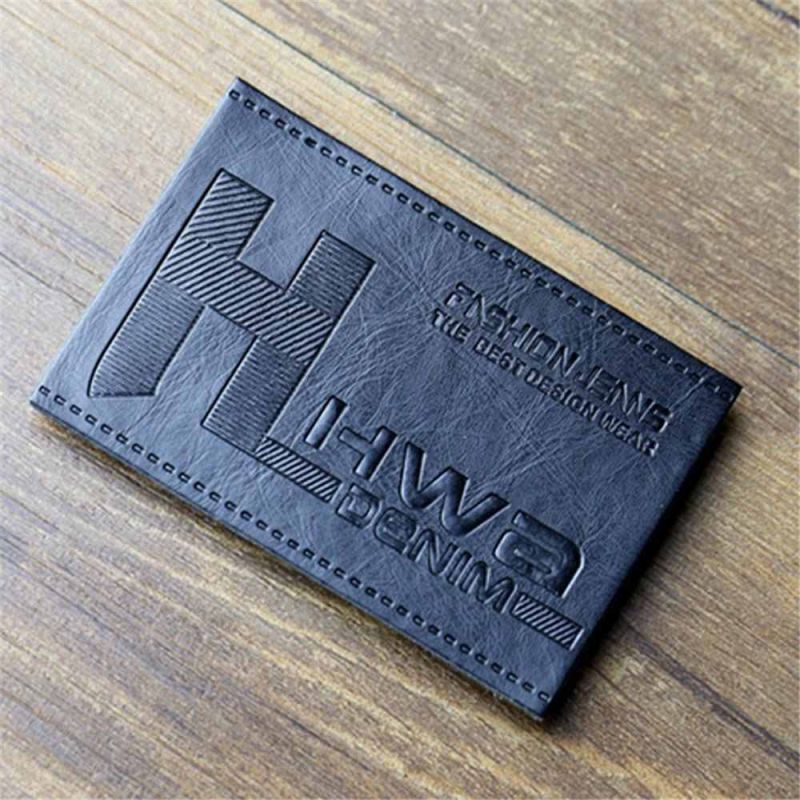
Leather Labels (Leather or PU Patch)
Leather labels are often used on jeans, knitted garments, hats, etc. They offer a professional, stylish, and rugged look. Materials include genuine leather, faux leather, and PU leather.
Types:
Genuine Leather: Made from real animal hide (cow, goat, sheep, etc.). Durable, breathable, and recyclable.
Faux Leather: PU leather with realistic texture, consistent look, and low maintenance.
Common Applications:
Jeans
Footwear
Hats
Belts
Bags
Wallets
Knitted items
Customization Techniques:
Embossing: Raised designs using heat and pressure.
Hot Stamping: Uses dies and foil to create metallic text or images.
UV Printing: Digital process that dries ink with UV light—durable and crack-resistant.
Options:
Shapes: Rectangle, circle, square etc.
MOQ: 4, 000 pieces (flexible)
Free Sampling: Yes (die charges may apply)
Note: Dark-dyed leather may bleed onto light fabrics.

Leather Labels (Leather or PU Patch)
Leather labels are often used on jeans, knitted garments, hats, etc. They offer a professional, stylish, and rugged look. Materials include genuine leather, faux leather, and PU leather.
Types:
Genuine Leather: Made from real animal hide (cow, goat, sheep, etc.). Durable, breathable, and recyclable.
Faux Leather: PU leather with realistic texture, consistent look, and low maintenance.
Common Applications:
Jeans
Footwear
Hats
Belts
Bags
Wallets
Knitted items
Customization Techniques:
Embossing: Raised designs using heat and pressure.
Hot Stamping: Uses dies and foil to create metallic text or images.
UV Printing: Digital process that dries ink with UV light—durable and crack-resistant.
Options:
Shapes: Rectangle, circle, square etc.
MOQ: 4, 000 pieces (flexible)
Free Sampling: Yes (die charges may apply)
Note: Dark-dyed leather may bleed onto light fabrics.

Leather Labels (Leather or PU Patch)
Leather labels are often used on jeans, knitted garments, hats, etc. They offer a professional, stylish, and rugged look. Materials include genuine leather, faux leather, and PU leather.
Types:
Genuine Leather: Made from real animal hide (cow, goat, sheep, etc.). Durable, breathable, and recyclable.
Faux Leather: PU leather with realistic texture, consistent look, and low maintenance.
Common Applications:
Jeans
Footwear
Hats
Belts
Bags
Wallets
Knitted items
Customization Techniques:
Embossing: Raised designs using heat and pressure.
Hot Stamping: Uses dies and foil to create metallic text or images.
UV Printing: Digital process that dries ink with UV light—durable and crack-resistant.
Options:
Shapes: Rectangle, circle, square etc.
MOQ: 4, 000 pieces (flexible)
Free Sampling: Yes (die charges may apply)
Note: Dark-dyed leather may bleed onto light fabrics.
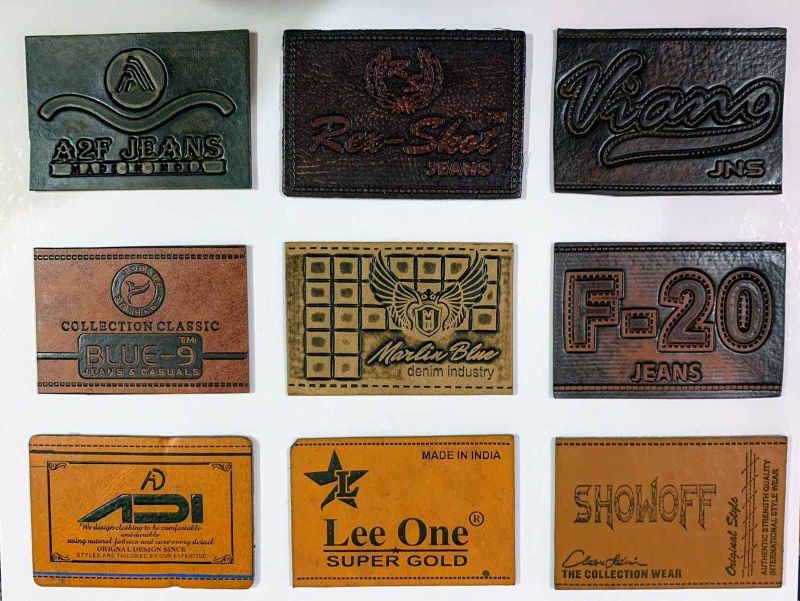
Leather Labels (Leather or PU Patch)
Leather labels are often used on jeans, knitted garments, hats, etc. They offer a professional, stylish, and rugged look. Materials include genuine leather, faux leather, and PU leather.
Types:
Genuine Leather: Made from real animal hide (cow, goat, sheep, etc.). Durable, breathable, and recyclable.
Faux Leather: PU leather with realistic texture, consistent look, and low maintenance.
Common Applications:
Jeans
Footwear
Hats
Belts
Bags
Wallets
Knitted items
Customization Techniques:
Embossing: Raised designs using heat and pressure.
Hot Stamping: Uses dies and foil to create metallic text or images.
UV Printing: Digital process that dries ink with UV light—durable and crack-resistant.
Options:
Shapes: Rectangle, circle, square etc.
MOQ: 4, 000 pieces (flexible)
Free Sampling: Yes (die charges may apply)
Note: Dark-dyed leather may bleed onto light fabrics.
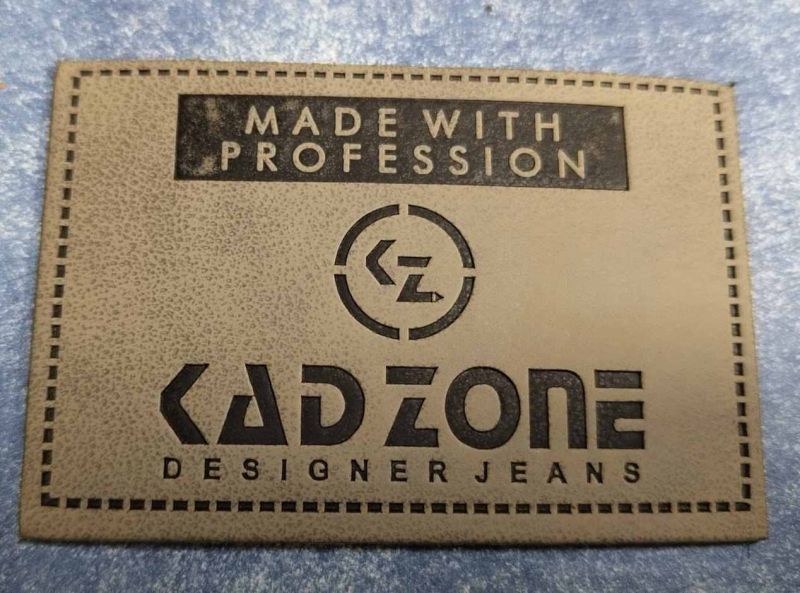
Leather Labels (Leather or PU Patch)
Leather labels are often used on jeans, knitted garments, hats, etc. They offer a professional, stylish, and rugged look. Materials include genuine leather, faux leather, and PU leather.
Types:
Genuine Leather: Made from real animal hide (cow, goat, sheep, etc.). Durable, breathable, and recyclable.
Faux Leather: PU leather with realistic texture, consistent look, and low maintenance.
Common Applications:
Jeans
Footwear
Hats
Belts
Bags
Wallets
Knitted items
Customization Techniques:
Embossing: Raised designs using heat and pressure.
Hot Stamping: Uses dies and foil to create metallic text or images.
UV Printing: Digital process that dries ink with UV light—durable and crack-resistant.
Options:
Shapes: Rectangle, circle, square etc.
MOQ: 4, 000 pieces (flexible)
Free Sampling: Yes (die charges may apply)
Note: Dark-dyed leather may bleed onto light fabrics.

Leather Labels (Leather or PU Patch)
Leather labels are often used on jeans, knitted garments, hats, etc. They offer a professional, stylish, and rugged look. Materials include genuine leather, faux leather, and PU leather.
Types:
Genuine Leather: Made from real animal hide (cow, goat, sheep, etc.). Durable, breathable, and recyclable.
Faux Leather: PU leather with realistic texture, consistent look, and low maintenance.
Common Applications:
Jeans
Footwear
Hats
Belts
Bags
Wallets
Knitted items
Customization Techniques:
Embossing: Raised designs using heat and pressure.
Hot Stamping: Uses dies and foil to create metallic text or images.
UV Printing: Digital process that dries ink with UV light—durable and crack-resistant.
Options:
Shapes: Rectangle, circle, square etc.
MOQ: 4, 000 pieces (flexible)
Free Sampling: Yes (die charges may apply)
Note: Dark-dyed leather may bleed onto light fabrics.
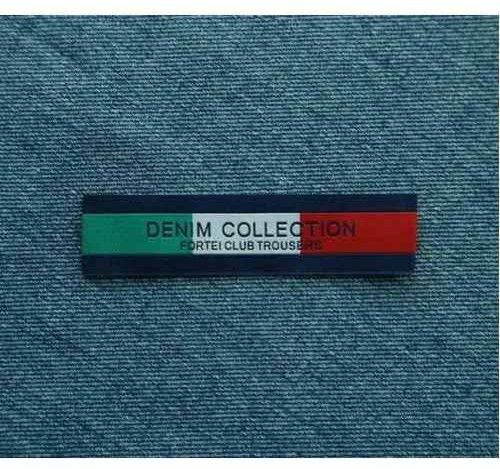
Woven Label
Woven labels are produced in a manner similar to weaving cloth: woven yarns on a loom to present your designs. As a result, the yarn determines its design and colour
Woven labels display your logo or message using more threads than embroidered ones. The woven label is flat in nature. However, to add to its professional appearance, You can create a high-sheen silk effect or a rich matte lustre. Woven labels are frequently used as fabric name labels, fabric logo labels, neck labels, etc. Fashion brands attach embroidered labels on the outside of an item.
Woven Label V/s Heat Transfer Labels
Feature
Woven Labels
Heat Transfer Labels
Price
Higher (Due to weaving process)
More Affordable
Colour
No Limitations
No Limitations (but fades with washing)
Materials : Damask, Satin, Taffeta, Cotton (Eco-friendly& Sustainable)
Plastic (Non- Biodegradable)
Usage : Main/Neck/Size Labels, Jeans Labels
Mostly Main labels
Durability : Long-Lasting
Prone to fading/scratching
Quality Luxurious
Requires more effort to look professional
Why use Woven Labels for branding?
Enhance product presentation
Communicate product information
Increase brand recognition
Provide a personal touch
Long–lasting life
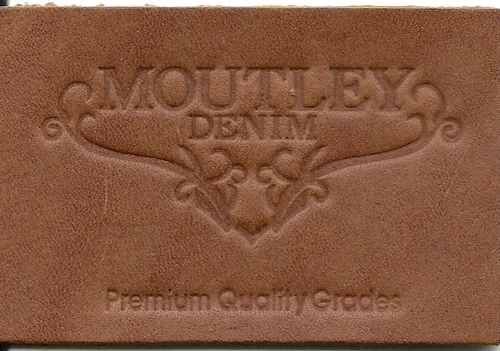
Leather Labels (Leather or PU Patch)
Leather labels are often used on jeans, knitted garments, hats, etc. They offer a professional, stylish, and rugged look. Materials include genuine leather, faux leather, and PU leather.
Types:
Genuine Leather: Made from real animal hide (cow, goat, sheep, etc.). Durable, breathable, and recyclable.
Faux Leather: PU leather with realistic texture, consistent look, and low maintenance.
Common Applications:
Jeans
Footwear
Hats
Belts
Bags
Wallets
Knitted items
Customization Techniques:
Embossing: Raised designs using heat and pressure.
Hot Stamping: Uses dies and foil to create metallic text or images.
UV Printing: Digital process that dries ink with UV light—durable and crack-resistant.
Options:
Shapes: Rectangle, circle, square etc.
MOQ: 4, 000 pieces (flexible)
Free Sampling: Yes (die charges may apply)
Note: Dark-dyed leather may bleed onto light fabrics.
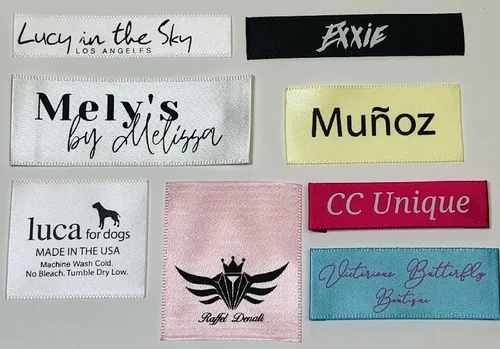
Woven Label
Woven labels are produced in a manner similar to weaving cloth: woven yarns on a loom to present your designs. As a result, the yarn determines its design and colour
Woven labels display your logo or message using more threads than embroidered ones. The woven label is flat in nature. However, to add to its professional appearance, You can create a high-sheen silk effect or a rich matte lustre. Woven labels are frequently used as fabric name labels, fabric logo labels, neck labels, etc. Fashion brands attach embroidered labels on the outside of an item.
Woven Label V/s Heat Transfer Labels
Feature
Woven Labels
Heat Transfer Labels
Price
Higher (Due to weaving process)
More Affordable
Colour
No Limitations
No Limitations (but fades with washing)
Materials : Damask, Satin, Taffeta, Cotton (Eco-friendly& Sustainable)
Plastic (Non- Biodegradable)
Usage : Main/Neck/Size Labels, Jeans Labels
Mostly Main labels
Durability : Long-Lasting
Prone to fading/scratching
Quality Luxurious
Requires more effort to look professional
Why use Woven Labels for branding?
Enhance product presentation
Communicate product information
Increase brand recognition
Provide a personal touch
Long–lasting life

What are paper labels?
Hang tags or swing tags are universal tools for brand labelling. Materials range from coated paper, specialty paper, kraft paper, recycled paper, paperboard, etc. Paper tags are small pieces of paper or cardboard attached to items for identification or labelling. These tags may include information such as product name, brand, price, size, or other relevant details. They are often attached to clothing, accessories, or other retail products to communicate essential information to customers.
Paper tags are also used for inventory management, tracking, and security purposes. The size and weight of paper tags enhance your brand’s appearance. Customers often evaluate your products based on the quality of your marketing material.
Standard Sizes:
– 1.375″ x 2.75″
– 1.624″ x 3.25″
– 1.875″ x 3.75″
– 2.125″ x 4.25″
– 2.375″ x 4.75″
– 2.625″ x 5.25″
– 2.875″ x 5.75″, etc.
Paper Qualities:
250gsm, 300gsm, 350gsm, 400gsm, 500gsm, 600gsm, 700gsm, 800gsm, etc. 300gsm to 400gsm paper is typically used for clothing hang tags.
Finishing Techniques:
Foil Stamping: Produces a shiny, metallic finish using heat and pressure.
Matte Lamination: A soft, muted plastic coating for a sophisticated look; often combined with spot UV for contrast.
Gloss Lamination: Adds a polished look and enhances reflectivity.
UV Spot Finish: Applied to specific areas to create visual emphasis.
Embossing/Debossing: Creates raised (embossed) or sunken (debossed) designs. Paper thickness affects quality.
Why Use Paper Tags for Branding?
In order to Enhance product presentation.
To communicate product information
To increase brand recognition
To provide a personal touch
Q&As:
Q: What is the best material for paper tags?
A: It depends on the desired look. Kraft paper is great for a rustic appeal, while glossy cardstock offers a premium finish.
Q: How can I make my paper tags stand out?
A: Use bold colours, unique shapes, custom finishes, and reflect your branding clearly.
Q: Are paper tags recyclable?
A: Yes, but check your local recycling guidelines.
Q: What’s the MOQ? A: 5, 000 pieces.
A: Flexible in certain cases—please contact us to discuss.
 Mr. Vivek Mehrotra (Shri Om Creation)
 Third Floor, Shop No 10 , 11 80/79, Super Hamraz Complex, Kanpur Nagar, Cooper Ganj, Uttar Pradesh - 208001, India
 https://www.shriomcreation.co.in
 Share us via