
 GST : 07AFEFS9829J1ZC
 4.5/5
4.5/5
Our Products
Our offered Product range includes Plain Epoxy Fiberglass Sheets and ESD Fiberglass Epoxy Sheet.
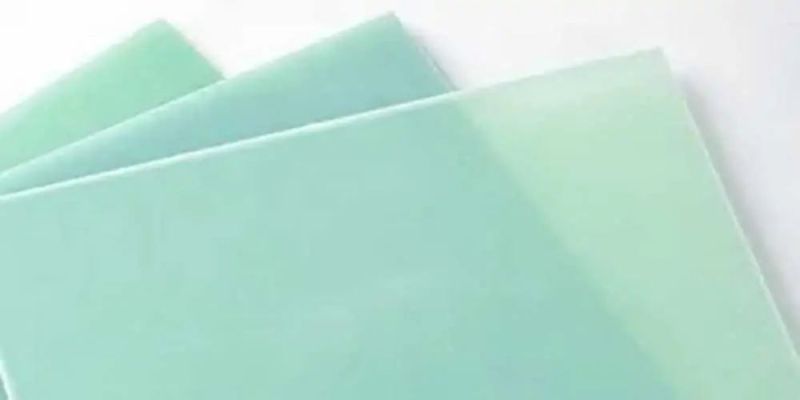
Epoxy fiberglass sheets have become an integral part of various industries due to their exceptional mechanical and electrical properties. These materials are widely used in applications that require high strength, durability, and resistance to harsh environments. This article discusses the different grades of fiberglass epoxy materials, their mechanical and electrical properties, and how they meet international standards such as NEMA, BS, DIN, and IEC.
GRADES OF FIBERGLASS EPOXY MATERIALSFiberglass epoxy materials are available in various grades, each offering unique properties suitable for specific applications. Some of the most common grades include:
G-10 Epoxy
– A high-strength, non-conductive material made from woven fiberglass cloth impregnated with epoxy resin.
– Known for its:
Excellent dielectric strength
Low moisture absorption
Resistance to chemicals and corrosion
– Commonly used in electrical insulation applications.
FR4 Epoxy
– A flame-retardant grade widely used in the electronics industry.
– Offers:
High mechanical and electrical strength
Low moisture absorption
Good thermal stability
– Commonly used in printed circuit boards (PCBs) and other electronic components.
G-11 Epoxy
– Similar to G-10, but with a higher glass content for greater mechanical strength and rigidity.
– Used in aerospace and automotive industries for structural components.
NEMA Grades
– Defined by the National Electrical Manufacturers Association (NEMA).
– Include grades such as:
GPO-1
GPO-2
GPO-3
GPO-4
– Each designed for specific electrical insulation applications based on mechanical and electrical requirements.
Fiberglass epoxy materials exhibit a combination of durability, strength, and electrical insulation, making them highly reliable across industries:
High Strength
– Excellent strength-to-weight ratio, ideal for lightweight, strong components.
Low Moisture Absorption
– Ensures stability of properties even in humid environments.
Chemical and Corrosion Resistance
– Resists most industrial chemicals and corrosive conditions, perfect for harsh environments.
Dielectric Strength
– Superior electrical insulation capabilities for high-voltage applications.
Thermal Stability
– Maintains mechanical and electrical integrity at elevated temperatures.
 Mr. Abhishek Jain (SK JAIN INSULATIONS)
 18/4625 Ansari road, Darya Ganj, Delhi - 110002, India
 https://www.insulationplastics.in
 Share us via