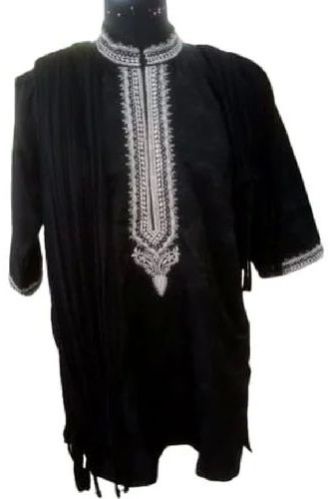
Men\'s wedding embroidered dress, often referred to as a Sherwani or Achkan in South Asian cultures, is a traditional and opulent garment worn for weddings and other formal occasions. Here are the key features and details that typically define such a dress:
\n
\n
Fabric
\n
\n- Luxurious Materials: Crafted from high-quality fabrics such as silk, brocade, velvet, or jacquard, which lend richness and elegance to the attire.
\n- Lining: Often lined with silk or satin for comfort and to enhance the structure of the garment.
\n
\n
\n
Embroidery
\n
\n- Intricate Designs: Features elaborate and detailed embroidery, often done with metallic threads (zari), silk threads (resham), or with embellishments like beads, sequins, and stones.
\n- Traditional Motifs: Embroidery motifs may include floral patterns, paisleys (buta), intricate geometric designs, or motifs inspired by Mughal art and architecture.
\n
\n
\n
Silhouette
\n
\n- Sherwani Style: Typically has a long, fitted coat-like silhouette that extends below the knees. It may feature a Nehru collar (mandarin collar) or a high collar with button closures.
\n- Achkan Style: Similar to the Sherwani but with a shorter length, often worn with churidar pants.
\n
\n
\n
Accessories
\n
\n- Dupatta: Sometimes paired with a matching or contrasting dupatta (scarf) draped over one shoulder, adding to the regal appearance.
\n- Turban: Worn as a headpiece, often matching the outfit\'s fabric and embroidery, sometimes embellished with jewels or brooches.
\n- Footwear: Traditional footwear such as mojari (embroidered leather shoes) or khussa (embellished slip-on shoes) complete the ensemble.
\n
\n
\n
Color Palette
\n
\n- Rich Colors: Common colors include shades of red, maroon, gold, ivory, royal blue, and green, chosen for their symbolic significance and aesthetic appeal in South Asian weddings.
\n
\n
\n
Occasions
\n
\n- Weddings: Primarily worn by grooms at their wedding ceremonies and receptions, as well as by family members and close relatives.
\n- Formal Events: Suitable for formal gatherings, receptions, and cultural celebrations where traditional attire is preferred.
\n

 GST : 27AJRPA4564H1Z0
 4.3/5
4.3/5
 Ms. Sudha Radhakrishna Acharya (Sudhhz)
 5A/1, Nityanand Baug CHS Ltd., Mahul Road, Chembur, Vashi, Navi Mumbai, Maharashtra - 400074, India
 https://www.sudhhz.in
 Share us via