 Write a Review
Our Products
Our product range contains a wide range of Atmospheric Test Chambers and Vacuum Test Chambers
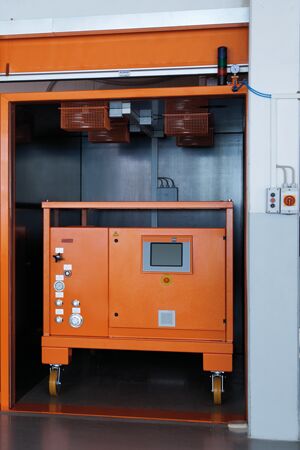
With atmospheric test chambers it is not necessary to evacuate air before the test process. Test chambers of this construction type can be manufactured at significantly lower cost with a significantly larger volume than vacuum chambers.
We build these chambers with a chamber volume of up to 50 m as standard. This allows for reliable testing of even larger units and assemblies. However, we also recommend atmospheric testing when delicate, vacuum-sensitive components such as devices with touch screens need to be tested for their leak tightness.
This system configuration also allows the filling of the test objects with SF6 gas in the test chamber and subsequent recovery of the gas. However, with atmospheric pressure, the test duration is on average 10 - 30 times longer as the increase in concentration for atmospheric pressure is significantly lower.
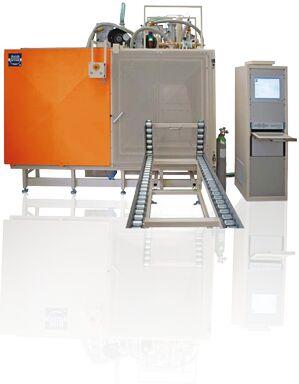
This model range with a chamber volume of approx. 50 - 500 l is the ideal solution for testing smaller components where gas handling can take place outside the test chamber.
Vacuum testing of larger components (with or without integrated gas handling)We manufacture systems of this model range with a chamber volume of 500 l to approx. 20, 000 l. We recommend this model range where larger components need to be tested or where integrated gas handling in the test chamber is required. In this case, the test objects are filled with SF6 in the chamber.
Gradual evacuation and filling of the test objects is also possible in order to avoid an inadmissible differential pressure between the test object and chamber.
When testing SF6-filled control system components, SF6 can remain in the test object after testing. This makes the SF6 test method an interesting alternative to the known helium leak test in the field of GIS production as it is not necessary to recover the test gas from the test chamber after completion of the test process. As a consequence, the SF6 test method has a shorter handling time per test unit.
 Super Phoenix (super phoenix)
 Office No 510, 5th Floor ATL Corporate Park, L&T Gate No 7 Saki Vihar Road, Powai , ., Mumbai, Maharashtra, India
 Share us via








