Write a Review
Our Products
Our offered Product range includes Cap Sealing Wads, Sealing Wads, House Induction Sealing Wads and Induction Sealing Wads.
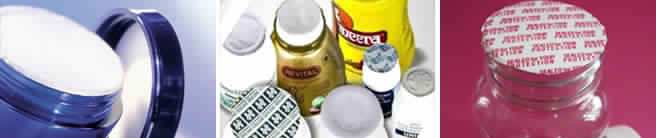
In this type, the cap or closure for the container is separate from the induction sealing wad which is inserted into it. There are various kinds of wads and all are normally multi-layered. Broadly they can be categorized as :
Single Piece Sealing Wadsare fitted into cap of the containers and screwed around the container mouth. These capped-containers are made to pass the induction heat sealer. With the threaded cap upon bottle providing required pressure, as sealing layer cools, it adheres to bottle and provides for a perfect sealed surface.
Two piece sealing wadsnormally consists of a uppermost layer ofpaperboard (that maybe glued to the cap). The next layer is wax that is used to bond a layer of aluminum foil to the paperboard. The lowermost layer is a polymer film laminated to the foil. After the cap or closure is screwed to the container , the container is passed under aninduction coil, which emits an oscillating electromagnetic field. The induction coil begins to heat-up the conductivealuminum foil. The heat melts the wax, which gets absorbed into the paperboard layer and the foil is released from the cap. The polymer film also heats and flows onto the lip of the container. After cooling, the polymer creates a bond with the container resulting in an airtight sealed product. Two piece sealing wads are used for leaving some type of secondary seal in cap so as to prevent leakage when induction seal is removed from the mouth of the container.
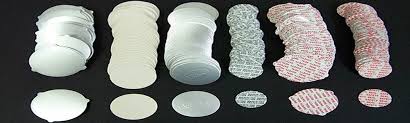
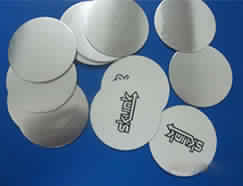
Induction sealing wads are used to seal containers and protect their contents from deterioration or contamination due to access of air, moisture or any other undesirable impurity to the contents of the container. Induction sealing wads also prevent tampering or adulteration as it is not possible to remove and re-apply the wads without leaving noticeable evidence.
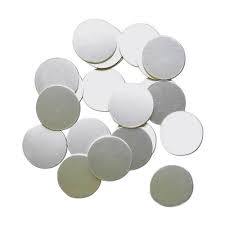
After the containers have been filled and capped, an induction current is created and passed through a conducting aluminium foil disc, present in the induction sealing wad, heating it up. The Aluminum disc has a layer of polymer film laminated to it, which melts, and sticks to the mouth of plasticorglasscontainers to give them airtight seal. The process takes a few seconds to complete and neither the container nor its contents have to cope with any temperature changes and remain unaffected. There are two types of Induction Sealing Wads :
 Mr. Anuj Jain (Swift Enterprises (p) Limited)
 23/4742, Ansari Road, Darya Ganj, New Delhi, New Delhi, Delhi - 1100012, India
 Share us via