 GST : 24BEYPS7834B1Z0
 5.0/5
5.0/5
Our Products
Our Complete range of products are HCl Gas Generation Plant and Hydrochloride Gas Absorption Plant.
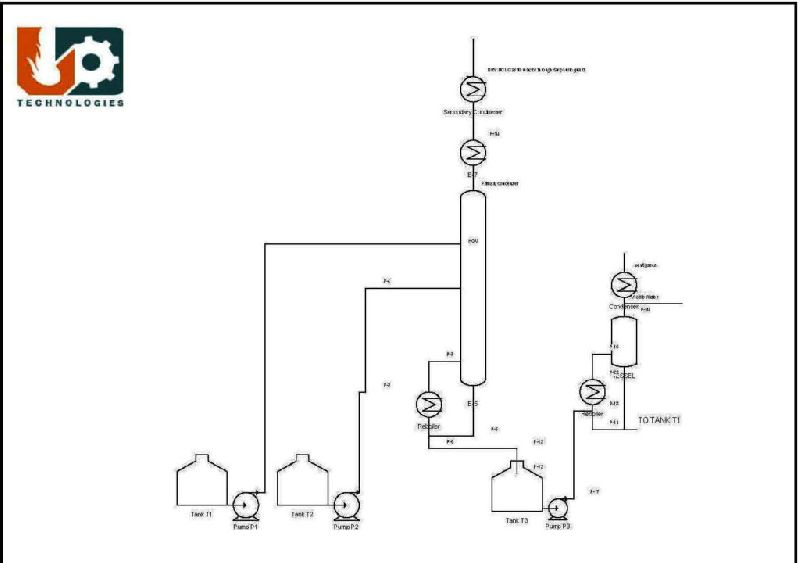
HCl Hydrochloride Gas Generator-Calcium Chloride Route
Method Of Hcl Gas Generator CaCl2 RouteSeveral methods have been adopted by industries for HCL Gas Generator. But generation by Sulphuric Acid Route and Boiling Route are commonly practiced. We offer Calcium Chloride Route for HCL Gas Generator.Hydrochloric acid and water form a maximum boiling point azeotrope at 11OC corresponding to a concentration of 20.24%; HCl. By adding concentrated CaCl2 solution to commercial hydrochloric acid; azeotrope point is eliminated and. the entire HCl becomes available for liberation by distillation.Anhydrous HCl gas generation through Calcium Chloride Route is the most environmental friendly technique.
Process DescriptionThe above principle- is achieved in practice by feeding metered quantities of commercial HCl and CaCl2 -solution to a stripping column with a steam heated re-boiler at the bottom. The effluent from the bottom of the column is a dilute acidic calcium chloride solution which is concentrated to desired Concentration in a evaporator and re-used. The vapor leaving is condensed stage wise with cooling water and chilled brine as a coolant. The relatively dry gas passes through a mist eliminator and to the point of consumption.
Salient Features
HCL Gas generation by Boiling Route
HCL Gas generation by Sulfuric Acid route
Hydrogen chloride is produced as a by-product or waste gas by a variety of processes like chlorination of Organic chemicals within the process industries. In many countries there are strict maximum emission levels for hydrogen chloride which mean that it must be removed from waste gas streams. This may be done simply by scrubbing it out of the waste gas, or where the quantities are large enough, by absorbing it to produce a hydrochloric acid product.
Hydrogen chloride has a great affinity for water and the absorption can be easily accomplished as long as a suitable method is found to contact the gas and the water. The absorption of hydrogen chloride into water causes a great deal of heat to be evolved which has to be removed from the system. The theoretical maximum concentration achievable is dependent on the temperature and the partial pressure of HCI in the exhaust gas entering the plant.
The most appropriate HCI absorption process for any particular application depends on the nature of the feedstock and on the product required. The three basic types are batch-wise operated HCI scrubbers or continuously operated adiabatic and isothermal absorbers.
Hydrogen chloride and hydrochloric acid are very corrosive materials and will attack many materials of construction commonly used in the chemical process industries. Borosilicate glass is the ideal material of construction, being suitable for handling hydrogen chloride gas, hydrochloric acid, and any impurities present with the exception of hydrofluoric acidHydrogen chloride eventually generated in reaction along with SO2, Unreacted chlorine or organic vapors.T o absorb Hydrogen chloride with such additional chemicals, need s different designs and required expertise
The Adiabatic absorber is the simplest form of HCl absorber, which can be operated continuously. Under the normal operating procedure, Adiabatic Hydrogen Chloride Absorber produces 30 % HCl. Adiabatic Absorber is a vertically mounted Packed Column. The standard configuration of the adiabatic absorber consists of a suitable Glass Packed Column with internals, coil type condenser & cooler with the necessary drain outlet for the acid. The Hydrogen Chloride Gas enters at the bottom of the column & Water flows from the top of the column & flows down through the column.
Heat generated by the dilution of Hydrochloric acid gas with water. It vaporizes @30% water and other non-soluble components of the gas stream. Condensed stream together with make up water is returned to the packed tower and discharged from the bottom of the column after cooling by cooling water.
Falling Film Absorber Capacity:10 Kg/hr to 900 Kg/Hr Incoming 100%HCl gas Process Description Hydrogen Chloride gas is produced from the variety of process industries & mainly from chlorination operation. This must be scrubbed before venting to the atmosphere. Hydrogen chloride has a great affinity of water and easily absorbed in water. The absorption of Hydrogen Chloride gas in to water cause large amount of heat, due to exothermicity which has to be removed by means of suitable device. The remaining un-absorbed gas along with other inserts from the bottom of the absorber is entering in to Secondary Process water is circulated through Secondary Scrubber to absorb the HCl gas and form dilute acid. The advantage of providing Tail Scrubber is to get scrubbed Unscubbed 5% gases. This dilute acid is circulated through Falling Film Absorber to absorb HCl gas as explained above.
Salient Features : High absorption efficiency. High acid concentration achievable. Safe Operation due to low isothermal temperature. Handle a wide range of gas loading with minimum liquid flow rates to maintain full tube wetting. Variation in Hydrogen Chloride Gas flow rates or Composition causes no operation problem.
 Mr. Samir Shah (UD Technologies)
 D-102, Sun City Exoticarn, Manjalpur, Vadodara, Gujarat - 390011, India
 Share us via