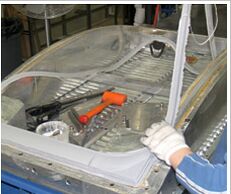
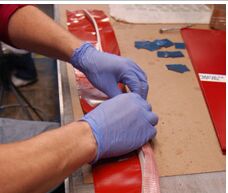
Cascade Gasket assisted in the design and then manufactured this flight critical exit door seal for a commercial aircraft. The seal effectively blocks both air and water from the aircrafts interior, in flight and while grounded, and is composed of three materials: BMS 1-57 silicone rubber, D2000 inter-weave fabric, and inconel metal inserts at the top of the seal. Although rubber compression molding was the primary manufacturing process, several steps were involved in creating the door seal. First, the inconel metal inserts were pre-fabricated and coated, in preparation for receiving the rubber and fabric. Next, the part was hand formed and laid in the mold in four separate sections, blending together only at areas indicated by the print design. The mold was then placed under extreme heat and pressure for 4 hours, allowing the rubber to flow and fill the mold, assuming the shape of the final component, with a final tolerance of +- 0- .030. After the molding was complete, the part was cleaned and placed in an oven for 3 hours at 350 degrees Fahrenheit, to set the shape and cure the rubber. The final process involved the addition of a secondary seal, applied on the header section of the seal, for extended sealing and management of the product. The final exit door seal is both air and water tight, and measures 48 long by 27 wide.
 Write a Review
 Abdul Shamdeen (cascade gasket & Mnfg. co.)
 kent, washington, usa
 Share us via