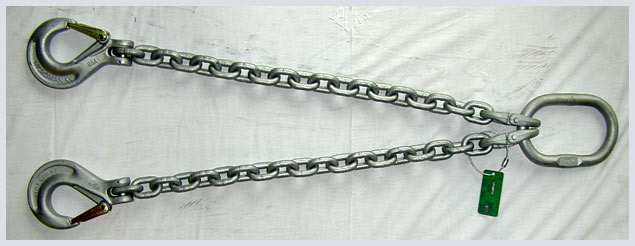
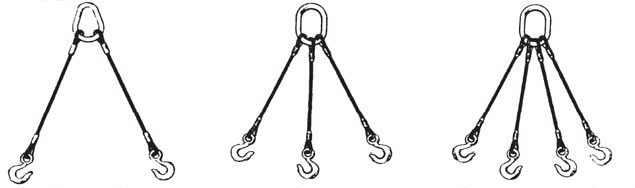
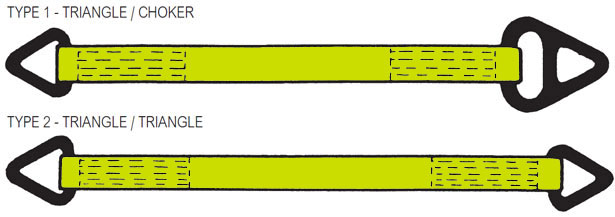
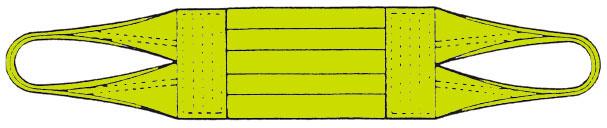
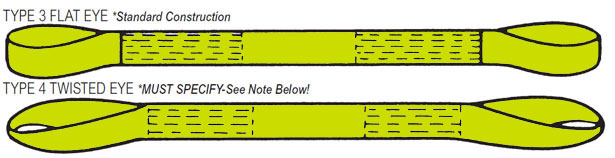
Leading Manufacturer, Supplier & Retailer of Eye & Eye Round Slings, Alloy Chain Slings, Multi-Leg Wire Rope Slings, One Leg Eye and Eye Wire Rope Slings and Reversed Eye Web Slings.
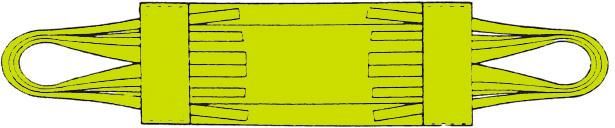
Fabricated with the same inherent features as our polyester Viking roundsling! ID CODE COLOR OF EYES RATED CAPACITY IN POUNDSVERTICAL RATED CAPACITY IN POUNDSCHOKER RATED CAPACITY IN POUNDSBASKET EYE LENGTH APPROX WEIGHT PER FTVEE1 Purple 2600 2100 5200 10 .26VEE2 Green 5300 4200 10600 10 .37VEE3 Yellow 8400 6700 16800 12 .52VEE4 Tan 10600 8500 21200 12 .62VEE5 Red 13200 10600 26400 14 .83VEE6 Orange 16800 13400 33600 16 .98VEE7 Blue 21200 17000 42400 16 1.50
Environmental Data All chain slings are with a corrosion protective finish.Heat resistance up to 550 F (without changing properties)Do not use below -40 FGrades of Chain Grade 80 Alloy = Industry Standard for General UseGrade 100 Alloy = 25% More Work Load LimitsGrade 50 = Stainless Steel for Corrosive Applications
Single Line (SL) and Double Line (DL) slings are constructed with a high tenacity nylon inner core providing ultra strengths, combined with an external integrated outside cordura jacket which provides superior abrasion resistance. Two web strengths with a permanent single black line or a double black line woven in the webbing further provides additional choice of capacity! Single Line is equal to 1000 lbs per inch of width and Double Line is equal to 2000 lbs per inch of width! Example: 2 Single Line (1000 lbs per inch) equals 2000 lbs vertical lift.2 Double Line (2000 lbs per inch) equals 4000 lbs vertical lift. For more details see chart below.Special Features: Eliminates the need for two ply constructionOffers over 30% more strength than competitors single ply slingsEasy identification of ratings with single and double linesInsures unique protection from abrasion
Work load limits will be reduced when less than 90 degrees from horizontal. (See Efficiency Chart) Angles of less than 30 degrees are not to be used. Inspect before use. Additional requirements and safe operating practices are outlined in current OSHA, Federal Register Part 29, 1910.184 and ASME B30.9 c-2013. Death or injury can occur from improper use or maintenance!