
 Okhla, Nevada, United States
 Write a Review
Our Products
Our Complete range of products are Wheat Seeds and Barley Seeds.
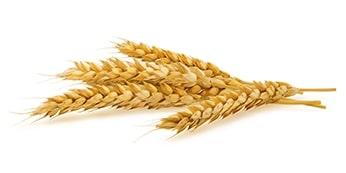
Wheat, any of several species of cereal grasses of the genus Triticum and their edible grains. Wheat is one of the oldest and most important of the cereal crops. Of the thousands of varieties known, the most important are common wheat (Triticum aestivum), used to make bread; durum wheat (T. durum), used in making pasta (alimentary pastes) such as spaghetti and macaroni; and club wheat (T. compactum), a softer type, used for cake, crackers, cookies, pastries, and flours. Additionally, some wheat is used by industry for the production of starch, paste, malt, dextrose, gluten, alcohol, and other products. For treatment of the cultivation of wheat, see cereal farming. For the processing of wheat grain, see cereal processing. The wheat plant has long slender leaves and stems that are hollow in most varieties. The inflorescences are composed of varying numbers of minute flowers, ranging from 20 to 100. The flowers are borne in groups of two to six in structures known as spikelets, which later serve to house the subsequent two or three grains produced by the flowers. Though grown under a wide range of climates and soils, wheat is best adapted to temperate regions with rainfall between 30 and 90 cm (12 and 36 inches). Winter and spring wheat are the two major types of the crop, with the severity of the winter determining whether a winter or spring type is cultivated. Winter wheat is always sown in the fall; spring wheat is generally sown in the spring but can be sown in the fall where winters are mild.
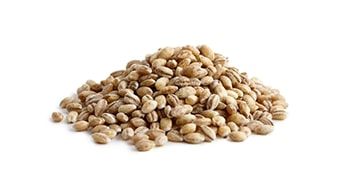
Barley , a member of the grass family, is a major cereal grain grown in temperate climates globally. It was one of the first cultivated grains, particularly in Eurasia as early as 10, 000 years ago. Barley has been used as animal fodder, as a source of fermentable material for beer and certain distilled beverages, and as a component of various health foods. It is used in soups and stews, and in barley bread of various cultures. Barley grains are commonly made into malt in a traditional and ancient method of preparation. In 2017, barley was ranked fourth among grains in quantity produced (149 million tonnes ) behind maize, rice and wheat. Barley was one of the first domesticated grains in the Fertile Crescent, an area of relatively abundant water in Western Asia, and near the Nile river of northeast Africa. The grain appeared in the same time as einkorn and emmer wheat. Wild barley ranges from North Africa and Crete in the west, to Tibet in the east. According to some scholars, the earliest evidenceof wild barley in an archaeological context comes from the Epipaleolithic at Ohalo II at the southern end of the Sea of Galilee. The remains were dated to about 8500 BCE.
 Mr. Greg Erickson (Global Commodity Finders Group, LLC)5605 Riggins Court Suite 200, Reno, Okhla, Nevada - 89502, United States
 Share us via