Write a Review
Our Product / Services
We offer a complete product range of Sal Seed DOC, Cassia Tora Meal, Rape Seed Meal, Sunflower Meal and Packagings
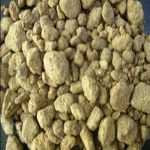
Rapeseed meal
· Rapeseed meal (Canola Meal) is used basically in animal feed due to its protein content of 36-38%.
· Producers: China, India, Canada, European Union-27 and Japan are the other major producers of rapeseed - canola meal.
· Exporters: Canada is the world's largest exporter having market share of around 50% in world trade followed by India and China.
· Major Markets: United States is the biggest importer of Canadian canola meal. Mexico, Ireland, Taiwan, Indonesia, Thailand, China and Vietnam are the other buyers for Canadian meal. Bangladesh, South Korea, China, Malaysia, Philippines, Taiwan, Indonesia, Japan, Singapore, Thailand and Vietnam are the main buyers for Indian rapeseed meal.
· Futures: Rapeseed or Canola meal is not traded on any exchange in world. Traders and Exporters looking to hedge their risks have to use canola and rapeseed futures.
· European Union : E.U. is the biggest consumer of rapeseed meal in world. The EU-27 is already using considerable amounts of rapeseed meal in animal feed, however, there is still room for further expansion. The extent to which rapeseed meal can replace soybean meal and other protein sources in animal feed depends on the animal species and production stage. The potential share of rapeseed meal is highest in dairy cattle feed and lowest in feed for calves and laying hens. The popularity of rapeseed meal for animal feed varies among EU Member State. Its use is most pronounced in MS that have a long rapeseed crushing history and a high dairy production. For years the oilseeds industry in these MS has been engaged in educational campaigns that promote the benefits of rapeseed meal in animal production. In these countries the potential to further expand the rapeseed meal share in feed rations is somewhat limited. Countries that fall in this category include Germany, France, the Benelux, and the UK. In other MS, namely in the South-Eastern part of the EU, farmers’ reservation about this ingredient are only slowly diminishing and rapeseed meal use is gradually increasing. It may take a couple of years until these countries reach levels comparable to those of more traditional users. In Poland the Association of Feed Producers, the Federation of Cattle Breeders and Milk Producers, and the Association of Swine Breeders and Producers 'POLSUS " have announced a campaign to build awareness of the value of rapeseed meal and cake under the banner "Rapeseed meal - a valuable source of protein and energy”.
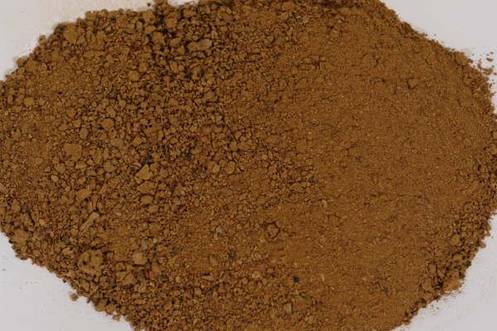
Sal DOC contains 10-12 per cent protein and about 50 per cent starch and can be used as cattle and poultry feed. Starch could be isolated from Sal Meal and used in various industries. Sal meal also contains 14% tannin consequently not more than 3% for chicks and 10% for laying hens and cattle is used in compound feeds. The detanning of Sal meal will provide tannins for leather industry which are presently imported as well as deoiled sal meal can be incorporated in cattle and poultry feed in large proportions.
The Sal seed has about 12%-14% oil which is extracted. the protein content are low in Sal seed extraction at 9%-10%, but it has good levels of lysine and imthionine in its essential amino acid profile. Sal seed extraction contains 6%-10% trannin and it is grouped amongst starchy feed, as its carbohydrate content is about 70% that contributes to the feed energy.The Sal seed extraction can be beneficially used to decrease the ruminal degradation of other proteins is the compound feed in order to increase their biological value for ruminants and is preferred for use in cow feed.The extraction is low cost material and is abundantly available. it is generally used as livestock feed ingredient for dairy cattle and poultry in India and foreign countries to prepare formulated feed.
A. NORMAL SPECIFICATIONS1. Oil & Albumin ( O +A ) : 9.0% - 10.0% min2. Sand/ Sillica : 2.0% - 2.5% max.3. Fiber : 5.0% min.4. Castor : nil5. Moisture : 10.0% - 11.0% max.6. Ash : 4.5% max.7.- Carbonhidrats : 60.0% - 70.0% max.
B. NUTRIENTS1. Dry Matter : 90.0%2. Total Crude Protein CP : 9.0% - 10.0% min.3. Digestible Crude Protein DCP : ------4. Total Digestible Nutrient TDN : 41.0%
C. ESSENTIAL AMINO ACIDSa) Lys : 0.42%b) Met : 0.11%c) Cyst : 0.1%d) Thr : 0.32%e)Tryip :----------
1. Ca : 0.1%2. p : 0.2%
D. METABOLISABLE ENERGY1. cattle : 1483 k/cal2. poultry : 1808 k/cal
E. CALLARIFIC VALUE3000 to 3500 k/cal
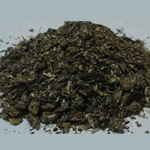
Sunflower meal is obtained by crushing its seeds for oil and oilcake which is further sent for extraction to obtain remaining oil and its meal. Sunflower seed is popular as bird seeds. But with the growth in consumption of sunflower oil, it is mainly crushed for obtaining edible oil so the production of meal too is good enough to create local and some international demand. Sunflower meal is widely used as protein material for animal feed. Meal contains about 30% crude protein with 30% fibre. It is superior to most vegetable proteins in digestibility.
Sunflower seed extractions are widely used as protein material for animal feed. Indian sunflower seed extractions contain about 30% crude protein with 30% fibre. Although sunflower protein is low in lysine, methionime & cystine levels are favourable to meet poultry feed requirements. It is superior to most vegetable proteins in digestibility. Recent development of various enzyme preparations, which can act upon fibre in sunflower meal, making it more digestible, can result in an economical substitute for various protein sources. Thus it can be used at higher levels in the poultry feed.
SUNFLOWER MEAL PROTEIN 28% MIN. MOISTURE 10% MAX. FIBER 30% MAX. S & S 2.5% MAX.
Sunflower Seed, Meal & Oil World MarketThe estimated sunflower seed export for 2009-10 from Argentina was 55000 tonnes while for sunflower meal it stood at 600000 tons and for sunflower oil at 800000 tons. There is export tax of 32% on export of seed from Argentina while it is 30% for sunflower oil and meal.
Russian exports for 2009-10 for sunflower meal is estimated at 900000 tons while for oil it is 600000 tons and for seed 50000 tons. Kazakhstan is the major buyer for Russian sunflower seeds while Italy, Turkey, Spain, Latvia, Cyprus, Egypt and Morocco are major importers of its meal. Turkey, Kazakhstan, Egypt & India are the major buyers of sunflower oil of Russia. The export duty on sunflowerseeds is 20 percent of customs value, but not less than 30 Euros per metric ton while export meal & oil is duty free.
Sunflower seed exports of Ukraine are estimated at 400, 000 tons in the 2009/2010 while oil export is estimated at 2.1 million tons and meal export at 1.75 million tonnes. India, Turkey, Egypt, United Kingdom, Netherlands, France, Algeria, Iran, Spain & Italy are major importers of Ukraine's sunflower oil. For sunflower seed, EU countries (France, Spain, Netherlands, Poland, Italy, Germany), Pakistan, Turkey & Georgia are the major destination. Ukrainian sunflower meal is mainly exported to Poland, Belarus, Latvia, Israel, Turkey, Morocco, France, Lithuania, Italy and United Kingdom. Export duty for sunflower seed have decreased to 12% as of January 1, 2010 and in next two years it shall get reduced to 10%.
Major destinaions for Indian sunflower seeds are Pakistan, U.K, China, Netherlands, Philippines & Poland. The export of Indian Sunflower meal is very limited as compared soybean meal and rapeseed meal with Thailand being the major buyer. India imports sunflower oil mainly from Ukraine, Russia and Argentina. Indian import for 2009-10 is estimated at 600000 tons.
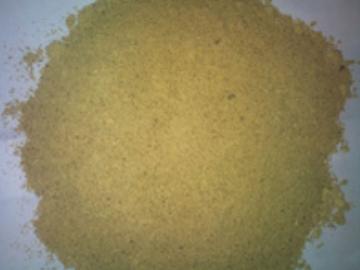
Cassia Tora meal is 100% Natural, Organic, Non GMO product for manufacturing for Cattle feeds, Animal feeds, Aqua Feeds, Horse feeds, Poultry Feeds Etc.It is Worldwide approved product.Cassia Tora meal is a by-product formed during processing of Cassia Tora seeds into Cassia Tora Splits.The extracted Cassia Tora meal is further processed by toasting at a high temperature to remove Trypsin Inhibitor, thus improving its nutritive value.
Cassia Tora Meal is rich in proteins and carbohydrates, and is a 100 percent natural agricultural product without the addition of any chemicals or preservatives. Processed Cassia Tora meal can be used either in conjunction with other feed stuffs or by itself, as it is a complete nutritional feed
|
CASSIA TORA MEAL |
|
| Crude Proteins | 30-32 % |
| Oil | 8-9 % |
| Moisture | 3-4 % |
| Metabolic Energy | 2500 Kcal/Kg |
| Sand & Silica | 0-1 % |
| Crude Fibers | 12-13 % |
| Ash | 4-5% |
 Manohar Jindal (Anuj Trade Links)
 41, Manish Bagh Colony, Navlakha, Indore, Madhya Pradesh - 452001
 Share us via