Write a Review
Our Products
Our Complete range of products are Valve Guides and Control Valves.
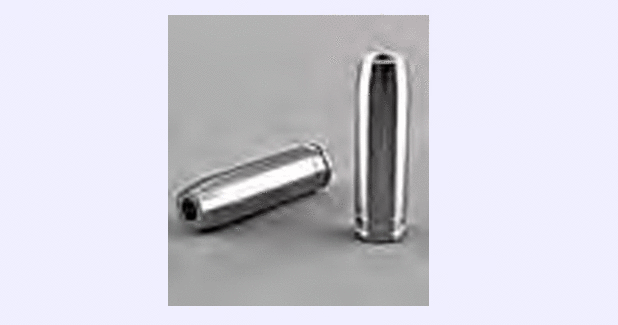
Pral Exports offers valve guides. In most types of piston engines, a valve guide is provided for each engine valve in the cylinder head. Along with the valve spring, it serves to positively locate the valve so that it may make proper contact with the valve seat. A valve guide is a tube-shaped piece of metal, pressed into the cylinder head, with the valve reciprocating inside it. Guides serve also to conduct heat from the combustion process out from the exhaust valve and into the cylinder head where it may be taken up by the cooling system. Usually valve guides are made up of different materials as per their requirements in specific applications. Cast iron is used for small engines. Tin bronze, aluminium bronze and other alloys such as manganese bronze and leaded phosphor bronze are used to manufacture valve guides. These materials provide good thermal conductivity. Crystallisation process makes guides wear resistant.
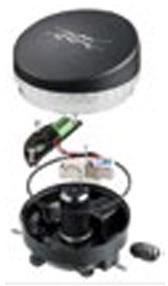
Alfa Laval ThinkTop D30 is an easy-to-install integrated control unit for hygienic applications. This offers an affordable and cost-effective alternative to conventional valve monitoring and control solutions. Installation and setup is quick and easy, which eliminates fault handling during commissioning and production. It is designed to meet the market challenges for even more usability and hassle-free control of automated valves. Simply position the unit directly on top of the valve actuator, connect the air and then connect the cable to the PLC system. No special expertise, adapters or tools are required as well as no need to adjust the feedback position at regular intervals. ThinkTop D30 detects loss of air pressure, which is one of the most common types of process failures. It withstands the effects of physical impact, vibration, water hammer, thermal variation and pressure shock. ThinkTop D30 is both watertight and IP66/IP67-compliant, so it prevents condensation as well as stops dust, water and other particles from penetrating into the control head. This also means the control head can be hosed down with water or cleaning liquid without affecting its operation. This ensures maximum hygiene and effectively eliminates problems associated with corrosion and external contamination.
 Sandeep Rangroo (ASAPP Info Global Services Pvt Ltd.)
 A-303, Navabharat Estates, Zakaria Bunder Road, Sewri (West), Mumbai, Maharashtra - 400015, India
 Share us via