Write a Review
Our Products
We offer the best product range of Column Components.
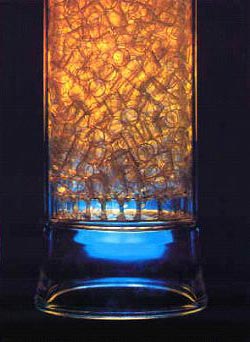
Our company has carved a niche as the Manufacturer, Supplier and Exporter of Column Components from Mumbai, Maharashtra. Fabricated using advanced machinery and accurate molds, our Column Components are preferred by various research establishments. Clients from all over the world can order bulk quantities of Column Components from us at affordable rates.
Introduction
Like their pipeline counterparts, Borosilicate glass column components find universal application throughout the world’s chemical, pharmaceutical, food and drink and allied industries where the advantage of using glass as a basis for the construction of complete process systems have long been recognized:
In many unit operations such as reaction, extraction and absorption, the transparency factor of glass column components is a particular advantage. As an example, color changes in reaction processes are easily monitored, droplet separation in extraction processes can be observed unhindered and constant visual monitoring of hydraulic performance in packed columns is possible.
Column components are available from DN 80 to DN 450 with a smaller range of precision bore components available from DN 25 to DN 150 for specific applications where close internal tolerances are essential.
The complete range of column components is described on the following pages. All column components have standard flat buttress end connections. Further details of theses are provided in section: Technical Information.
For standard flat buttress end connections from DN25 to DN300, it is possible to achieve a 3° deflection in the joint by using a flexible gasket. Details of these and all other couplings and gasket can be found in section Couplings.
DN refers to the nominal bore. Unless otherwise stated all dimensions are given in mm.
For permissible operating conditions, unless otherwise stated in the individual description, please see section Technical Information.
Applications of internalsColumns used for absorption and extraction processes can be fitted with many different internals such as packed beds, structured packing and sieve or bubble-cap trays. The typical operating characteristics, as well as the recommended and possible areas of application for each of these internals, are detailed in this section: the processes being limited to gas/liquid operation in the form of rectification and absorption processes.
Packed beds or structure packing are used to create the surface required for mass transfer by increasing the area of contact at the surface of the liquid when it flows over the internals as a film. Irregular packed beds have a relatively high-pressure drop. Figure 1 shows the pressure drop for ceramic saddles. A very significant reduction in pressure drop, particularly in regard to vacuum rectification, can be achieved by the introduction of structured packing. Figure 2, for example shows the pressure drop values for SULZERKERAPAK. A clear reduction in pressure drop is discernible here.
Applications of internals
In plate columns the boundary surface for mass transfer is created by the liquid phase flowing across the trays being penetrated by the gas or vapour rising from the plate below. The main distinctions here are between bubble cap trays and sieve trays. Plate columns have higher-pressure drop then packed columns. To illustrate this, Figure 3 on the previous page shows the pressure drop of the buyer low-rise tray. The pressure drop of the tray is about the same as for 1 meter packing of 25mm ceramic saddles.
The suitability of internals to a particular process is really determined by the process conditions in each case. If a low-pressure drop is required, then structured packing are the main ones to choose. In all other cases the permissible operating range of the various internals for a particular application is the determining factor. Packed and plate columns have different operating ranges as a result of the different type of boundary surface creation. The terms operating range here refers to the range of gas and liquid flows within which problem-free operating of the column is possible.
Figure 4 shows typicall load characteristics of a packed column with the operating range shaded. This is mainly limited by the so-called upper load limit, designated by flooding, against higher flow. The lower load limit designated by minimum wetting stems from the requirements that the packing has to have an even film of liquid to achieve the desired separation. It can also be seen from Figure 4 that it is possible to individual cases, however, the achievable separation effect should be checked.
Plate columns have different operating characteristics. As the load characteristics in Figure 5 show, several factors limiting the operating range have to be taken into consideration with this design. It must be emphasized in particular that turndown of the liquid load is much greater for the plate column.
 Mr. Surinder Garg ( Guddu Garg ) (Garg Scientific Instruments)
 No. 32, Sainath Industrial Estate No. 2, Off Aarey Road, Goregaon East, Mumbai, Maharashtra - 400063
 Share us via