
 GST : 24AQRPY0664M1Z0
 5.0/5
5.0/5
Our Products
Our product range contains a wide range of over Head Conveyor System and Truck Loading Conveyor
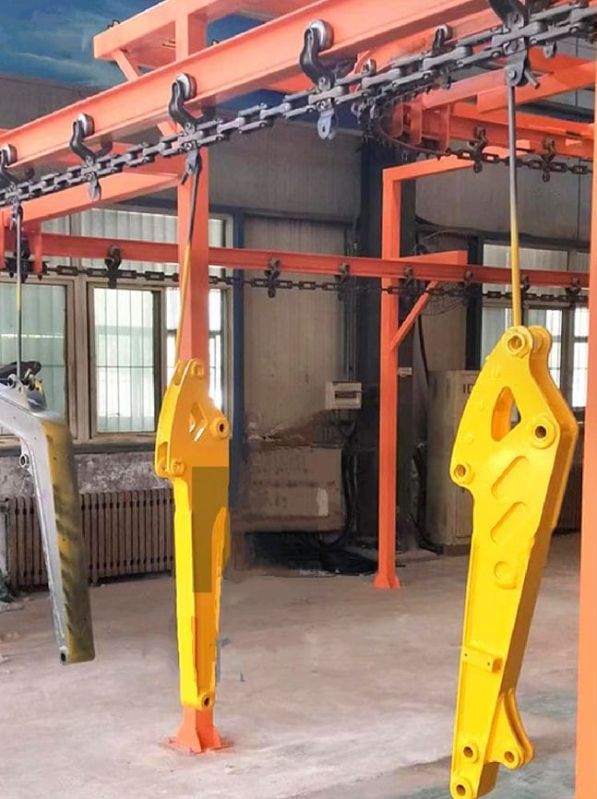
Overhead Conveyor Definition of Terms
Each powered overhead conveyor consists of:
A continuous circuit of chain running through track and a variety of vertical and horizontal curves.
A Drive unit that grabs the chain and pull it through the track.
A Take-up unit that ensures the chain is always stretched tight, even as it wears over many years of use.
Electrical controls which may be a simple on/off motor starter, a variable speed controller or it may have an industrial grade programmable logic controller or it may even have a PC or host system.
Synchronous Conveyor it all moves together
The term synchronous is often used to describe what type of overhead conveyor system it is. The term means that all loads on the conveyor will move at the same harmonized pace, because the chain that carries them is continuous. For example: start the conveyor and all start, stop it and all stop.
The desired load being carried will be held with some sort of fixture, be it a simple or more complex carrier with many moving parts to lock in the load, allow the operators to swivel it, etc. These must be designed to move up and down along the track without problems.
Overhead Conveyor Carries Non-Conveyable Loads
The overhead conveyor can carry loads that are often considered to be non-conveyable on most conveyors due to their shape. The overhead conveyor is traditionally used in painting systems, where product cannot be handled by humans or there will be a paint defect. It can carry the loads through harsh environments like caustic washers, spray or paint application booths, and very hot drying and baking ovens without much effect on itself.
Energy Efficient Conveyor
The other overhead conveyor advantage is the ease of use. Most powered overhead conveyors have only 1 motor and can still power 700-800 feet of conveyor. It will consume less energy than a typical hair dryer; making it a somewhat more environmentally friendly option for your warehouse space and at the same time saves you money. For more detailed information check out this video on overhead conveyor basics.
What is an Enclosed Track Overhead Conveyor?
The mechanism is quite simple we have a chain consisting of bearings and links, which is pulled through a track. This overhead conveyor is specifically called an enclosed track overhead conveyor because the chain is almost completely covered by the track. This is an important safety feature because it is safer for operators to use and less likely to become contaminated with dirt, dust, paint and other particles. There are open style conveyors available but are these styles are less appealing.
Additional Information:
Delivery Time : 3 weeks
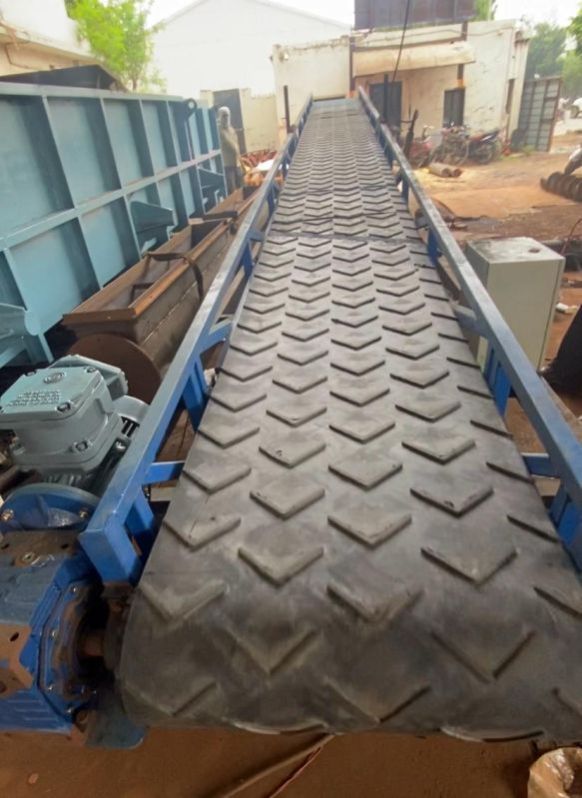
What is a truck loading conveyor?
A truck loading conveyor is a system used to load trucks with loose materials such as boxes, crates, or pallets. These conveyors typically have an adjustable height and width to accommodate different truck sizes. The materials are fed onto the conveyor from a loading dock or platform and are then transported into the truck bed. Some truck loading conveyors also feature tilt mechanisms to help load the materials more evenly.
How do truck loading conveyors work?
Truck loading conveyors are primarily used for loading and unloading trucks with various types of materials. These conveyors can be either stationary or portable, depending on the needs of the business. Stationary truck loading conveyors are typically found in warehouses, while portable units are more common in outdoor applications. The most common type of truck loading conveyor is a roller conveyor. This type of conveyor uses a series of rollers to move materials from one point to another. The rollers may be powered by an electric motor or by gravity, depending on the specific application. Roller conveyors are often used to load and unload heavy materials, such as pallets or drums. Another type of truck loading conveyor is a belt conveyor. Belt conveyors use a continuous belt to move materials from one point to another. They are commonly used to transport lightweight materials, such as packages or boxes. Belt conveyors can be powered by an electric motor or by gravity, depending on the needs of the application. Truck loading conveyors can also be customized to meet the specific needs of a business. For example, some businesses may need a conveyor that can load and unload multiple trucks at once. Others may need a conveyor that is able to load and unload trucks with different types of materials. No matter what the specific needs may be, there is likely a type of truck loading conveyor that can meet those needs.
 Mr. Abhinay Yadav (Hexacon Enterprise)
 Plot No.5/38/6 opposite Kiran industrie Phase-1 G.I.D.C Vatva, Ahmedabad, Gujarat - 382445
 https://www.hexaconenterprise.in
 Share us via