Write a Review
Our Products
We offer the best product range of Prilled Urea and Fertilizer Urea.
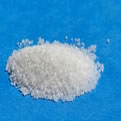
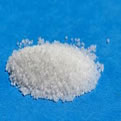
Ureaorcarbamideis identified as a life changing event in the history of agriculture. Urea is the world?s most common nitrogenfertilizerand has been used uniformly in all the agricultural lands of the world.
The last decade has seen urea as a superb replacement to ammonium nitrate and has unleashed new unsurpassed production records. The white, crystalline solid comprises of a proportionate compound mixture of more than one nutrient and contains 46% nitrogen. Farmers have identified with this chemicalfertilizeras a great ladder to huge success inagrorevolution.
Type:
01. Prilled Urea: Prilled urea, or "prills" are formed by dropping liquid urea from a prilling tower into droplets that dry into roughly spherical shapes 1mm to 4 mm in diameter
02. Granular Urea: Granular urea is chemically the same as prilled urea. Granular urea, however, is slightly larger and harder. Today, the use of prilled urea is more prevalent because it is more resistant to breaking down when being blended with the other components of fertilizer.
USES:AgricultureChemical industryExplosiveAutomobile systemsLaboratory usesMedical useAnalysis
Other commercial uses:A stabilizer innitrocelluloseexplosivesA component ofanimal feed, providing a relatively cheap source ofnitrogento promote growthA non-corroding alternative torock saltfor roadde-icing, and the resurfacing ofsnowboardinghalfpipes and terrain parksAflavor-enhancing additive forcigarettesA main ingredient in hair removers such asNairandVeetA browning agent in factory-producedpretzelsAn ingredient in someskin cream, [12]moisturizers, hair conditionersAreactantin some ready-to-usecold compressesfor first-aid use, due to theendothermicreaction it creates when mixed withwaterAcloud seedingagent, along with other saltsAflame-proofing agent, commonly used in dry chemicalfire extinguishercharges such as the urea-potassium bicarbonatemixtureAn ingredient in manytooth whiteningproductsAn ingredient indish soapAlong withammonium phosphate, as ayeast nutrient, for fermentation ofsugarsintoethanolA nutrient used byplanktoninocean nourishmentexperiments forgeoengineeringpurposesAs an additive to extend the working temperature and open time ofhide glueAs a solubility-enhancing and moisture-retaining additive todyebaths for textile dyeing or printing
Application of urea:
Urea can be applied in various forms; it can be spread in bulk alone or can also be mixed with other fertilizers before application.However Urea should be preferably spread alone so as to avoid unevenness in the field.In case of preparing blended mixtures with other fertilizers the best ones to suit its density are monoammonium phosphate (11-52-0) or diammonium phosphate (18-46-0). When blended together, these are easily spread uniformly across the cultivated land.
Advantages of Urea Fertilizer
Urea can be applied to soil as a solid or solution or to certain crops as a foliar spray.Urea usage involves little or no fire or explosion hazard.Urea's high analysis, 46% N, helps reduce handling, storage and transportation costs over other dry N forms.Urea manufacture releases few pollutants to the environment.Urea, when properly applied, results in crop yield increases equal to other forms of nitrogen.
| 1. | Moisture, percent by weight, maximum | 0.5 |
| 2. | Total Nitrogen, percent by weight, minimum | 46.0 |
| 3. | Biuret maximum | 1.0% |
| 4. | Melting Point | 132 degree Celsius |
| 5. | Color | Pure while |
| 6. | Radiation | Normal |
| 7. | Granulation - 1-4 mm >90% Free flowing 100% treated against caking Non- clotted - free from harmful substances . |
 Kaya (Kayalon Impex Pvt. Ltd.)
 2nd floor, Vishwakarma Chambers, Majura Gate, Ring Road, SURAT - 2, Gujarat
 Share us via