-
Min. Order (MOQ)
500 Metric Ton
-
Place of Origin
UKRAINE AND RUSSIA
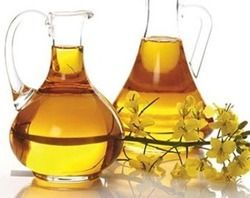
Linseed oil, also known as flaxseed oil, is a colourless to yellowish oil obtained from the dried, ripened seeds of the flax plant (Linum usitatissimum). The oil is obtained by pressing, sometimes followed by solvent extraction. Linseed oil is a drying oil, meaning it can polymerize into a solid form. Due to its polymer-forming properties, linseed oil can be used on its own or blended with combinations of other oils, resins or solvents as an impregnator, drying oil finish or varnish in wood finishing, as a pigment binder in oil paints, as a plasticizer and hardener in putty, and in the manufacture of linoleum. Linseed oil use has declined over the past several decades with increased availability of synthetic alkyd resinswhich function similarly but resist yellowing.Linseed oil is an edible oil in demand as a nutritional supplement, as a source of -Linolenic acid, (an omega-3 fatty acid). In parts of Europe, it is traditionally eaten with potatoes and quark. It is regarded as a delicacy due to its hearty taste, that enhances the flavour of quark, which is otherwise bland.Chemical CompositionLinseed oil is a triglyceride, like other fats. Linseed oil is distinctive for its unusually large amount of -linolenic acid, which has a distinctive reaction with oxygen in air. Specifically, the fatty acids in a typical linseed oil are of the following types: The triply unsaturated -linolenic acid (51.9-55.2%), The saturated acids palmitic acid (about 7%) and stearic acid (3.4-4.6%), The monounsaturated oleic acid (18.5-22.6%), The doubly unsaturated linoleic acid (14.2-17%). Having a high content of di- and triunsaturated esters, linseed oil is particularly susceptible to polymerization reactions upon exposure to oxygen in air. This polymerization, which is called drying, results in the rigidification of the material. The drying process can be so exothermic as to pose a fire hazard under certain circumstances. To prevent premature drying, linseed oil-bas

 Lagos, Nigeria
 Write a Review

 Mr. Kharamall (Kharamall Online Ltd.)
 Share us via