
 GST : 27AAHFO4407C1ZK
 4.0/5
4.0/5
Our Products
Our product range contains a wide range of Aquasol AE257 Nitrate Test Kit, Aquasol AE219 Sulphate Test Kit, Kyoritsu Packtest COD TEST KIT Range 0-250ppm, Aquasol AE409 Chloroscope Chlorine Test Kit and Aquasol Manganese Test Kit

Nitrites occur in water as an intermediate product in the biological breakdown of organic nitrogen being produced either through the oxidation of ammonia or the reduction of nitrate. The presence of large quantities of nitrites is indicative of waste water pollution. Low range nitrite estimation is useful for drinking water analysis. Nitrite is added to control corrosion in closed cooling systems. We have two kits for nitrite one a very low range especially for drinking and the higher one for waste water. Our AQUASOL AE217 kits are based on colour comparison and are very simple and convenient to use.

Sulphate is a constituent of TDS and may form salts with sodium potassium magnesium and other cations. Sulphate (so4-2) is widely distributed in nature and may be present in natural waters at concentrations ranging from a few to several hundred milligrams per litre. Sulphate can cause scale build-up in water pipes. Sulphates are also food for theAnaerobic slime formers the sulphate reducing bacteria which are responsible for pitting type of corrosion in pipes.The AQUASOL water test kit for sulphate is based on titrimetry and is extremely user friendly.


This product allows to measure COD concentration in different types of sample including river water and industrial wastewater.
However, it hardly reacts to oil or solid form, so please be aware when measuring the sample like industrial wastewater that may contain them.

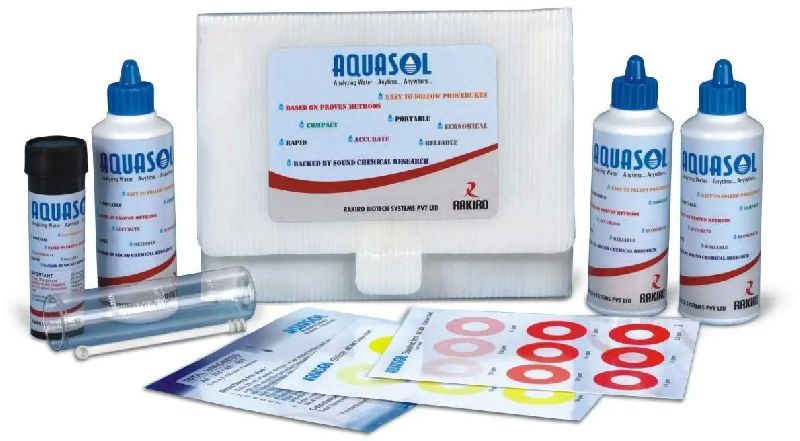
Chlorine is the most widely used oxidizing biocide today for disinfection of domestic water supplies as also for the removal of tastes and odours from water. The amount of chlorine required to be added in a water system is determined by chlorine demand contact time ph and temperature of the water. Chlorine residual in drinking water indicates that disinfection has been achieved by chlorine and bacteria / viruses that cause diarrheal disease have been eliminated. Also the water is protected from recontamination during storage. Our AQUASOL single reagent based Free Chlorine Test Kit (O.T.) comes with a scientifically designed Colour Comparator. The economical Comparator based design not only discern colours easily but also helps to achieve results quickly. This Free Chlorine Test Kit (AE-409) is a cost effective and convinent method for periodic monitoring free chlorine in water. The end point is very sharp and easily discernable by the user. Even a shop floor worker will be able to get desired results with our test kit.

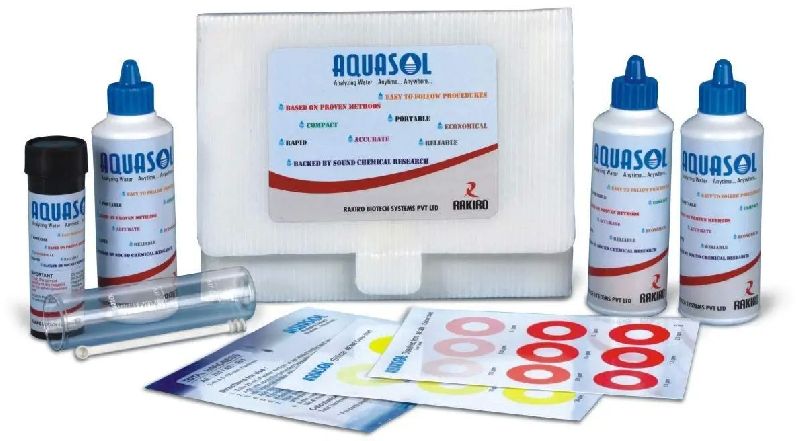
Manganese is a mineral that naturally occurs in rocks /soil and it is found in iron-bearing waters but is more rare than iron. When manganese is present in water it produces extremely objectionable stains on everything with which it comes in contact and deposits collect in pipelines tap water containing black sediment and turbidity due to precipitated manganese. When fabrics are washed in manganese-bearing water dark brown or black stains are formed due to the oxidation of the manganese. The International Drinking Water Regulations recommend a limit of 0.05 mg/l manganese and industrial purposes the manganese content should not exceed 0.01 to 0.02 mg/l. Therefore monitoring of Manganese is mandatory in drinking water and our Manganese water test is one of its kinds and works on the simple Colour Comparison principle.

Water is the major ingredient in a water soluble metalworking fluid mix. It may amount to as much as 90-99% of the mix as used. Therefore its importance in product performance can not be ignored. Corrosion residue scum rancidity foam excess concentrate usage or almost any metalworking fluid performance problem can be caused by the quality of the water used in making the mix. Untreated water always contains impurities. Some impurities affect drastically by reacting or combining with metalworking fluid ingredients. These impurities can change performance characteristics. Therefore water treatment is necessary to obtain the full benefits of water soluble metalworking fluids.

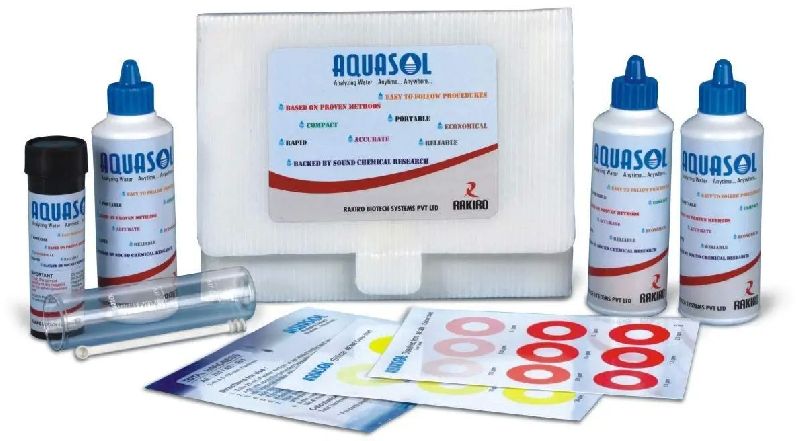
Chlorine is the most widely used oxidizing biocide today for disinfection of domestic water supplies as also for the removal of tastes and odours from water. The amount of chlorine required to be added in a water system is determined by chlorine demand contact time ph and temperature of the water. Chlorine residual in drinking water indicates that disinfection has been achieved by chlorine and bacteria / viruses that cause diarrheal disease have been eliminated. Also the water is protected from recontamination during storage. Our AQUASOL AE246L chlorine test is available Iodometric method and this kit gives very reliable results. Even a shop floor worker will be able to get desired results with our test kit.

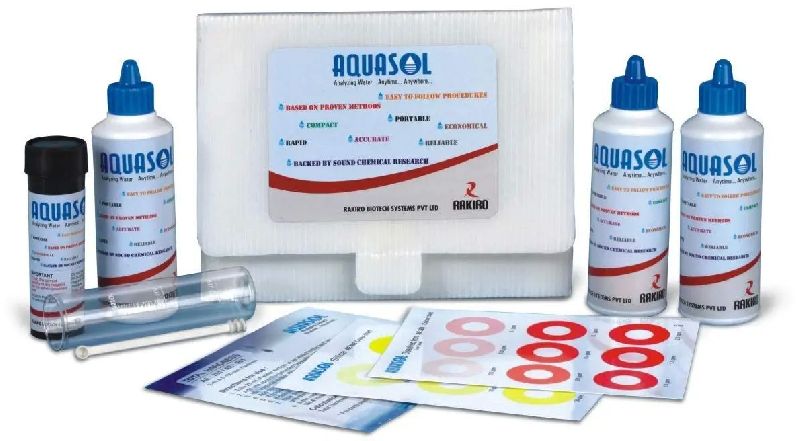
Chlorine is the most widely used oxidizing biocide today for disinfection of domestic water supplies as also for the removal of tastes and odours from water. The amount of chlorine required to be added in a water system is determined by chlorine demand contact time ph and temperature of the water. Chlorine residual in drinking water indicates that disinfection has been achieved by chlorine and bacteria / viruses that cause diarrheal disease have been eliminated. Also the water is protected from recontamination during storage. Our AQUASOL AE246 chlorine test is available Iodometric method and this kit gives very reliable results. Even a shop floor worker will be able to get desired results with our test kit.

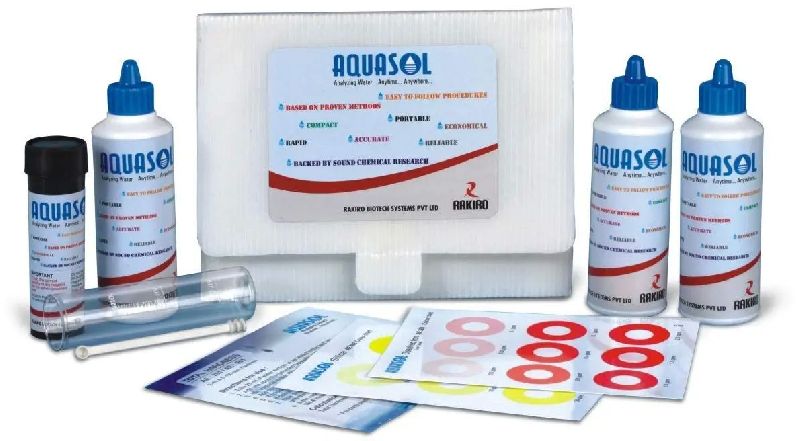
D.O. is essential for the aquatic plant and animal life. DO is detrimental in boiler systems because it leads to corrosion in boiler systems. DO analysis measures the amount of gaseous oxygen (o2) dissolved in an aqueous solution DO measurement is a tricky business, but our Aquasol AED08 kit makes testing easy and simple.

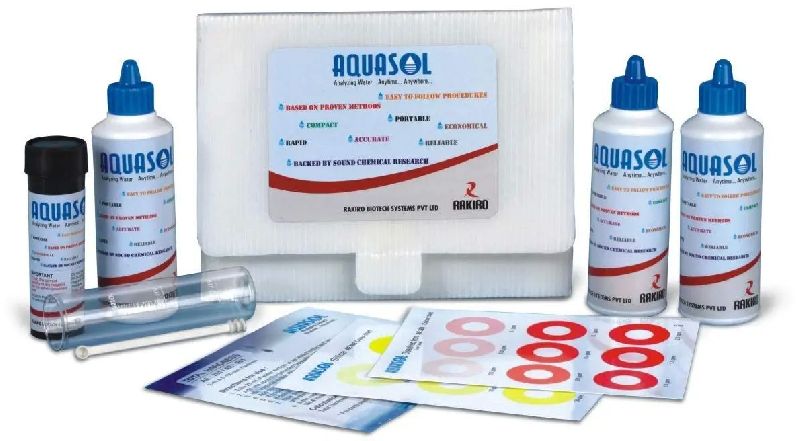
Chlorine is the most widely used oxidizing biocide today for disinfection of domestic water supplies as also for the removal of tastes and odours from water. The amount of chlorine required to be added in a water system is determined by chlorine demand contact time ph and temperature of the water. Chlorine residual in drinking water indicates that disinfection has been achieved by chlorine and bacteria / viruses that cause diarrheal disease have been eliminated. Also the water is protected from recontamination during storage. Our AQUASOL AE205 chlorine test is available as DPD method and the kit gives very reliable results. The end point is very sharp and easily discernable by the user. Even a shop floor worker will be able to get desired results with our test kit.

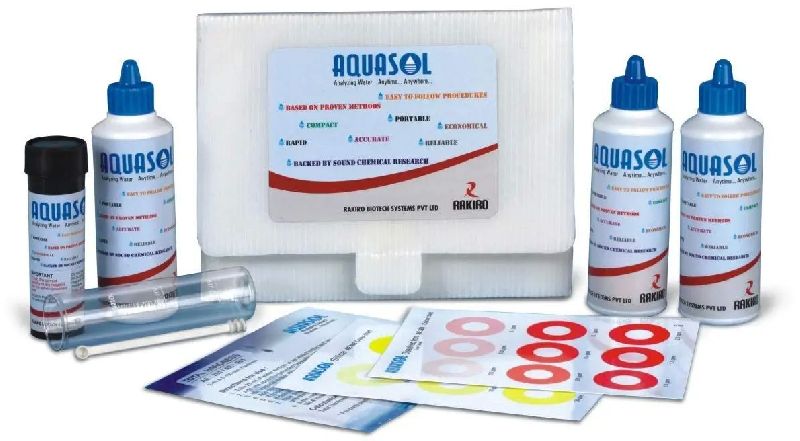
Chlorine is the most widely used oxidizing biocide today for disinfection of domestic water supplies as also for the removal of tastes and odours from water. The amount of chlorine required to be added in a water system is determined by chlorine demand contact time ph and temperature of the water. Chlorine residual in drinking water indicates that disinfection has been achieved by chlorine and bacteria / viruses that cause diarrheal disease have been eliminated. Also the water is protected from recontamination during storage. Our AQUASOL AE215 chlorine test is available as DPD method and the kit gives very reliable results. The end point is very sharp and easily discernable by the user. Even a shop floor worker will be able to get desired results with our test kit.

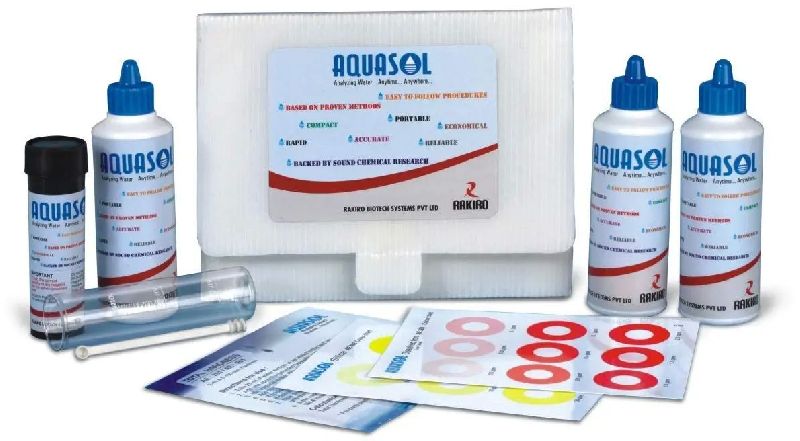
Orthophosphate is a commonly used corrosion inhibitor that is added to finished drinking water. It works by forming a protective coat inside pipes in the distribution systems and in customer homes to prevent lead from leaching into drinking water. The other name is phosphoric acid and it is used to control alkalinity/acidity in foods and beverages. It is a vital parameter for boiler cooling and process water treatment. This AE301 water testing kit is again based on colour comparison in simple and easy steps.


Orthophosphate is a commonly used corrosion inhibitor that is added to finished drinking water. It works by forming a protective coat inside pipes in the distribution systems and in customer homes to prevent lead from leaching into drinking water. The other name is phosphoric acid and it is used to control alkalinity/acidity in foods and beverages. It is a vital parameter for boiler cooling and process water treatment. This AE301 water testing kit is again based on colour comparison in simple and easy steps.

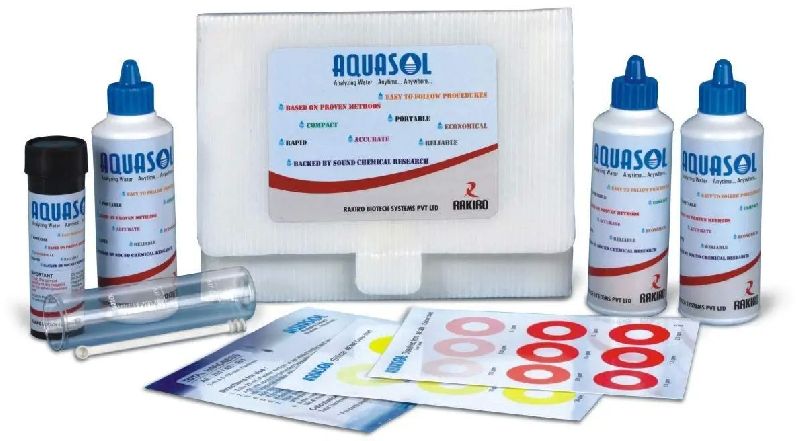
pH is the standard measure of how acidic or alkaline a solution is. It is a measure of the hydrogen ion concentration in solution. Ph is important because chemical processes take place when water has a certain ph. A ph indicator giving different colors at different ph is a simple and reliable method to read ph for routine monitoring. Our AQUASOL ph water test kit comprises of a universal indicator giving clear colours which match the colour chart perfectly. An extremely easy to use product it finds usage in almost all processes.


Phosphonates a are a class of chelating agents and scale inhibitors used in household cleaning products personal care products institutional cleaners and industrial cleaning processes and water treatment additives in various applications. They play an important role in boiler cooling and process water treatment. Our AE401 phosphonate water testing kit is available for high range is used by boiler maintenance personnel frequently.

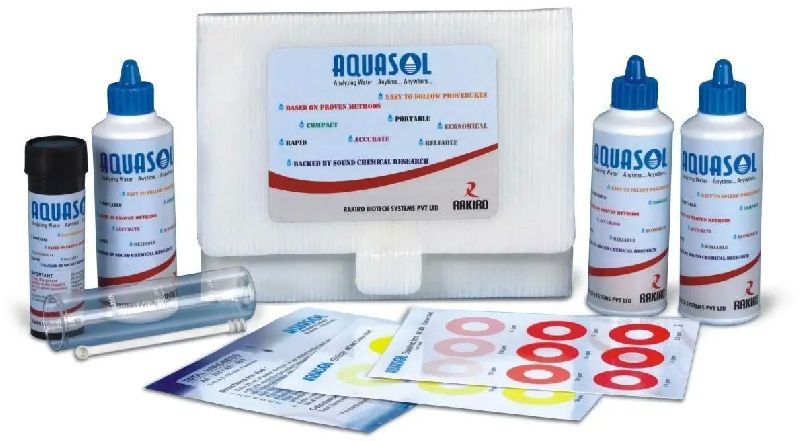
Phosphonates a are a class of chelating agents and scale inhibitors used in household cleaning products personal care products institutional cleaners and industrial cleaning processes and water treatment additives in various applications. They play an important role in boiler cooling and process water treatment. Our AE411 phosphonate water testing kit is available for low range is used by boiler maintenance personnel frequently.

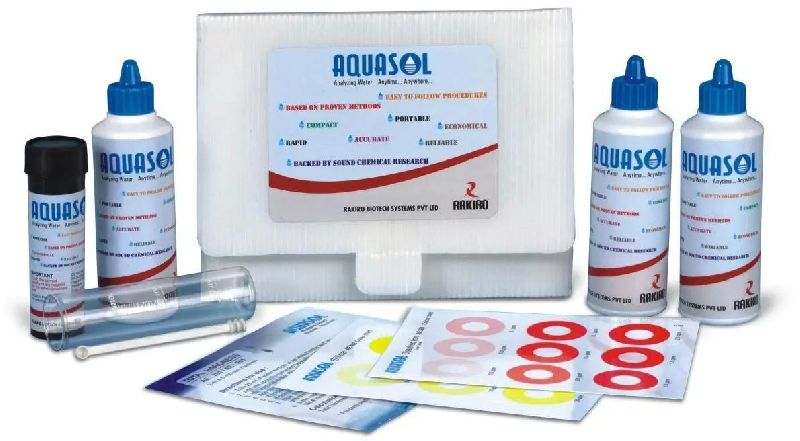
Silica (sio2) is an oxide of silicon and is present in almost all minerals. It is found in surface and well water. Silica is a problem for high pressure boilers as it exhibits enough volatility that high pressure boilers will have silica carry over to the vapour partition. When the steam pressure is reduced in turbines silica will precipitate on the blades as a glassy deposit which reduces efficiency. Measuring silica in water is useful to monitor demineralizer for boiler water treatment. Our AQUASOL AE332 kits are based on colour comparison and are very simple and convenient to use.

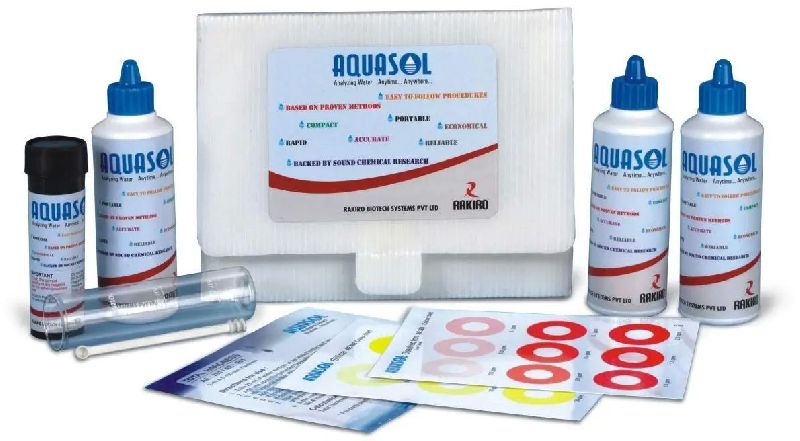
Silica (sio2) is an oxide of silicon and is present in almost all minerals. It is found in surface and well water. Silica is a problem for high pressure boilers as it exhibits enough volatility that high pressure boilers will have silica carry over to the vapour partition. When the steam pressure is reduced in turbines silica will precipitate on the blades as a glassy deposit which reduces efficiency. Measuring silica in water is useful to monitor demineralizer for boiler water treatment. Our AQUASOL AE312 kits are based on colour comparison and are very simple and convenient to use.

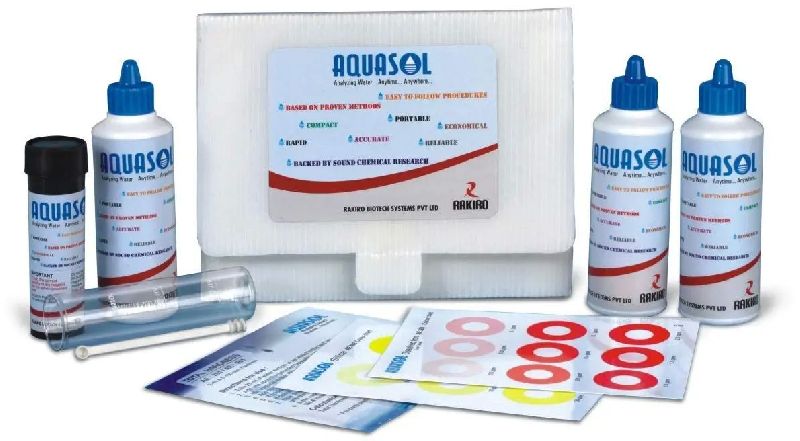
Silica (sio2) is an oxide of silicon and is present in almost all minerals. It is found in surface and well water. Silica is a problem for high pressure boilers as it exhibits enough volatility that high pressure boilers will have silica carry over to the vapour partition. When the steam pressure is reduced in turbines silica will precipitate on the blades as a glassy deposit which reduces efficiency. Measuring silica in water is useful to monitor demineralizer for boiler water treatment. Our AQUASOL AE322 kits are based on colour comparison and are very simple and convenient to use.

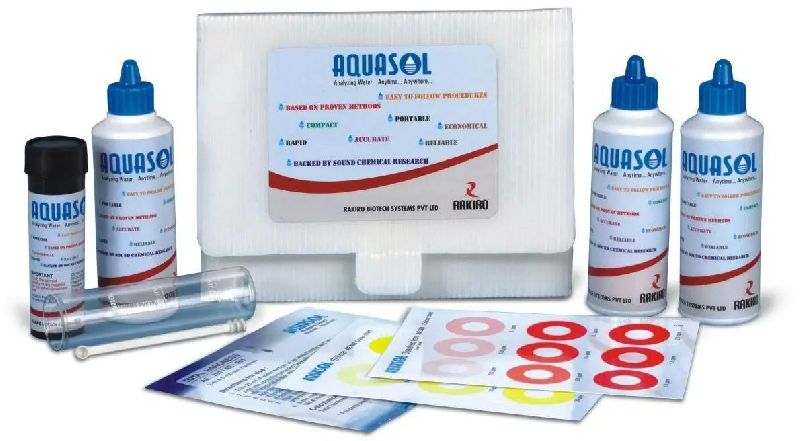
Silica (sio2) is an oxide of silicon and is present in almost all minerals. It is found in surface and well water. Silica is a problem for high pressure boilers as it exhibits enough volatility that high pressure boilers will have silica carry over to the vapour partition. When the steam pressure is reduced in turbines silica will precipitate on the blades as a glassy deposit which reduces efficiency. Measuring silica in water is useful to monitor demineralizer for boiler water treatment. Our AQUASOL AE302 kits are based on colour comparison and are very simple and convenient to use.

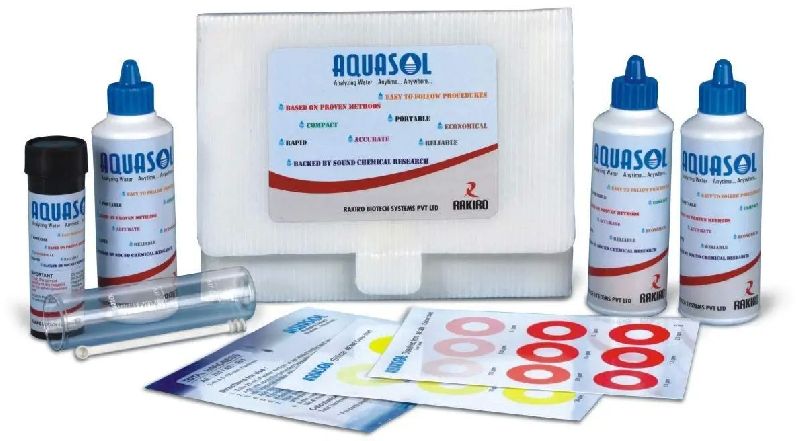
Sulphate is a constituent of TDS and may form salts with sodium potassium magnesium and other cations. Sulphate (so4-2) is widely distributed in nature and may be present in natural waters at concentrations ranging from a few to several hundred milligrams per litre. Sulphate can cause scale build-up in water pipes. Sulphates are also food for theAnaerobic slime formers the sulphate reducing bacteria which are responsible for pitting type of corrosion in pipes.The AQUASOL water test kit for sulphate is based on titrimetry and is extremely user friendly.

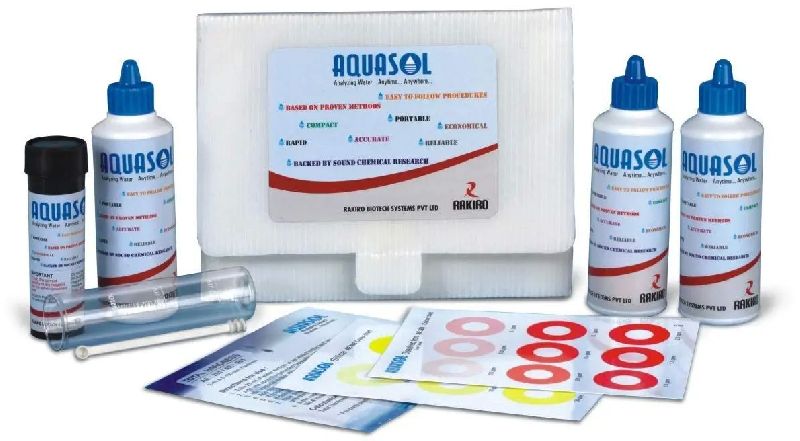
Sulphite is not usually present in surface waters. If sulphite is discharged in effluents or from domestic wastewaters it readily oxidizes to sulphate. Sodium sulphite the most common form of sulphite is an excellent reducing agent and is commonly used as an oxygen scavenger to control corrosion. Sulphite concentrations in boiler and process waters must be monitored regularly to protect the systems. Our sulphite test kit works when sulphite in salt form has been added to waters. It is a titration method easy to use and easy to read.


Tannin is a natural organic material that is the by product of nature s fermentation process created as water passes through peaty soil and decaying vegetation. Tannins create a light yellow to dark brown discoloration of the water and cause yellow staining on fabrics fixtures and laundry. Tannin based formulations are used for prevention of scale and corrosion in steam boilers closed cooling systems and steam locomotives. The tannin test kit is a titrimetric one and has reagents for two ranges in the same kit making it portable and user friendly.

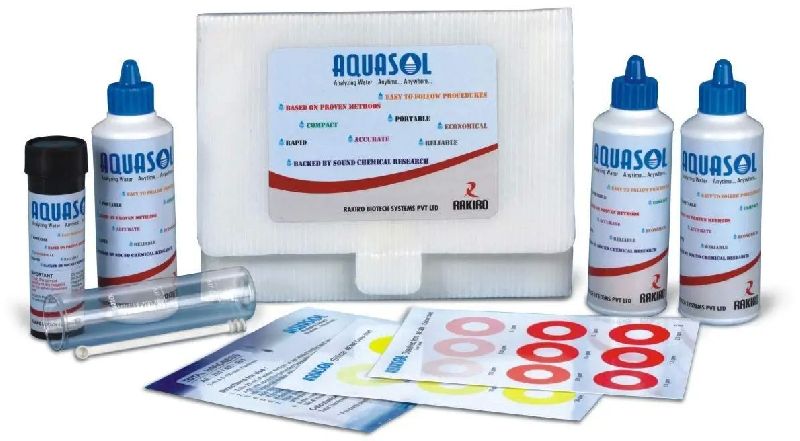
Turbidity is a principal physical characteristic of water. It is caused by suspended matter or impurities that interfere with the clarity of the water. These include clay silt finely divided inorganic and organic matter soluble coloured organic compounds and plankton and other microscopic organisms. Turbidity is the measure of relative clarity of a liquid. Clarity is required for drinking water and in manufacturing uses. This AQUASOL water turbidity test kit is simple and adequate. It has been designed for onsite use. It suffices its purpose and helps regular monitoring.

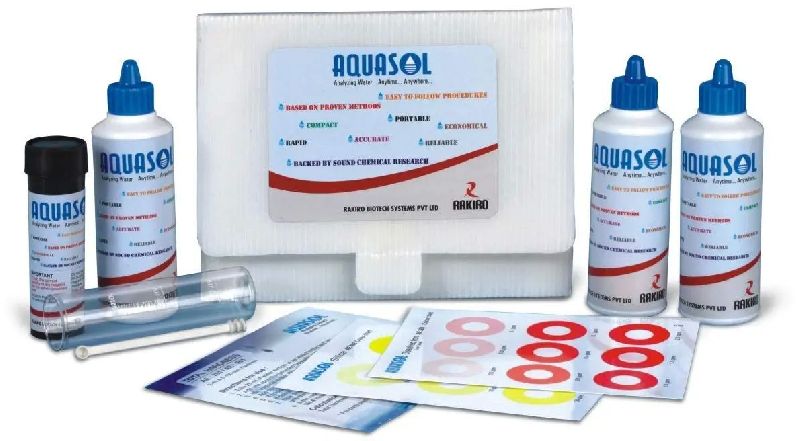
Zinc is introduced into water naturally by erosion of minerals from rocks and soil most zinc is introduced into water by artificial pathways such as by-products of steel production coal-fired power stations or from the burning of waste materials. Zinc is also used in some fertilizers that may leach into groundwater. Zinc is used as a corrosion inhibitor for Cooling water. The zinc water testing system is easy to use and results achieved are fairly accurate.

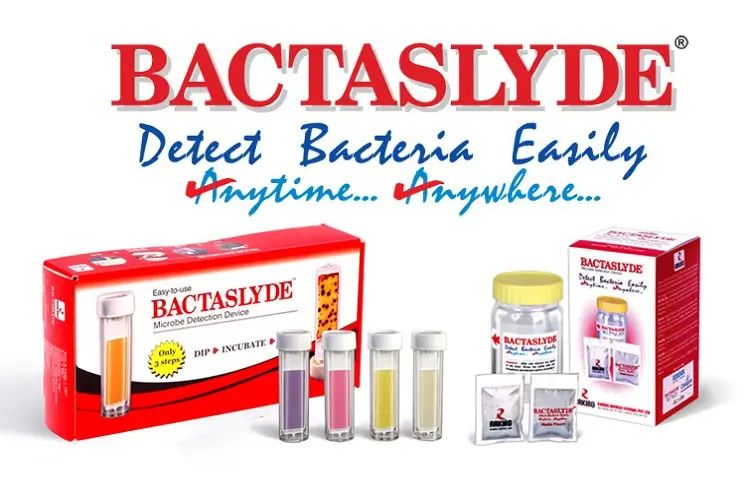
Yeast are unicellular fungi which are used to make bread and other wheat-based products such as dough and dumplings. Also they are useful in production of alcoholic beverages through fermentation. Almost all species of yeasts and fungi grow on BACTASLYDE and there growth may consist either purely of yeasts or purely of fungi or may be mixed.
Fungi are aerobic and commonly occur in nature especially in places which are damp where organic matter and oxygen are present. They produce vast numbers of spores and grow continuously without regards to size and shape. Several fungi are domesticated species that are bred or selected according to their capacity to ferment food without producing harmful toxins.
The Total Bacterial Count gives a quantitative idea about the presence of microorganisms such as bacteria yeast and mold in a sample. It is also known as Total Viable Count (TVC) Heterotrophic Plate Count (HPC) Heterotrophic Colony Count (HCC) Aerobic Plate Count (APC) Total Plate Count (TPC) or Standard Plate Count (SPC) and it represents the total bacterial load in a given sample. All our range of dip slides enables you to perform the Total Bacterial Count on one side of the slide to reflect the general hygiene condition of a sample.

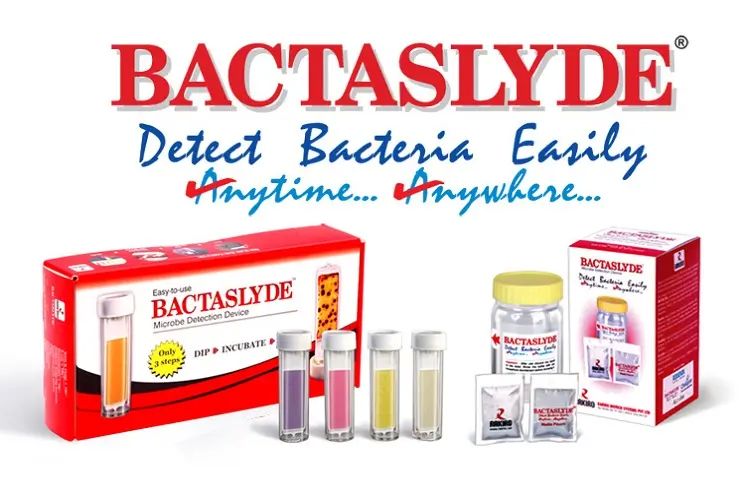
Pseudomonas commonly found in soil or water and is generally in slime form with a consistency range from that of molasses to rubber. It is extremely versatile as it thrives not only in normal atmospheres but also in hypoxic atmospheres and acquires immunity very rapidly to antibiotics. These species are sturdy organisms able to live at very low oxygen tension and difficult to kill. They obtain their energy for living and multiplying either by oxidizing organic compounds or by fermentation. They are more or less free swimming in cooling water and thrive by oxidizing organic substrates to carbon dioxide. It also serves as a biding agent for accumulation of dirt or other organisms and if unchecked can form insulating sticky films on surface where it initiates under deposit corrosion. Pseudomonas is a highly relevant opportunistic human pathogen and has been incriminated in hospital acquired infections in water supplies soaps ice and even disinfectants. Only Pseudomonas species will grow on BACTASLYDE and the colonies would be white off white red or green.
The Total Bacterial Count gives a quantitative idea about the presence of microorganisms such as bacteria yeast and mold in a sample. It is also known as Total Viable Count (TVC) Heterotrophic Plate Count (HPC) Heterotrophic Colony Count (HCC) Aerobic Plate Count (APC) Total Plate Count (TPC) or Standard Plate Count (SPC) and it represents the total bacterial load in a given sample. All our range of dip slides enables you to perform the Total Bacterial Count on one side of the slide to reflect the general hygiene condition of a sample.

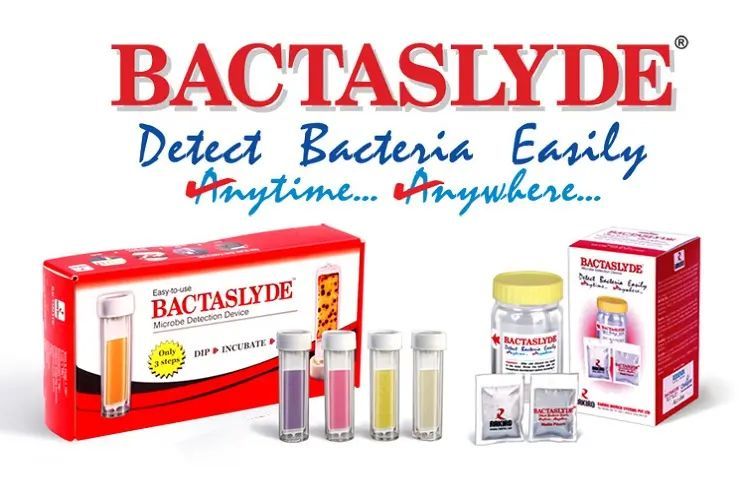
Algae the plant like microorganisms are prolific invaders of the open exposed parts of cooling systems such as the tower and the pond areas. They will grow rapidly if conditions are right and only require light; CO2 and water to synthesize their growth. Algae are often visible as green felt-like mats in internal sections of cooling towers that are wet and accessible to sunlight.
Algal growth is extremely unsightly and will reduce the efficiency of the cooling tower as a heat exchanger. Loosened deposits will block and foul pipe work and other heat exchange surfaces. The dead cells contribute to the formation of the complex organic material Humus which supports the growth of other microorganisms particularly the anaerobic types.
Filamentous and capsulated colonial algae coat splash packing thus interfering with the formation of droplets which aid intimate contact of water and air. Algal growth prevents rainwater from wetting film packing and forming thin films which are Algae also secrete a mucilaginous sheath much like the slime layer in bacteria. The mucilage of the blue-green algae in particular is associated with a peculiar form of movement called gliding that is exhibited when the organism is in contact with a firm surface. These sticky secretions may contribute significantly to complications in cooling systems such as clogged screens and fouled heat exchangers.
Many algae produce within their cells malodorous oils and poisonous cyclic alcohols these are released when the organisms die and may cause foul odours.
How to Use Algrosee
Just cut open media pouch and empty contents into the tube provided. Now add water sample to be tested up to red arrow mark. Place the tube on the Energy source. Observe the colour of the tube every day for 4 days.
The medium used in AlgroSee has been specially formulated for the growth of a wide variety of Algae species viz green bluegreen brown red etc.

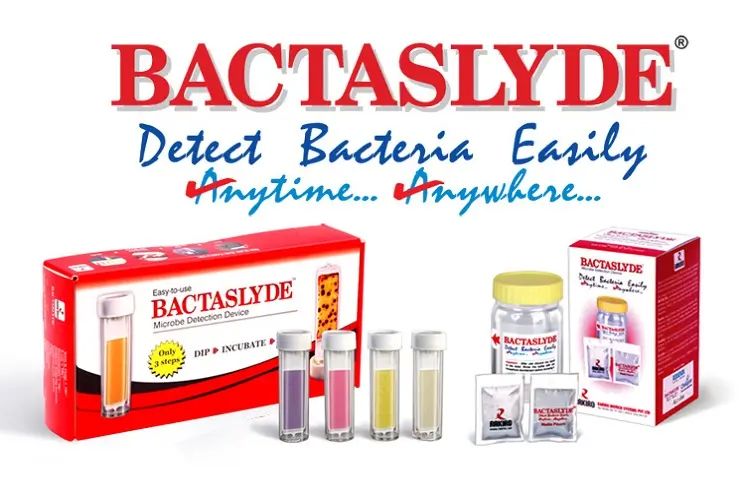
Salmonella bacteria are zoonotic and can be transferred between humans and other animals. These are intestinal pathogens and are cause for many diseases viz. typhoid paratyphoid food poisoning etc. Classic typhoid fever is a serious and life-threatening infection which has a mortality approaching 20%. Cases of enteric fever almost always occur from the ingestion of contaminated food or water. These bacteria can survive for some time without a host for weeks outside a living body and they are not destroyed by freezing. They are frequently found in polluted water contamination from the excrement of carrier animals being particularly important. This organism enters through the digestive tract due to ingestion of contaminated food. The food infection is generally thru eating or handling contaminated raw or not properly cooked meat of cattle swine poultry fish etc. FDA has laid down mandatory testing norms to control risk of salmonella contamination in foodstuff like spices fish and eggs etc. BACTASLYDE is supplied in boxes of 5 along with the complete instructions set for a complete quantitative analysis of the contamination.

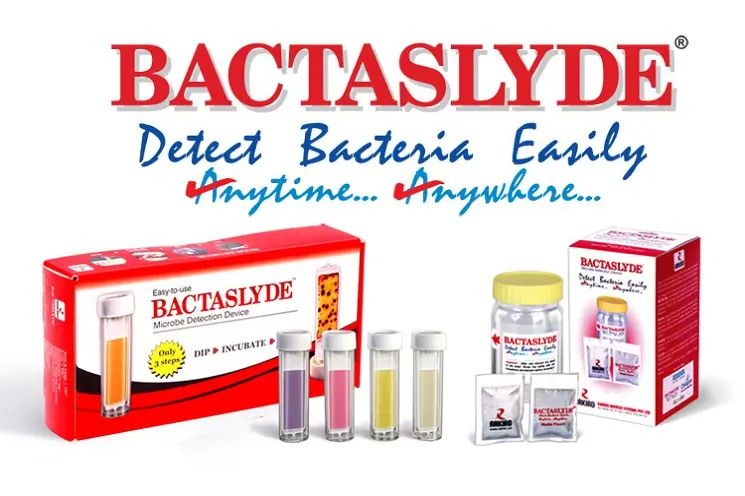
Staphylococcus species are found on the skin and hair of a large proportion of the population and are the common cause of pyogenic infections and food poisoning. They spread through various housekeeping activities generally in domestic environment and in hospitals. Infection in food can occur through workers from infected cuts abrasions boil or from nasal carriers. Foods with high salt content are generally contaminated with staphylococcus species like meat ham synthetic cream sauces fresh fish canned f and cheeses especially cheddar. Staphylococci produce several enterotoxins which can withstand high temperature. Many species of staphylococcus are pathogenic and cause food poisoning diarrhea and prostration while the other make useful indicators of sewage pollution. Foods especially the high salt content ones are contaminated with staphylococcus species viz. meats synthetic cream and sauces fresh fish and canned vegetables and cheeses. Staphylococci produce several enterotoxins which withstand heating at 1000C for 30 min. BACTASLYDE is supplied in boxes of 5 along with the complete instructions set for a complete quantitative analysis of the contamination.

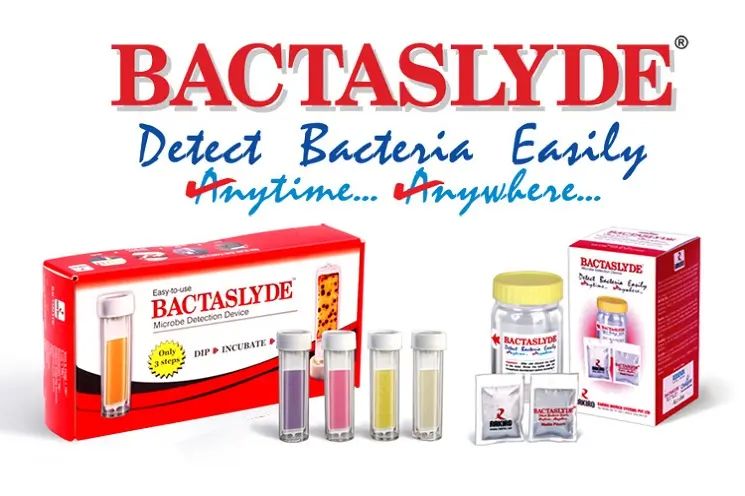
Vibrio cholera is the causative agent of cholera that occurs naturally in water and transmitted primarily through faeces and sewage polluted drinking water and food. Earlier cholera was found in practically all major cities of the world especially in places with ineffective sanitation and where not much is done to prevent pollution of food and water. However after consistent vigilance by both National and International health authorities all over the world and with sanitary engineering of sewage disposal and water supplies the scourge of mankind has been brought under much control. But it is still found in fish and shellfish produce or leftover cooked grains. Marine and estuarine fishes are the most susceptible medium and it is usually most severe in marine culture and fish farms. BACTASLYDE is supplied in boxes of 5 along with the complete instructions set for a complete quantitative analysis of the contamination.

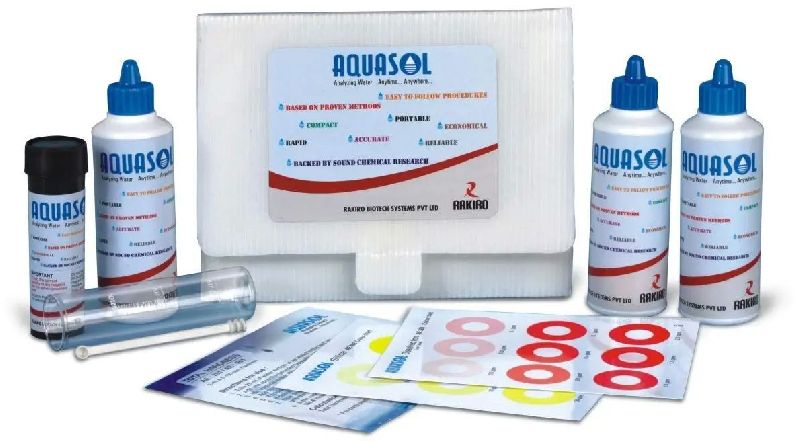
Amines are used as neutralizing agents for condensation water in boiler treatment. This helps to control corrosion.Our Aquasol AE402 alkalinity kit is very easy to use test to gives reliable results in terms of cyclohexamine.

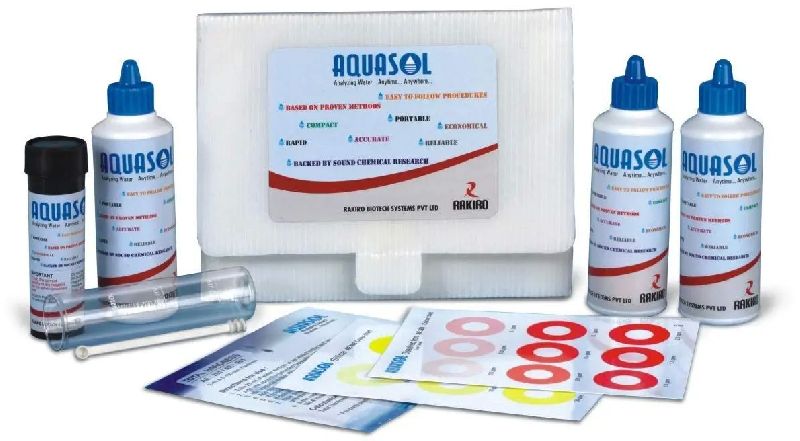
Amines are used as neutralizing agents for condensation water in boiler treatment. This helps to control corrosion.Our Aquasol AE412 alkalinity kit is very easy to use test to gives reliable results in terms of cyclohexamine.

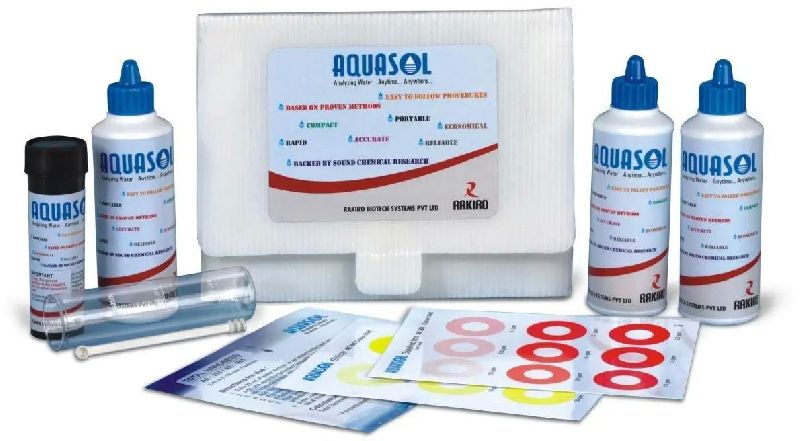
Chemical Oxygen Demand (COD) is defined as the amount of a specific oxidant that reacts with the sample under controlled conditions. The quantities of oxidant consumed is expressed in terms of its oxygen equivalence.
Because of Dichromate ions specific oxidant properties (CrO72-) unique chemical properties it gets reduced to the chromic ion (Cr3+) in COD test.
COD is a defined test the extent of sample oxidation can be affected by digestion time reagent strength and sample COD concentration.
COD is often used on a measurement of pollutants in waste water and natural water.
To determine COD two methods are useful the open reflux method is suitable for a wide range of waste water and large sample size is preferred. Another is the closed reflux method is suitable for smaller quantities. It requires homogenisation of sample. Accurate measurement of sample values as well as reagent volumes and concentration are critical.
Principle

pH is the measure of the hydrogen ion concentration in water. It denotes if the water is acidic (7). When pH is 7 it is said to be neutral. Natural water range between pH 5.0 and pH 10.0 while sea water is near pH 8.3. Monitoring of pH becomes an important exercise for the growth and well being of fresh water species this is especially true for a closed water body viz. nbreeding pond pans or aquariums. Fresh water species thrive over a large pH range viz.6.0 9.5.The growth retards below 6.0 and below 4.0 most species are killed.
Our freshwater pH test kit is very minimalistic and easy to use.

Ammonia is one of the many forms of Nitrogen existing in environment. While other Nitrogen forms (other than Ammonia) can affect aquatic life indirectly Ammonia is directly toxic to aquatic life. Ammonia enters the aquatic surrounding through municipal effluent discharge thru nitrogen waste from mammals or also thru natural means like nitrogen fixation or agriculture runoff water.
High levels of Ammonia lead to a toxic buildup in internal tissue and blood in marine species leading to potential death. pH and temperature can affect the Ammonia toxicity to aquatic life.

Ammonia is one of the many forms of Nitrogen existing in environment. While other Nitrogen forms (other than Ammonia) can affect aquatic life indirectly Ammonia is directly toxic to aquatic life. Ammonia enters the aquatic surrounding through municipal effluent discharge thru nitrogen waste from mammals or also thru natural means like nitrogen fixation or agriculture runoff water.
High levels of Ammonia lead to a toxic buildup in internal tissue and blood in marine species leading to potential death. pH and temperature can affect the Ammonia toxicity to aquatic life.

pH is the measure of the hydrogen ion concentration in water. It denotes if the water is acidic or alkaline . When pH is 7 it is said to be neutral. Natural water range between pH 5.0 and pH 10.0 while sea water is near pH 8.3. pH is an essential factor which affects the growth of any living species. Hence it is always advisable to monitor pH regularly to ensure the well-being of all living species. Most marine animals are different from fresh water species in the sense that they require a smaller pH range to thrive viz. 7.5 8.5. This is due to the fact that at lower pH marine species are not able to maintain the salt balance and not only does the animal cease to reproduce but also die. The range of our pH test kit is 7.4 9.0.

Ammonia is one of the many forms of Nitrogen existing in environment. While other Nitrogen forms (other than Ammonia) can affect aquatic life indirectly Ammonia is directly toxic to aquatic life. Ammonia enters the aquatic surrounding through municipal effluent discharge thru nitrogen waste from mammals or also thru natural means like nitrogen fixation or agriculture runoff water. High levels of Ammonia lead to a toxic buildup in internal tissue and blood in marine species leading to potential death. pH and temperature can affect the Ammonia toxicity to aquatic life. The ranges are from 0.05 to 8.0 ppm. Both the above kits are based on color comparison. They consist of a reagent NH1 bottle and a comparator tube along with a colorcomparator. They are extremely easy to use and can be used by anybody at any place.

Nitrates are found in nature and many of our food material. Generally the level of Nitrates is quite low in ground water. In aquatic environments Nitrates may seep in thru fertilizer runoff from cultivated lands municipal industrial and also private sewage disposal systems and waste water refuse dumps and decaying plant debris. High Nitrate levels in Drinking water pose a great health risk to Infants causing Methemoglobinemia Blue Baby Syndrome. The presence of Nitrates in the Aquatic environment does not pose such a problem as Ammonia or Nitrites. Nitrate concentrations of 50 ppm or so are quite safe for fish. But if the levels reach 80 ppm then the problem begins as this high concentration can be toxic.

Nitrates are found in nature and many of our food material. Generally the level of Nitrates is quite low in ground water. In aquatic environments Nitrates may seep in thru fertilizer runoff from cultivated lands municipal industrial and also private sewage disposal systems and waste water refuse dumps and decaying plant debris. High Nitrate levels in Drinking water pose a great health risk to Infants causing Methemoglobinemia Blue Baby Syndrome
The presence of Nitrates in the Aquatic environment does not pose such a problem as Ammonia or Nitrites. Nitrate concentrations of 50 ppm or so are quite safe for fish. But if the levels reach 80 ppm then the problem begins as this high concentration can be toxic.
Another problem with Nitrates is that Algal blooms happen and these are highly detrimental to the aquatic species. Bacterial and Fungai infections prevail in these conditions and cause the Fish to lose immunity along with their capacity to reproduce thus retarding growth.

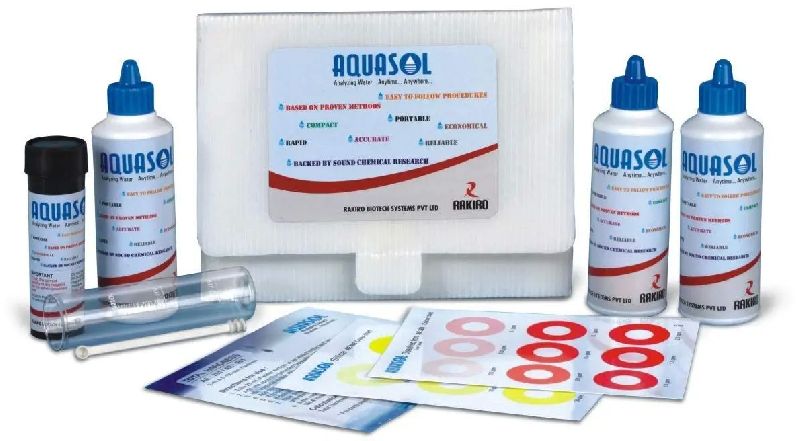
Calcium hardness is caused by the presence of calcium ions in the water. Calcium salts can be readily precipitated from water and high levels of calcium hardness tend to promote scale formation in the water system. Calcium hardness is an important control test in industrial water systems such as boilers and steam raising plants. Our Aquasol AE202 kit tests even low levels of calcium in water.

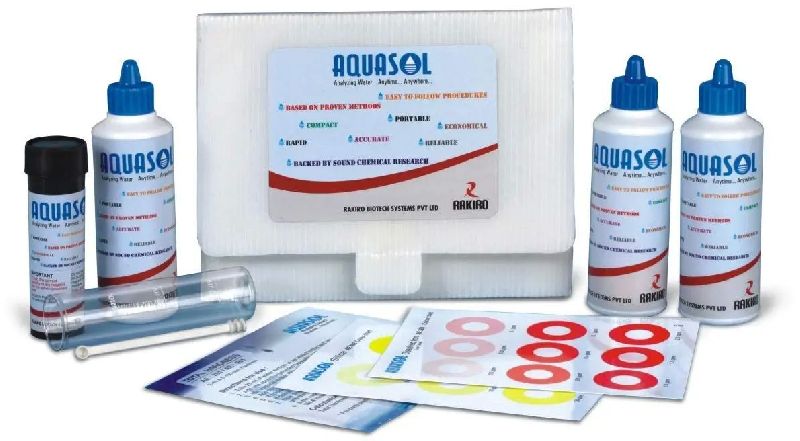
Calcium hardness is caused by the presence of calcium ions in the water. Calcium salts can be readily precipitated from water and high levels of calcium hardness tend to promote scale formation in the water system. Calcium hardness is an important control test in industrial water systems such as boilers and steam raising plants. Our Aquasol AE212 kit tests even high levels of calcium in water.

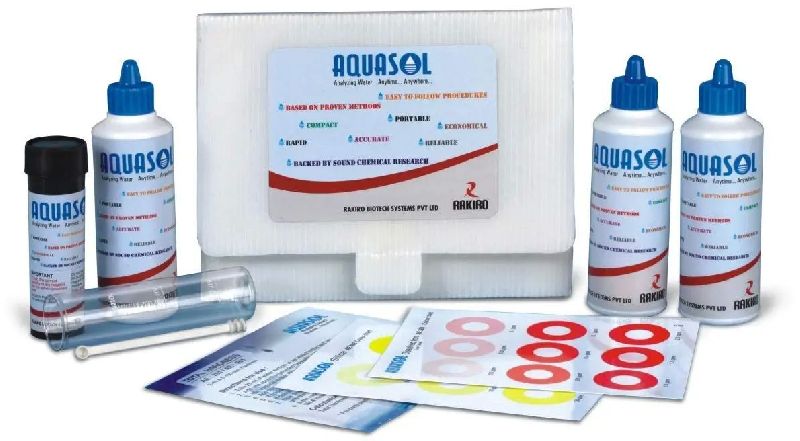
Chlorine dioxide is a broad-spectrum micro biocide effective over a wide ph range. Chlorine dioxide is effectively used in the control of microbiological growths in industrial cooling waters under conditions unfavorable to chlorine. Our AE405 water test is a titrimetric one generally used by cooling tower maintenance personnel to monitor residuals of the oxidising microbiocide.

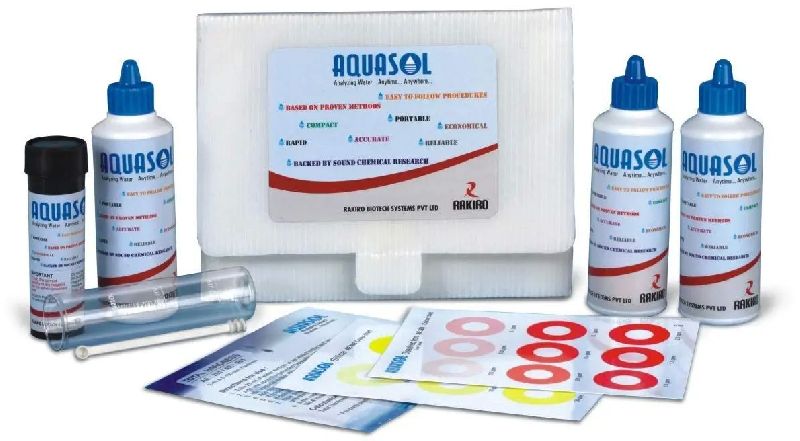
Formulations containing molybdate are used as corrosion inhibitors in industrial water treatment. In particular molybdate finds application in closed recirculating systems such as water heating systems and chilled water systems. Since molybdates are widely used in water treatment and industrial processes testing molybdate is becoming increasingly important for effluents and industrial discharges. This AE309 water test kit is a colour comparison one and can give accurate results in time.

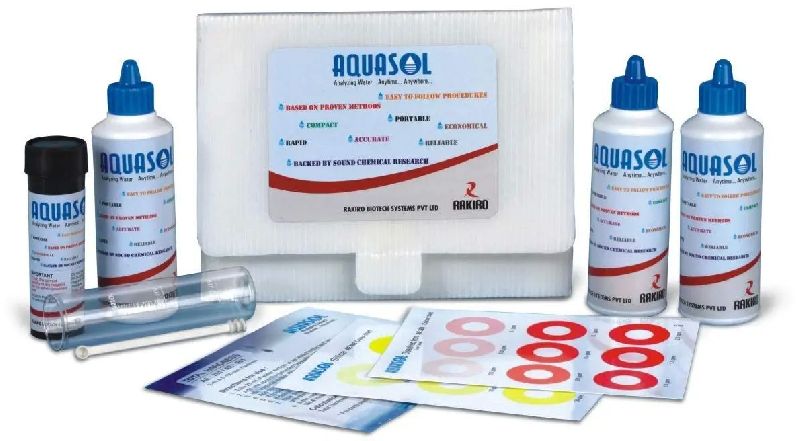
Carbon dioxide can react with water to form carbonic acid (h2co3). Carbonic acid will cause corrosion in steam and return lines. Carbon dioxide can originate from condenser air leakage or bicarbonate (hco3) alkalinity in the feed water.Our AQUASOL AE403 test for carbon dioxide is a titrimetric kit packaged with standardized reagents ready to use convenient and accurate.


When water passes through or over deposits such as limestone the levels of ca2+ mg2+ and hco3 ions present in the water greatly increase and cause the water to be classified as hard water. Hardness in water is caused by dissolved minerals and calcium and magnesium ions are usually present in significant concentration along with other divalent ions. Hardness creates scale deposit problem which lead to energy loss in different industrial systems such as boiler cooling system cause scale formation in plumbing heating appliances and boilers. Measuring total hardness is essential to monitor softener demineralization RO plant softening processes etc. Our AQUASOL AE201 hardness range is one of the largest available in the market today. It is a premium kit and finds use in almost all industries where water is the most important ingredient/parameter.

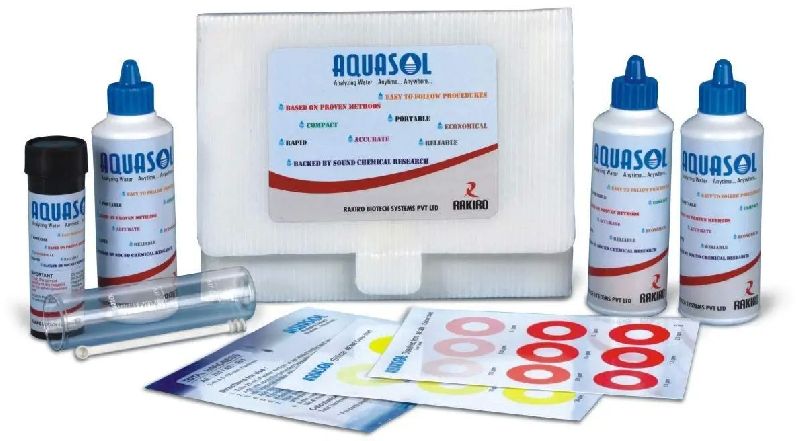
When water passes through or over deposits such as limestone the levels of ca2+ mg2+ and hco3 ions present in the water greatly increase and cause the water to be classified as hard water. Hardness in water is caused by dissolved minerals and calcium and magnesium ions are usually present in significant concentration along with other divalent ions. Hardness creates scale deposit problem which lead to energy loss in different industrial systems such as boiler cooling system cause scale formation in plumbing heating appliances and boilers. Measuring total hardness is essential to monitor softener demineralization RO plant softening processes etc. Our AQUASOL AE201 hardness range is one of the largest available in the market today. It is a premium kit and finds use in almost all industries where water is the most important ingredient/parameter.

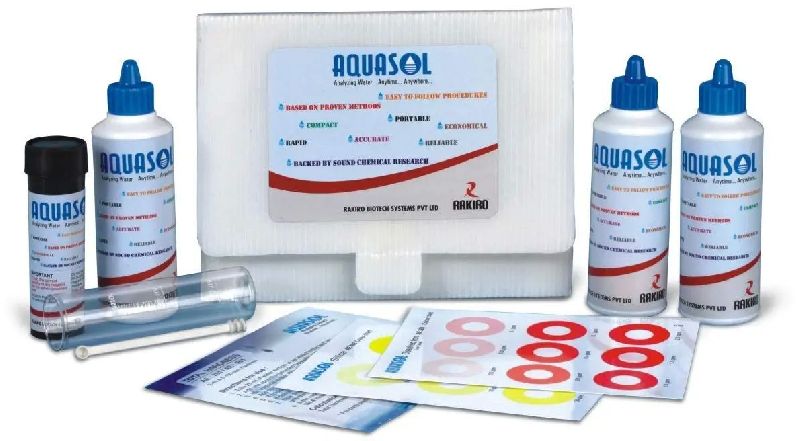
When water passes through or over deposits such as limestone the levels of ca2+ mg2+ and hco3 ions present in the water greatly increase and cause the water to be classified as hard water. Hardness in water is caused by dissolved minerals and calcium and magnesium ions are usually present in significant concentration along with other divalent ions. Hardness creates scale deposit problem which lead to energy loss in different industrial systems such as boiler cooling system cause scale formation in plumbing heating appliances and boilers. Measuring total hardness is essential to monitor softener demineralization RO plant softening processes etc. Our AQUASOL AE221 hardness range is one of the largest available in the market today. It is a premium kit and finds use in almost all industries where water is the most important ingredient/parameter.

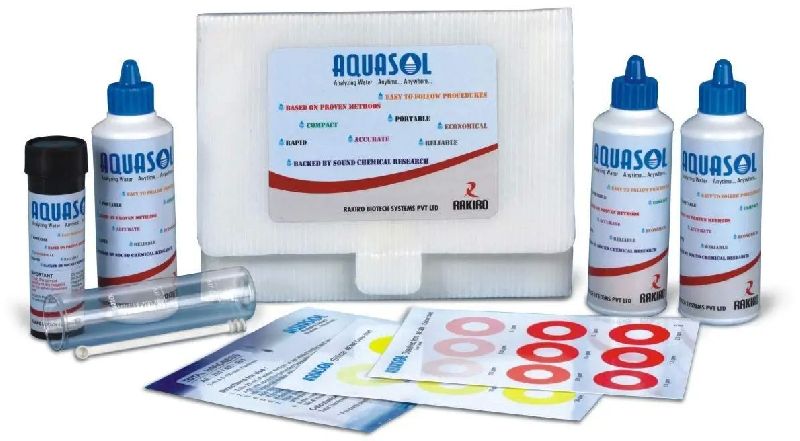
When water passes through or over deposits such as limestone the levels of ca2+ mg2+ and hco3 ions present in the water greatly increase and cause the water to be classified as hard water. Hardness in water is caused by dissolved minerals and calcium and magnesium ions are usually present in significant concentration along with other divalent ions. Hardness creates scale deposit problem which lead to energy loss in different industrial systems such as boiler cooling system cause scale formation in plumbing heating appliances and boilers. Measuring total hardness is essential to monitor softener demineralization RO plant softening processes etc. Our AQUASOL AE231 hardness range is one of the largest available in the market today. It is a premium kit and finds use in almost all industries where water is the most important ingredient/parameter.
 Mr. Arvind Jain (Om Arham Global Solutions LLP)
 101, Mahavir Krupa, Behind Jain Temple, Nr Keshariyaji Bhavan, Dhobi Ali, Edulji Rd, Tembhi Naka, Thane, Maharashtra - 400601
 https://www.omarham.co.in
 Share us via









