 Write a Review
Our Products
We are leaders in the market for providing best range of Hydrochloric Acid (IP/BP), Nitric Acid (AR/ LR), Glacial Acetic Acid (IP), Boric Acid (IP) and Potassium Tetraborate
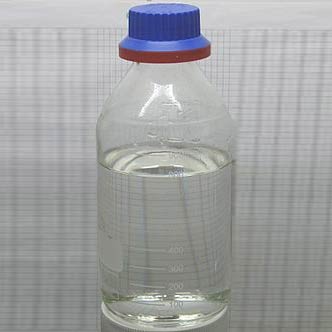
Hydrochloric Acid (IP/BP)is a clear, colorless, highly pungent solution of Hydrogen Chloride (HCl) in water. Hydrochloric Acid is a highly corrosive, strong mineral acid with many uses. Hydrochloric Acid has numerous applications, including pharmaceuticals, household cleaning, production of gelatin and other food additives, descaling, and leather processing.
Details
| Tests | Observations | Specification |
|---|---|---|
| Description | A clear, Colourless, fuming liquid, odour pungent | A clear, colourless, fuming liquid, odour pungent. |
| Indentification | Complies |
A) Should comply by evolution of chlorine. 1) should comply by curdy white precipitate formation. |
| Solubility | Complies | Miscible with water. |
| Arsenic | 0.1 ppm | Not more than 1 ppm. |
| Heavy metals | 0.5 ppm | Not more than 5 ppm. |
| Bromide & Iodiate | Complies | The chloroform layer should not become brown or violet. |
| Free chlorine | Complies | Any blue colour produced disappears on the addition of 0.2 ml of 0.01 M sodium thio sulphate. |
| Sulphite | Complies | The colour of iodine should not be completely discharged. |
| Sulphates | 5 ppm | Not more than 20 ppm. |
| Residue on evaporation | 0.01% | Not more than 0.01% |
| Assay | 36.20% | Between 35.0% and 38.0% |
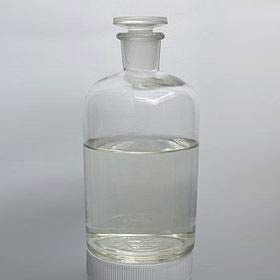
Nitric Acid (AR/ LR) (HNO3), also known as aqua fortis and spirit of niter, is a highly corrosive strong mineral acid. The pure compound is colorless, but older samples tend to acquire a yellow cast due to decomposition into oxides of nitrogen and water. Most commercially available nitric acid has a concentration of 68%. When the solution contains more than 86% HNO3, it is referred to as fuming nitric acid. Depending on the amount of nitrogen dioxide present, fuming nitric acid is further characterized as white fuming nitric acid or red fuming nitric acid, at concentrations above 95%.
Nitric Acid is the primary reagent used for nitration - the addition of a nitro group, typically to an organic molecule. While some resulting nitro compounds are shock- and thermally-sensitive explosives, a few are stable enough to be used in munitions and demolition, while others are still more stable and used as pigments in inks and dyes. Nitric Acid is also commonly used as a strong oxidizing agent.
In elemental analysis by ICP-MS, ICP-AES, GFAA, and Flame AA, dilute nitric acid (0.5 to 5.0%) is used as a matrix compound for determining metal traces in solutions.
Ultrapure trace metal grade acid is required for such determination, because small amounts of metal ions could affect the result of the analysis. It is also typically used in the digestion process of turbid water samples, sludge samples, solid samples as well as other types of unique samples which require elemental analysis via ICP-MS, ICP-OES, ICP-AES, GFAA and flame atomic absorption spectroscopy.
In electrochemistry, Nitric Acid is used as a chemical doping agent for organic semiconductors, and in purification processes for raw carbon nanotubes.
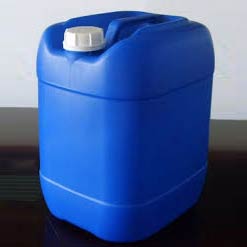
Glacial Acetic Acid (IP) (systematically named ethanoic acid is an organic compound with the chemical formula CHOOH (also written as CH3CO2H or C2H4O2). It is a colorless liquid that when undiluted is also called glacial acetic acid. Glacial Acetic Acid has a distinctive sour taste and pungent smell. Glacial Acetic Acid is mainly produced as a precursor to polyvinylacetate and cellulose acetate. Although it is classified as a weak acid, concentrated acetic acid is corrosive and attacks the skin.
Glacial Acetic Acid is one of the simplest carboxylic acids. It is an important chemical reagent and industrial chemical. In the food industry, acetic acid is used under the food additive code E260 as an acidity regulator and as a condiment. As a food additive, it is approved for usage in many countries, including Canada, the EU, USA and Australia and New Zealand.
Glacial Acetic Acid is used in analytical chemistry for the estimation of weakly alkaline substances such as organic amides. Glacial acetic acid is a much weaker base than water, so the amide behaves as a strong base in this medium.
Specifications
| Tests | Observations | Limit As per IP 2010 |
|---|---|---|
| Description | A clear, colourless, volatile liquid | A clear, colourless, volatile liquid |
| Identification | Passes | Should comply as per IP |
| Freezing point | 16.0 ºC | [NLT 14.8 ºC]. |
| Residue on evaporation | 0.00% | [NMT 0.01%] |
| Reducing Substances | Complies | Should comply as per IP |
| Heavy metals | 0.5 ppm | [NMT 2 ppm]. |
| Iron | 0.4 ppm | [NMT 10 ppm]. |
| Chlorides | 3 ppm | [NMT 5 ppm]. |
| Sulphates | 40 ppm | [NMT 50 ppm]. |
| Assay | 99.85% | [Between 99.0% to 100.5% |
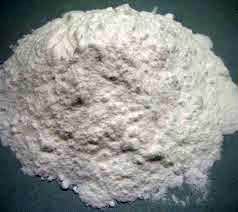
Boric Acid (IP), also called hydrogen borate, boracic acid, orthoboric acid and acidum boricum, is a weak acid of boron often used as an antiseptic, insecticide, flame retardant, neutron absorber, or precursor to other chemical compounds. It has the chemical formula H3BO3 (sometimes written B (OH) 3), and exists in the form of colorless crystals or a white powder that dissolves in water.
Boric Acid can be used as an antiseptic for minor burns or cuts and is sometimes used in dressings or salves. It is has application as eye wash, ointments, foot powder, shampoo, skin cream, mouth wash and veterinary formulations.
Specifications
| Appearance | White powder |
|---|---|
| Confirms to IP specification | |
| Assay (by Acidimetry) | 99.5 - 100.5% |
| Appearance of solution | Passes test |
| Substances insoluble in alcohol | Passes test |
| pH (3.3%, water) | 3.8 - 4.8 |
| Sulphate (SO4) | Max 0.04% |
| Heavy metals (as Pb) | Max 0.0015% |
| Arsenic (As) | Max 0.001% |
| Organic Impurities | Passes test |
| Loss on drying | Max 0.5% |
Potassium Tetraborate, Extra Pure is a product resulting from the controlled reaction of potassium hydroxide, water and boric acid.
When dissolved in water, Potassium Tetraborate hydrolyzes to give a mildly alkaline solution. It is thus capable of neutralizing acids. It also combines with strong alkalis to lower their pH. The pH of a 2% (wt.) solution of Potassium Tetraborate is 9.2. The value increases very slightly with increasing concentration, and diminishes very slightly with increasing temperature. The relatively constant pH of Potassium Tetraborate solutions makes them excellent buffering agents, and these are often recommended as primary standards in analytical procedures.
Potassium Tetraborate is an excellent solvent for metallic oxides at high temperatures. In the field of metallurgy, it is used in the preparation of special welding, soldering and brazing fluxes of stainless steel, or various non-ferrous metals to avoid the “glare” associated with sodium borate.
Potassium borates dispersed in a very finely divided state, improve the load-carrying, anticorrosion, and anti-wear properties of industrial and automotive gear lubricants. Being a good absorber of thermal neutrons, Potassium Tetraborate is used for emergency shutdowns in nuclear-powered ships.
Orthophosphoric Acid (AR/IP) is a mineral (inorganic) acid having the chemical formula H3PO4 . Orthophosphoric Acid molecules can combine with themselves to form a variety of compounds, which are also referred to as phosphoric acids, but in a more general way. The term phosphoric acid can also refer to a chemical or reagent consisting of phosphoric acids, such as pyrophosphoric acid or triphosphoric acid, but usually orthophosphoric acid.
In addition to being a chemical reagent, Orthophosphoric Acid has a wide variety of uses, including as a rust inhibitor, food additive, dental and orthop(a)edic etchant, electrolyte, flux, dispersing agent, industrial etchant, fertilizer feedstock, and component of home cleaning products.
The most common source of phosphoric acid is an 85% aqueous solution; such solutions are colorless, odorless, and non-volatile. Orthophosphoric Acid is rather viscous, syrupy liquids, but still pourable. Because it is a concentrated acid, an 85% solution can be corrosive, although nontoxic when diluted. Because of the high percentage of phosphoric acid in this reagent, at least some of the Orthophosphoric Acid is condensed into polyphosphoric acids. For the sake of labeling and simplicity, the 85% represents H3PO4 as if it were all orthophosphoric acid.
Sulfuric Acid (AR/ LR) (alternative spelling sulphuric acid) is a highly corrosive strong mineral acid with the molecular formula H2SO4. Sulfuric Acid is a pungent-ethereal, colorless to slightly yellow viscous liquid, which is soluble in water at all, concentrations.
Sulfuric Acid is a diprotic acid and shows different properties depending upon its concentration. Its corrosiveness on other materials, like metals, living tissues (e.g. skin and flesh) or even stones, can be mainly ascribed to its strong acidic nature and, if concentrated, strong dehydrating and oxidizing property. Sulfuric Acid at a high concentration can cause very serious damage upon contact, as it not only causes chemical burns via hydrolysis, but also secondary thermal burns via dehydration. Accordingly, safety precautions should be strictly observed when handling it. Moreover, it is hygroscopic, readily absorbing water vapor from the air.
Sulfuric Acid is a central substance in the chemical industry. Sulfuric acid has a wide range of applications including domestic acidic drain cleaner, electrolyte in lead-acid batteries and various cleaning agents. Principal uses include mineral processing, fertilizer manufacturing, oil refining, wastewater processing, and chemical synthesis.
It is used in chemical industry for production of detergents, synthetic resins, dyestuffs, pharmaceuticals, petroleum catalysts, insecticides and antifreeze, as well as in various processes such as oil well acidizing, aluminium reduction, paper sizing and water treatment.
 Pankaj Gupta (MD) & Mr. Navin Shah (Sales) (Polypharm Private Limited)
 Calcot House, 1, M.P.Shetty Marg, (Tamarind Lane) Fort, Mumbai - 400 001., Maharashtra - 400001
 Share us via