
Company Information
 Member Since 15 Years
 Nature of Business Exporter Year of Establishment 1961
Ask for more detail from the seller
Contact Supplier
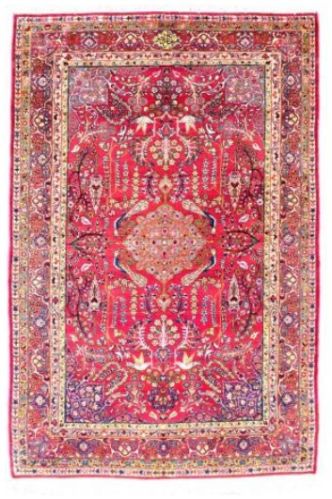
The dyes of Kerman are the most varied and imaginative. The dying process is done while the wool is still in the flock, before spinning, allowing for more uniformity of color. The dyers of Kerman are renowned for their skill in producing light shades of color. Kerman is also noted for its distinctive late 16th century to mid-17th century carpets called ‘vase carpets’. This term refers to a design of all-over stylized flowers and oversized palmettes with vases placed at intervals throughout the field. Kermans are woven in all rug sizes and the foundation is often cotton. To the north of Kerman is the village of Ravar where Laver Kerman rugs are made. These rugs are rarer than Kermans and the name is used as a distinction of quality.
Among all Persian rugs, none may be argued to be more elegant and refined as those produced in the city of Kerman. Kerman rugs often feature traditional Persian reds and blues or variations thereof and are nearly always floral and curvilinear in design. The fineness and quality antique rugs of Kerman weaves in combination with their traditional Persian floral designs make them ideal for those wishing to add grace and grandeur to the formal spaces of their home.
All natural dyes are paramount for the carpet to have more than just decorative value. Beyond that, various dyers had varying levels of skill and invested different lengths of time in dyeing the yarns. The “quality of color”–its radiance and level of nuance within each color–is centrally important. Certain rare colors such as Tyrian purple, saffron yellow, cochineal rose and greens add to the carpet’s value



Connect with us





 For Buyer
  For Seller
  Help
Help 

 Lobby A
 Send Enquiry