
Company Information
 Member Since 6 Years
 Nature of Business Manufacturer Year of Establishment 1993
Ask for more detail from the seller
Contact Supplier
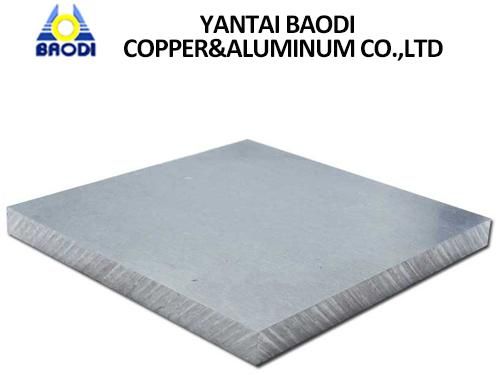
1:Brief Introduction Of 7075 aluminum steel:
The 7075 aluminum plate is a very strong grade of metal. It is well-known for its toughness, which is why it's frequently used in aerospace and aviation applications. It has excellent weight-to-strength ration, making it ideal for highly stressed parts. When in the annealed condition, forming can be performed, which should be followed by heat treatment. 7075 aluminum is considered to be strong for aluminum. While forming this alloy, it has greater springback. If forming this metal while in the annealed condition becomes difficult, it can be placed in heat between 200 and 250 degrees F to soften it. To make this alloy have high-strength capabilities, heat treating can be used. It also has excellent properties when in low temperatures. The conductivity to electricity of this metal is 36 percent of copper.
The strength measurements of this metal are as follows: 83,000 psi tensile strength, 48,000 psi shear strength and 73,000 psi shear strength. Due to this metal's excellent ratio for weight-to-strength, it can be used in applications involving structural parts that are highly stressed. High stress applications that frequently use this grade of aluminum include aircraft fittings, missile parts, regulating valve parts, meter gears, fuse parts, worm gears and keys. It's a popular choice for use in applications in commercial aircraft components and aerospace and defense equipment. The plastics industry also uses this alloy as a mold material.
The weldability of this metal is low, but the formability is great. When forging is used, it's required that the alloy be placed in temperatures between 700 and 900 degrees F. Afterwards, solution heat treatment should be used.
Mechanical properties:
The mechanical properties of 7075 depend greatly on the temper of the material.
7075-O
Un-heat-treated 7075 (7075-O temper) has maximum tensile strength no more than 280 MPa (40,000 psi), and maximum yield strength no more than 140 MPa (21,000 psi). The material has an elongation (stretch before ultimate failure) of 9-10%. It is very highly corrosion-resistant and has good strength.
7075-T6
T6 temper 7075 has an ultimate tensile strength of 510-540 MPa (74,000-78,000 psi) and yield strength of at least 430-480 MPa (63,000-69,000 psi). It has a failure elongation of 5-11%.
The T6 temper is usually achieved by homogenizing the cast 7075 at 450°C for several hours, quenching, and then aging at 120 °C for 24 hours. This yields the peak strength of the 7075 alloy. The strength is derived mainly from finely dispersed eta and eta' precipitates both within grains and along grain boundaries.
7075-T651
T651 temper 7075 has an ultimate tensile strength of 570 MPa (83,000 psi) and yield strength of 500 MPa (73,000 psi). It has a failure elongation of 3-9%. These properties can change depending on the form of material used. Thicker plate may exhibit lower strengths and elongation than the numbers listed above.



Connect with us





 For Buyer
  For Seller
  Help
Help 
 Yantai
 Send Enquiry