
Company Information
 Member Since 2 Years
 Nature of Business Service Provider Year of Establishment 2011
Ask for more detail from the seller
Contact Supplier
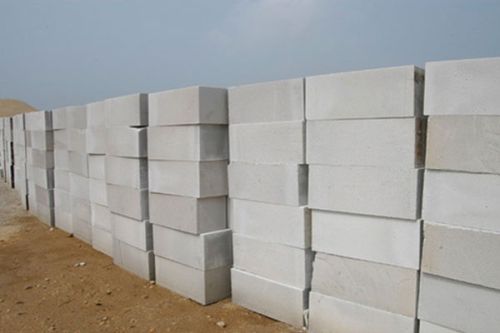
Autoclaved Aerated Concrete (AAC) blocks are extensively used in the construction industry due to their lightweight, compact, and durable characteristics. AAC blocks are non-load bearing and are ideal for wall partitions.
They exhibit higher resistance to fire, seismic activity, moisture, and termite pests, making them a popular choice for construction projects. AAC blocks are particularly suitable for high-rise buildings and structures that experience high-temperature variations.
Additionally, due to their lower density, high-rise buildings using AAC blocks require less steel and concrete for structural support. Moreover, the number of joints required for laying AAC blocks is lower, reducing the amount of mortar needed for construction.
The popularity of AAC blocks is because of their numerous benefits:
1. Durability: AAC blocks are robust and long-lasting because of their compressive strength and minimal water absorption, making them resistant to weathering and decay.
2. Eco-friendly: AAC blocks are produced from natural components and need less cement than typical concrete blocks, producing fewer carbon emissions during production.
3. Fire-resistant: AAC blocks are fire-resistant and do not generate harmful fumes when burned, making them a safe building material.
4. More seismic protection: Because of their capacity to disperse and absorb seismic energy generated by an earthquake, AAC blocks display minimal cracking and deformation. It is a safer building material in earthquake-prone areas.
5. Minimal maintenance: AAC blocks require little maintenance during their lifespan, lowering the building's maintenance expenses.



Connect with us





 For Buyer
  For Seller
  Help
Help 

 Sector 114, Gurugram, Haryana
 Send Enquiry