
Company Information
 Member Since 5 Years
 Nature of Business Trader
 GST No. 09BBNPS1230B4ZS
Ask for more detail from the seller
Contact Supplier
Acid Protease – Uses in Sugar, Ethanol & Distillery Industries
\\\\\\
Acid protease is a protein-degrading enzyme that works in acidic environments. It is widely used in fermentation-based industries such as ethanol production, molasses-based distilleries, and sugar processing, where it enhances nutrient availability, improves yeast performance, and reduces residual protein buildup.
\\\\\\
\\\
🔍 1. What is Acid Protease?
\\\\\\
Enzyme type: Protease (EC 3.4.23.18 – Aspartic-type)
\\\Function: Hydrolyzes peptide bonds in proteins
\\\Optimal pH: 3.5 – 5.0
\\\Sources: Aspergillus niger, Rhizopus spp., Mucor spp.
\\\\\\
\\\
🏭 2. Industrial Applications
\\\\\\
\\\
✅ A. Ethanol & Distillery Industry
\\\\\\
Breaks down complex proteins in grain-based mash (maize, sorghum, rice) or molasses
\\\Releases free amino nitrogen (FAN) – essential for yeast growth
\\\Reduces foaming during fermentation
\\\Improves alcohol yield by boosting yeast viability
\\\Enhances fermentation kinetics, especially in molasses-based fermenters
\\\\\\
\\\
✅ B. Sugar Industry
\\\\\\
Helps in clarification by breaking down protein content in juice
\\\Reduces non-sugar impurities, improving sugar crystallization
\\\Supports viscosity reduction in sugar syrup
\\\D. Brewing / Fermented Beverages
\\\Enhances yeast performance
\\\Reduces chill haze and protein-based instability
\\\Improves clarity and foam control
\\\📈 3. Benefits Summary
\\\| Protein hydrolysis | \\\Releases peptides & amino acids | \\\
| FAN production | \\\Improves yeast nutrition & fermentation | \\\
| Anti-foaming effect | \\\Reduces surface tension & foam | \\\
| Viscosity reduction | \\\Eases mash handling & pumping | \\\
| Residual sugar optimization | \\\Better sugar-to-alcohol conversion | \\\
💧 4. Application Guidelines
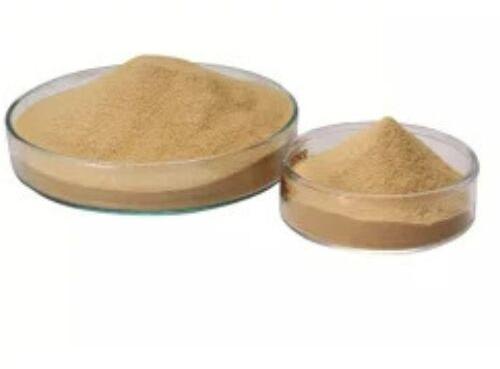
\\\Form: Liquid or powder
\\\Typical dosage: 0.05% – 0.2% (w/w of mash)
\\\pH range: 3.5 – 5.0
\\\Temp range: 35°C – 55°C
\\\Time: Add during mash preparation or early fermentation
\\\🏷️ 5. Common Product Examples
\\\\\\



Connect with us





 For Buyer
  For Seller
  Help
Help 

 Shaikpet, Hyderabad, Telangana


 Send Enquiry