
Products / Services
  • Products / Services
  • Companies
  • Buy Leads
    Post Buy Requirement

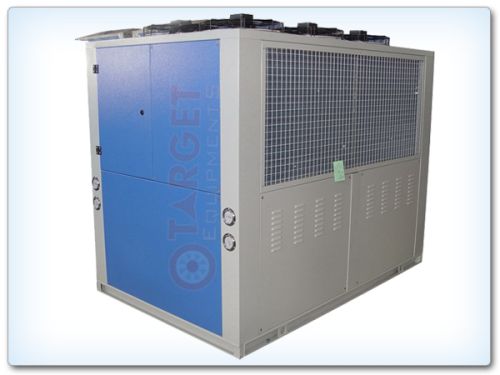
    Air Cooled Chiller

    • Supply TypeManufacturer, Exporter, Supplier, Retailer
    • Preferred Buyer Location All over the world

    Chilled water is used to cool and dehumidify air in mid to large size commercial, industrial facilities like Water chillers can be either water cooled chiller or air cooled chiller Whenever a....
    View More Details
    Send Enquiry

    Company Information

    • calendar Member Since 17 Years
    • building Nature of Business Retailer
    • Year of Establishment 2009

    Ask for more detail from the seller

    Contact Supplier
    Report incorrect details
    • Product Details

    • Company Details

    no_img_icon

    Chilled water is used to cool and dehumidify air in mid to large size commercial, industrial facilities like Water chillers can be either water cooled chiller or air cooled chiller Whenever a chiller's heat rejection can be used for a productive purpose, in addition to the cooling function.


    Water Cooled Chillers : Water cooled chillers are typically indoor installation and operation, it’s are cooled by a separate condenser water loop and connected to outdoor cooling towers to expel heat to the atmosphere.

    Air Cooled Chiller: Air Cooled chillers are intended for outdoor installation and operation. Air cooled machines are directly cooled by ambient air being mechanically circulated directly through the machine's condenser coil to expel heat to the atmosphere.

    Quality Control:

    Our chillers are compact design covering minimum floor area. low cost maintenance, break throw technology and long life serviceability Chilled water temperature can range from 1.5°C to 7°C We manufacturing chillers range from 0.5 TR to 250 TR

    Function Of Industrial Chiller
    • The industrial chillers are normally packaged, complete and closed-loop systems Include the condenser, pumps, chiller, temperature control systems and associated valves.
    • Circulates water or any other coolant at constant pressure and temperature. The coolant flows from the chiller to the point of application and back again.
    • Refrigeration is used as the cooling process in most of the industrial chillers. Some depend on air or water that flows over the coils containing a specific coolant in order to regulate the temperature.
    • The coolant that is used most commonly in process chillers is water, though coolant mixtures are employed frequently. The latest development in industrial water chillers is the utilization of water cooling rather than air cooling.
    • The condenser cools the refrigerant with water and not air.
    • A cooling tower cools the air, thus reducing the need for energy as well as the chiller size. This is because of the condenser's small surface area and the lack of cooling fans which minimizes the noise levels too.
    Industry Chiller Application

    Chilled water or other liquid from the chiller is pumped through process or laboratory equipment. Industrial chillers are used for controlled cooling of products, mechanisms and factory machinery in a wide range of industries like.

    • Plastic industry in injection and blow moulding,
    • Metal working cutting oils, welding equipment,
    • Die-casting and machine tooling, chemical processing,
    • Pharmaceutical formulation,
    • Food and beverage processing,
    • Paper and cement processing,
    • Vacuum systems
    • X-ray diffraction
    • Power supplies and power generation stations, analytical equipment, compressed air and gas cooling.
    • Target chiller used to cool high-heat specialized items such as MRI machines and lasers, and in hospitals, hotels and campuses.
    • The chillers for industrial applications can be centralized,
    • Decentral chillers are usually small in size (cooling capacity), usually from 0.2 tons to 10 tons. Central chillers generally have capacities ranging from 10 tons to 100
    Specifications

    When determining industrial chiller specifications, the following aspects need to be taken into consideration:


    • Source of power
    • Chiller rating
    • Capacity of the evaporator and condenser
    • Cooling capacity of the chiller
    • Type of the evaporator
    • Ambient temperature
    • Material of evaporator and condenser
    • Type of fan
    • Expectations of efficiency
    • Materials of plumbing and piping
    • Limits of noise level
    • Number of compressors and their type
    • Number of  circuits
    • Fluid leaving temperature
    • Coolant requirements
    • Type of refrigerant


    Share your requirements for a quick response!
    Tell us what you need?

    Looking for Air Cooled Chiller?

    Quantity
    Seller Contact Details
    To list your productBoost Your Business Visibility WorldwideRegister Now
    To list your productBoost Your Business Visibility WorldwideRegister Now
    Waiting for permission
    To search by voice, go to your browser settings and allow access to microphone

    Allow microphone access to search with voice