
Company Information
 Member Since 11 Years
 Nature of Business Retailer
 GST No. 27AABCL9949B1ZC
Ask for more detail from the seller
Contact Supplier
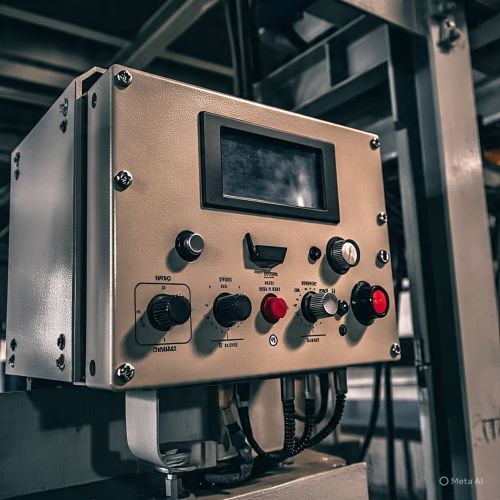
We are engaged in supplying of analog controller Benefits of Analog Controllers
No need for PLCs, HMIs, or programming
Quick deployment: Just wire and turn a knob or apply a signal
Smooth, noise-free operation: Especially when using filtered PWM
leelavati automation
Reliable in harsh environments: Less prone to digital EMI/ESD issues
analog motor controller is a device that regulates the operation of electric motors using continuous analog signals such as voltage (e.g., 0–10 V) or current (e.g., 4–20 mA). These controllers offer proportional, open-loop or closed-loop control over motor speed, torque, and direction without the need for digital programming or communication protocols.
Input Control Signals 0–10 V, ±10 V, 4–20 mA, potentiometer input
Output Modes PWM, linear voltage, or current to drive the motor
Direction Control Forward/reverse via discrete switch inputs or analog bias
Feedback Support Tachometer, encoder (in closed-loop variants)
Motor Types Supported DC brushed, DC brushless (BLDC), universal motors
Mounting DIN rail, panel-mount, or PCB embedded
Power Ratings From 12 V to 110 V DC (or up to 230 V AC input models)
Applications
Speed control of DC motors in conveyor belts, fans, pumps, and mixers
Manual or sensor-driven process control in HVAC, packaging lines
Retrofit or replacement of digital controllers in analog-only systems
leelavati automation
Adjustable lab or testing rigs with potentiometer speed dials
Controller Configurations
Parameter Common Options
Input Voltage 12 V, 24 V, 48 V, 110 V DC
Output Current 1 A – 30 A
Control Input 0–10 V, ±10 V, 4–20 mA, 5 kΩ pot
Output Type PWM or linear DC
Enclosure Open-frame or enclosed with heat sink
Safety Features Overcurrent, undervoltage, reverse polarity, thermal cutoff
Small DC (12–24 V, <5 A) PCB or compact enclosed
Medium (24–48 V, 5–10 A) DIN/panel mount, 0–10 V input
Advanced (closed-loop) Analog PID controller w/ tach
Industrial Grade Heatsink + current limiter
Analog vs Digital Motor Controllers
Feature Analog Controller Digital Controller
Input Method Voltage/current/potentiometer PLC or HMI via Modbus/fieldbus
Ease of Use Plug-and-play, no software needed Requires programming
Precision Medium High (PID tuning, profiles)
Cost Lower Higher
Integration Basic (non-networked) Fully networked (e.g. EtherCAT)
Analog Controller Use-Cases
Potentiometer-controlled speed regulators for basic operator panels
4–20 mA sensor-driven control in HVAC (e.g., air damper positioning)
0–10 V driven speed control from analog PLC modules
Testing benches for motors, fans, and pumps with analog dials
Teaching labs in polytechnic colleges and industrial training institutes
Basic PWM DC controller 12–24 V, 5 A with knob + 0–10 V Pot / 0–10 V
Industrial analog drive 24–48 V, 10–20 A, DIN rail mount 0–10 V
Closed-loop analog PID DC controller with encoder input ±10 V ₹
leelavati automation



Connect with us





 For Buyer
  For Seller
  Help
Help 

 Chembur, Mumbai, Maharashtra
 Send Enquiry