
Company Information
 Member Since 11 Years
 Nature of Business Retailer
 GST No. 27AABCL9949B1ZC
Ask for more detail from the seller
Contact Supplier
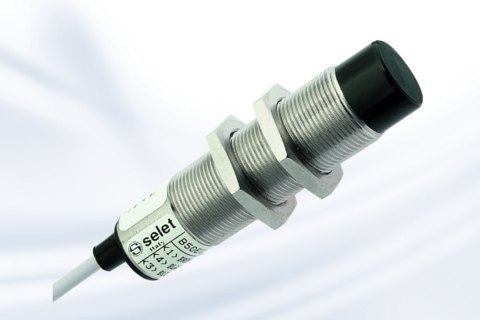
Analog Proximity Sensor in Industrial Automation An Analog Proximity Sensor is a type of sensor used in industrial automation to detect the presence or absence of an object and provide a continuous analog output proportional to the distance between the sensor and the target object. Unlike digital proximity sensors that only give ON/OFF signals, analog proximity sensors offer variable output signals—such as voltage or current—that correspond to the position or distance of the detected object. Principle of Operation Analog proximity sensors operate on various sensing technologies such as inductive, capacitive, ultrasonic, or photoelectric principles, depending on the application and target material. Inductive analog proximity sensors: Detect metallic objects by generating an electromagnetic field and measuring the change in inductance caused by the presence of metal. Capacitive analog proximity sensors: Detect both metallic and non-metallic objects by measuring changes in capacitance between the sensor and the target. Ultrasonic analog proximity sensors: Use ultrasonic sound waves and measure the time it takes for the echo to return, producing an analog output based on distance. Photoelectric analog proximity sensors: Use light beams and measure the intensity or time of reflection to provide an analog distance measurement. Output Signals The sensor outputs a continuous analog signal, typically: Voltage Output: Usually 0-10 V or 0.5-10 V proportional to the distance. Current Output: Commonly 4-20 mA, ideal for long-distance signal transmission with noise immunity. This continuous output allows precise measurement of object position or material level, enabling better process control and automation. Components Sensing Head: Contains the sensing elements and electronics to detect objects. Signal Processor: Converts raw sensor signals into a proportional analog output. Housing: Industrial-grade rugged casing often rated IP65 or higher for dust and water resistance. Connector or Cable: For power supply and signal transmission. Applications in Industrial Automation Positioning and Distance Measurement: Analog proximity sensors can accurately measure the position of machine parts, detect the proximity of objects, or monitor material levels. Material Handling and Conveyor Systems: They help in controlling speed, spacing, and positioning of items on conveyors by continuously monitoring distances. Quality Control: Detect minute variations in part position or surface profiles for inspection and sorting. Robotics: Provide feedback for robotic arms to adjust grip, position parts precisely, or avoid collisions. Level Measurement: Capacitive analog sensors monitor liquid or granular material levels in tanks or silos. Advantages Continuous Measurement: Offers more information than simple ON/OFF sensors. Precision and Control: Enables fine adjustments in automation processes. Versatile: Works with various materials and environments depending on sensor type. Noise Immunity: Current output models resist electrical noise better, suitable for harsh industrial settings. Easy Integration: Compatible with PLCs, DCS, and other control systems with analog input modules. Installation and Configuration Mounting should consider sensing range and target size/material. Calibration may be required to match the analog output with actual distances or positions. Shielding and proper grounding reduce interference in electrically noisy environments. The sensor must be aligned properly to detect the intended target reliably. Example Use Case In a bottling plant, an analog inductive proximity sensor monitors the position of metal caps on bottles as they move along the conveyor. The sensor outputs a voltage proportional to the distance of the cap from the sensor face. This data is fed to a PLC that adjusts the capping machine to ensure proper placement, reducing errors and downtime. Conclusion Analog



Connect with us





 For Buyer
  For Seller
  Help
Help 

 Chembur, Mumbai, Maharashtra
 Send Enquiry