 671 - 25,000 / Piece
Company Information
 Member Since 11 Years
 Nature of Business Retailer
 GST No. 27**********ZC
Ask for more detail from the seller
Contact Supplier
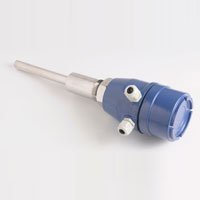
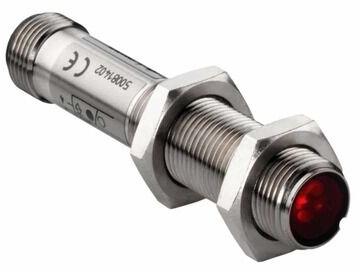
Beam Sensors are optical sensors widely used in industrial automation for detecting objects, presence, or motion by sensing interruptions or reflections of a light beam. They play a crucial role in safety, positioning, counting, and object detection across various manufacturing and processing industries.
Principle of OperationBeam sensors function by emitting a focused light beam—typically infrared or visible red light—from an emitter toward a receiver or reflector. Detection occurs when this beam is either interrupted or reflected by an object, triggering a response from the sensor.
There are three main types:
Through-beam (Opposed) Sensors: The emitter and receiver are separate units facing each other. When an object interrupts the beam, the receiver signal is blocked, indicating presence.
Retro-reflective Sensors: The emitter and receiver are housed together; a reflector is positioned opposite. The beam is sent to the reflector and back. An object blocking the beam path causes detection.
Diffuse Reflective Sensors: The emitter and receiver are in the same housing, and the sensor detects light reflected directly from the object’s surface. Detection depends on the object's reflectivity.
Emitter: Usually an LED or laser diode producing the light beam.
Receiver: Photodiode or phototransistor that detects the light beam.
Signal Processor: Converts received light signals into digital or analog outputs.
Housing: Durable and often rated IP65 or higher for dust and water resistance.
Mounting Hardware: Brackets or clamps for precise alignment and installation.
Non-contact Detection: Prevents mechanical wear and damage to objects.
High Speed Response: Suitable for fast-moving production lines.
Long Sensing Range: Through-beam types can detect objects up to several meters or even tens of meters.
Versatility: Suitable for detecting a wide range of materials and colors.
Easy Installation and Alignment: Flexible mounting options and adjustable sensitivity.
Reliability: Resistant to dust, moisture, and vibration in industrial environments.
Object Detection and Counting:
Detect presence, passage, or absence of products on conveyor belts.
Safety Systems:
Integrated into light curtains or perimeter guarding to stop machinery when a beam is broken.
Positioning and Sorting:
Assist robotic arms and automated systems in locating and handling items.
Packaging and Labeling:
Ensure packages are correctly positioned and labels are present.
Level Detection:
Detect material or product levels in hoppers or containers.
Ensure proper alignment between emitter and receiver for through-beam or reflector for retro-reflective sensors.
Use mounting brackets to maintain stable positioning, especially in vibrating environments.
Adjust sensitivity to accommodate varying target sizes, colors, and surface finishes.
Protect sensor lenses from dust and damage by using appropriate covers or cleaning regularly.
Avoid ambient light interference by positioning sensors away from direct sunlight or bright artificial lights.
In an automated bottling plant, beam sensors detect bottles passing on the conveyor. When a bottle breaks the beam between emitter and receiver, the sensor signals the filling machine to dispense liquid. This ensures precise filling and reduces waste.
ConclusionBeam sensors provide reliable, precise, and non-contact detection essential for modern industrial automation. Their adaptability to various environments and materials, combined with fast response and long detection ranges, makes them indispensable for enhancing productivity, safety, and quality control.





Connect with us





 For Buyer
  For Seller
  Help
Help 

 Chembur, Mumbai, Maharashtra
 Send Enquiry