
Company Information
 Member Since 11 Years
 Nature of Business Retailer
 GST No. 29ALDPS8451M1ZB
Ask for more detail from the seller
Contact Supplier
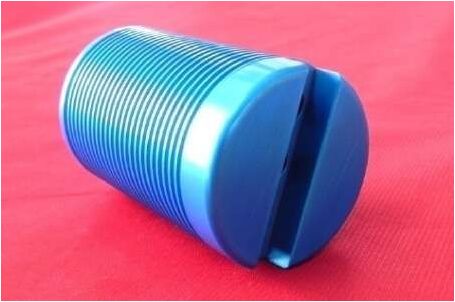
Aluminum alloys are anodized to increase corrosion resistance and to allow dyeing (coloring), improved lubrication, or improved adhesion. However, anodizing does not increase the strength of the aluminium object. The anodic layer is non-conductive.[3] When exposed to air at room temperature, or any other gas containing oxygen, pure aluminum self-passivates by forming a surface layer of amorphous aluminum oxide 2 to 3 nm thick,[4] which provides very effective protection against corrosion. Aluminum alloys typically form a thicker oxide layer, 5�15 nm thick, but tend to be more susceptible to corrosion. Aluminum alloy parts are anodized to greatly increase the thickness of this layer for corrosion resistance. The corrosion resistance of aluminum alloys is significantly decreased by certain alloying elements or impurities: copper, iron, and silicon,[5] so 2000-, 4000-, and 6000-series Al alloys tend to be most susceptible. Although anodizing produces a very regular and uniform coating, microscopic fissures in the coating can lead to corrosion. Further, the coating is susceptible to chemical dissolution in the presence of high- and low-pH chemistry, which results in stripping the coating and corrosion of the substrate. To combat this, various techniques have been developed either to reduce the number of fissures, to insert more chemically stable compounds into the oxide, or both. For instance, sulfuric-anodized articles are normally sealed, either through hydro-thermal sealing or precipitating sealing, to reduce porosity and interstitial pathways that allow corrosive ion exchange between the surface and the substrate. Precipitating seals enhance chemical stability but are less effective in eliminating ion exchange pathways. Most recently, new techniques to partially convert the amorphous oxide coating into more stable micro-crystalline compounds have been developed that have shown significant improvement based on shorter bond lengths.



Connect with us





 For Buyer
  For Seller
  Help
Help 

 Mysore Road, Bengaluru, Karnataka
  Send Enquiry