
Company Information
 Member Since 4 Years
 Nature of Business Exporter Year of Establishment 2023
Ask for more detail from the seller
Contact Supplier
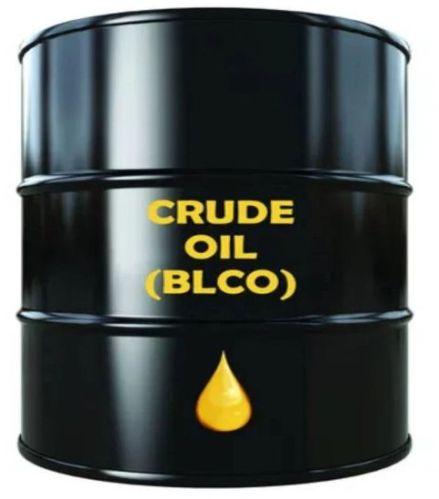
Crude oil, also known as petroleum, is a naturally occurring liquid found in underground reservoirs, composed primarily of hydrocarbons and other organic materials. It 's formed from the remains of ancient plants and animals subjected to heat and pressure over millions of years. Crude oil is refined to produce various petroleum products like gasoline, diesel, and jet fuel, among others.
Key characteristics of crude oil:
• Composition: A complex mixture of hydrocarbons, heteroatom compounds, and metals.
• Appearance: Typically black, brown, or amber liquid, but can also be yellowish, reddish, or greenish.
• Formation: Fossil fuel created from the remains of ancient marine organisms.
• Extraction: Extracted from underground reservoirs, often in association with natural gas and saline water.
• Refining: Undergoes refining processes to separate it into various petroleum products.
• Classification: Classified as "sweet" or "sour" based on sulfur content.
• API Gravity: Used to classify density, with higher values indicating lighter oil.
• Global Commodity: Traded in markets worldwide.
Uses of crude oil:
• Heating: Heating oils are derived from crude oil.
• Petrochemicals: Used as feedstock for the petrochemical industry to produce plastics, chemicals, and other materials.
• Other Products: Lubricants, asphalt, and various other products rely on crude oil.
In essence, crude oil is a vital raw material that fuels modern lifethrough its refined products, while also serving as a key component in the petrochemical industry.
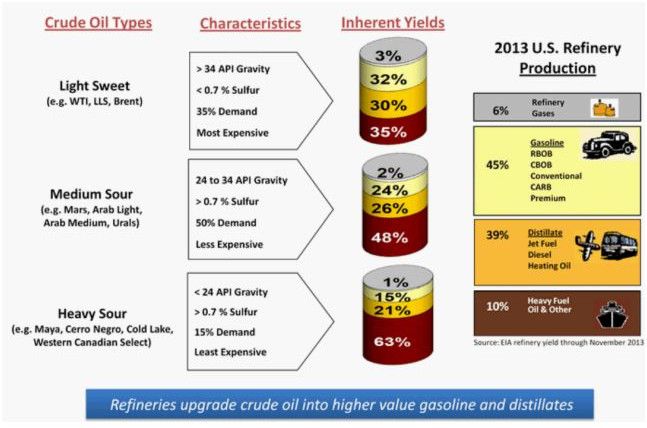
Crude oil is classified primarily by its density (API gravity) and sulfur content. Light crude oil has a lower density and higher API gravity
making it easier and cheaper to refine into products like gasoline. Heavy crude oil has a higher density and lower API gravity, requiring more complex and costly refining. Additionally, crude oil can be categorized as sweet (low sulfur content) or sour (high sulfur content), with sweet crude generally being more desirable.
Here 's a more detailed breakdown:
1. Density (API Gravity): • Light Crude: API gravity of 34° or higher. Easier to refine, producing more gasoline and other high-value products.
• Medium Crude: API gravity between 31° and 33°.
• Heavy Crude: API gravity of 30° or lower. More difficult and costly to refine, yielding lowervalue products with simpler processing.
• Extra Heavy Crude: A subset of heavy crude, with even higher density and viscosity. 2. Sulfur Content:
• Sweet Crude: Typically contains less than 0.5% sulfur by weight. Considered less polluting and easier to refine.
• Sour Crude: Contains 1% or more sulfur by weight. Requires more processing to remove sulfur, which is a pollutant.
3. Other Classifications:
• Waxy Crude: Contains a high percentage of paraffin waxes, which can solidify at lower temperatures, affecting flow and handling.
• Bitumen: A very heavy, viscous form of crude oil, often requiring specialized extraction and processing techniques.
4. Examples:
• Light Sweet Crudes: Examples include West Texas Intermediate (WTI) and Brent Crude, often used as global benchmarks.
• Heavy Sour Crudes: Examples include some crudes from Venezuela and Canada 's oil sands. 5. Impact on Refining:
• Light sweet crudes are generally more desirable because they require less processing, leading to higher yields of valuable products and lower refining costs.
• Heavy sour crudes require more complex and expensive refining processes to remove sulfur and separate out valuable products.
Understanding these classifications is crucial for understanding the global oil market, as different types of crude oil have varying impacts on pricing, refining operations, and environmental concerns



Connect with us





 For Buyer
  For Seller
  Help
Help 

 Dubai
Dubai 
 Send Enquiry