
Company Information
 Member Since 13 Years
 Nature of Business Supplier
Ask for more detail from the seller
Contact Supplier
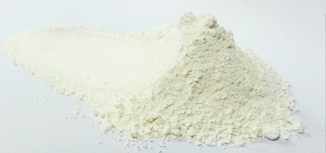
Calcined Kaolin
Calcined Kaolin is also called Anhydrous Aluminum Silicates. Calcined clay is made by the thermal treatment of water-washed and bleached kaolin to achieve purity, improved residues, brightness, and achieve a desired particle size distribution, and then subject to calcinations (heat treatment) to effect the anhydrous state through the removal of 14% water of hydration.
Calcined grades differ by method of exposure to heat. Conventional calcined grades are processed in vertical kilns with a substantial period of exposure. The unique calcination method is to flash calcine the material by exposing the feed clay to higher temperatures for only a few seconds duration. Both methods fully remove the water of hydration, but effect different particle shapes, specific gravity, and optical characteristics.
Low-temperature calcination, at about 650-700ºC, removes structural hydroxyls and forms amorphous metakaolin. Specific gravity is reduced from 2.58 to about 2.50 in the process, while hardness and porosity, and thus brightness, opacity and oil absorption, are increased. Fully calcined clays, with maximum brightness and opacity, are produced in the 1000-1150ºC range. This is hot enough to totally collapse the amorphous structure, with a consequent increase in specific gravity to 2.6-2.7, without causing the mineralogical transformation to mullite (specific gravity 3.2, hardness 6-7). The balance of opacity and sheen derived from calcined clays can be manipulated by the temperature, rate of heating and fluxes used in the calcination process.
The primary use of kaolin in coatings is as a TiO2 extender in waterborne architectural paints. Calcined clays generally provide the best brightness, TiO2 extension and dry hide. Water-washed and delaminated grades also contribute to extension and dry hide, as well as covering power and gloss control (finer particle size = higher gloss). [LESS]



Connect with us





 For Buyer
  For Seller
  Help
Help 
 Malaysia
  Send Enquiry