
Company Information
 Member Since 15 Years
 Nature of Business Manufacturer
Ask for more detail from the seller
Contact Supplier
Jump to: navigation, search
cassava leaves
(also known as tapioca in kerala india)
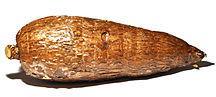
a manioc tuber
scientific classification
kingdom: plantae
(unranked): angiosperms
(unranked): eudicots
(unranked): rosids
order: malpighiales
family: euphorbiaceae
subfamily: crotonoideae
tribe: manihoteae
genus: manihot
species: m. Esculenta
binomial name
manihot esculenta
crantz
cassava (manihot esculenta), also called yuca, mogo, manioc, mandioca and kamoteng kahoy a woody shrub of the euphorbiaceae (spurge family) native to south america, is extensively cultivated as an annual crop in tropical and subtropical regions for its edible starchy, tuberous root, a major source of carbohydrates. It differs from the similarly-spelled yucca, an unrelated fruit-bearing shrub in the asparagaceae family. Cassava, when dried to a starchy, powdery (or pearly) extract is called tapioca, while its fermented, flaky version is named garri.
cassava is the third-largest source of food carbohydrates in the tropics.[1][2] cassava is a major staple food in the developing world, providing a basic diet for around 500 million people.[3] cassava is one of the most drought-tolerant crops, capable of growing on marginal soils. Nigeria is the world's largest producer of cassava.
cassava root is a good source of carbohydrates, but a poor source of protein. A predominantly cassava root diet can cause protein-energy malnutrition.[4]
cassava is classified as sweet or bitter. Like other roots and tubers, cassava contains anti-nutrition factors and toxins.[5] it must be properly prepared before consumption. Improper preparation of cassava can leave enough residual cyanide to cause acute cyanide intoxication and goiters, and may even cause ataxia or partial paralysis.[6] nevertheless, farmers often prefer the bitter varieties because they deter pests, animals, and thieves.[7] the more-toxic varieties of cassava are a fall-back resource (a "food security crop") in times of famine in some places



Connect with us





 For Buyer
  For Seller
  Help
Help 
 buea
buea  Send Enquiry