
Company Information
 Member Since 8 Years
 Nature of Business Retailer
Ask for more detail from the seller
Contact Supplier
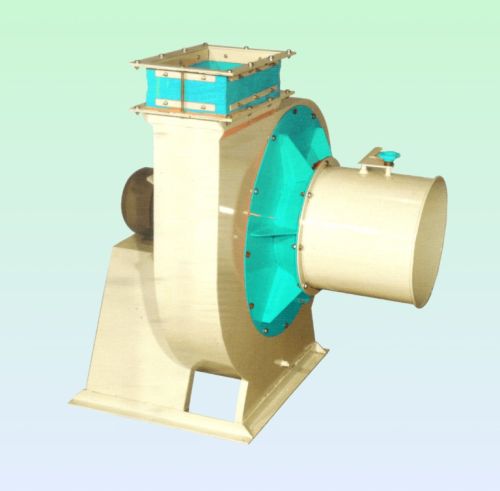
The Centrifugal Fan (Low & High Pressure) is a versatile and robust machine designed to deliver powerful airflow for various agricultural and industrial applications. It plays a crucial role in dust control, ventilation, and the separation of lighter materials from heavier ones in processing environments. Available in both low-pressure and high-pressure models, the centrifugal fan ensures optimal air movement and distribution, making it an essential component in maintaining clean and efficient operations.
Applications and Uses:
Dust Control in Grain and Seed Processing: The Centrifugal Fan is commonly used in grain and seed processing plants to manage dust and maintain air quality. It creates sufficient airflow to carry away dust and light impurities, enhancing the cleanliness of the processing environment and improving the quality of grains and seeds such as wheat, rice, maize, and barley.
Airflow Management for Separation Equipment: In conjunction with cyclones, aspiration channels, and other separation equipment, the Centrifugal Fan provides the necessary airflow to ensure effective separation of lighter impurities from heavier materials. This is vital in achieving high-quality output in processing grains, pulses, and seeds.
Ventilation in Processing Facilities: The Centrifugal Fan is also used to ventilate processing facilities, maintaining a safe and comfortable working environment by controlling temperature and removing dust and airborne particles.
Industrial Applications: Beyond agricultural uses, the Centrifugal Fan is employed in various industrial applications to move air or gases at different pressures. It is used in HVAC systems, dust collection systems, and pneumatic conveying systems to transport materials such as chemicals, minerals, and plastics.
Material Handling and Conveying: In material handling and conveying systems, the Centrifugal Fan is used to provide the air velocity required to move materials through pneumatic lines. It is particularly e



Connect with us





 For Buyer
  For Seller
  Help
Help 

 Bellari Road, Bangalore, Karnataka
 Send Enquiry