
Company Information
 Member Since 8 Years
 Nature of Business Supplier
Ask for more detail from the seller
Contact Supplier
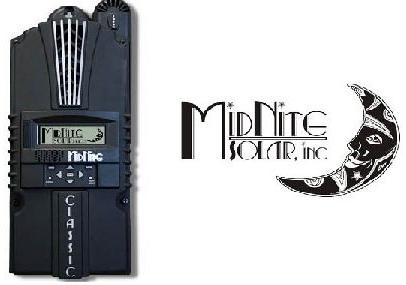
Charge controllers come in various types. Solar charge controllers regulate the charge from a solar panel array to a battery bank.
A solar charge controller will protect your batteries frombeing overcharged by your solar panels and it will block any reverse current (from the batteries) as well. Temperature sensors are an inexpensive addition that help the charge controller more accurately regulate the charge of the battery bank
Youll notice that solar charge controllers are specified by both amperage and voltage. You will need a charge controller that matches the voltage of your solar panel array and battery bank. (Usually 12, 24 or 48 VDC) And youll want to make sure the solar panel charge controller has enough capacity to handle the current (in amps) from your solar panel array.
Many types of charge controller is right for application: MPPT, PWM, and PWM shunt controllers. A PWM (Pulse Width Modulated) charge controller is the traditional style. They are robust, inexpensive and widely used in PV applications. PWM shunt controllers are used less often and mostly in applications where electrical interference is an issue. The MPPT (Maximum Power Point Tracking), charge controller is the shining star of todays PV systems. These controllers actually detect the optimum operating voltage and amperage of the solar array and match that with the battery bank. The result is additional 15-30% more power out of your array versus a PWM controller. Although the MPPT controller is more expensive than its PWM counterpart.



Connect with us





 For Buyer
  For Seller
  Help
Help 
 Dubai
Dubai  Send Enquiry