
Company Information
 Member Since 8 Years
 Nature of Business Retailer
Ask for more detail from the seller
Contact Supplier
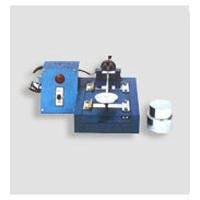
This test helps in determining the ability of a coating to resist degradation due to mechanical wear by hard and rough objects. Abrasion resistance can be enhanced by incorporation of surface modifying additives.
Adhesion testing in the paint and coating industries is necessary to ensure the paint or coating will adhere properly to the substrates to which they are applied.
This test helps in determining the degree to which a paint resists reaction with alkaline materials such as lime, cement, plaster, soap, etc.; a necessary property for paints in bathrooms, kitchens, laundries.
This test helps in determining the corrosive performance of decorative copper/nickel/chromium or nickel/chromium coatings on steel, zinc alloys, aluminum alloys, and plastics designed for severe service. It is also applicable to the testing of anodized aluminum.
This test helps in determining the ability of a coat to resist chemical deterioration or staining.
This test helps in determining the resistance of surface coatings (paint, clear coats, metallic plating, etc.) to chipping caused by the impacts of gravel or other flying objects.
This test helps in determining the hardness of paint coat.
The proper and effective preparation of a surface prior to coating is essential. Making sure that the correct roughness – or profile – has been generated is essential. If the profile is too low, the adhesion of the coating to the surface will be reduced. Too high and there is the danger that the profile peaks will remain uncoated.
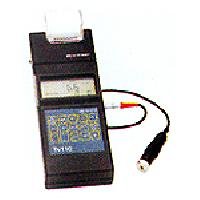
This test helps in determining the thickness of paint plating, coatings and galvanizing on iron steel.
This test helps in determining the resistance of organic coatings by controlled condensation. Condensation is produced by exposing the test surface of the sample to a heated, saturated mixture of air and water vapor, while the reverse side of the sample is cooled to room temperature air.
This test helps in determining the adhesion of a large variety of coatings.
This test helps in determining the corrosion degradation of coating systems for steel bridges.
This test is done to know when a coating is totally dry. When developing a process, it is often important to know the exact time it takes for the coating to dry or cure. There are many stages to the coating drying time. Once a coating has been applied, the first stage is that the coating levels off under gravity. Once a coating begins to cure, a thin dry film appears on the surface. The coating then continues to dry and finally after a period of time, the coating is totally cured.
This test helps in determining when, where, and how the paint or coating failure occurred.
The ability of a pipe coating to resist mechanical damage during shipping, handling, and installation will depend upon its impact resistance. This test method provides a systematic means for screening coating materials with regard to this property.
This test helps in determining the ability of a coating system to withstand the stresses of fabrication. Organic coatings on precoated sheet are subjected to stresses when fabricated into products by roll forming, brake bending, or other deformation processes. These stresses can exceed the flexibility or adhesive strength of the coating, resulting in fracture of the coating which exposes the substrate, or in the loss of adhesion of the coating to the substrate. Gloss (60deg.C):
Gloss measurement is essential instrument where a cosmetic appearance of the coating finish is required. It measures, guide to control and test right from matt to mirror finish accurately. Multi directing a beam light at a specific angle to the test surface and measuring the amount of reflection determine gloss. For general gloss measurement the 60º angle is recommended.
This test method covers a procedure for rapid, inexpensive determination of the film hardness of an organic coating on a substrate in terms of drawing leads or pencil leads of known hardness. This test covers the determination of the indentation hardness of organic materials such as dried paint, varnish and lacquer coatings, when applied to an acceptable plane rigid surface, for example, metal or glass.
Impact performance after painting/printing can be tested with several impact tests, like a puncture test or a falling dart test.
This test helps in determining the total water content of paints using a calcium hydride reaction test kit, or water content between 2 and 85 % water.
This test is used to measure resistance to cracking (flexibility) and adhesion of attached organic coatings on substrates of sheet metal or rubber-type materials.
Salt Spray:
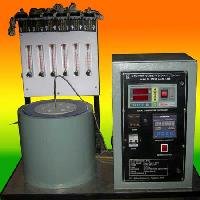
The salt spray test is a standardized test method used to check corrosion resistance of coated samples.
The scratch resistance can be established e.g. in the Taber abrasion test, where the amount of haze is established after a number of abrasive cycles. The scratch resistance can also be determined quantitatively by measuring the weight loss after a number of sanding cycles. The pen test determines the indentation caused by a sharp pencil applied with a defined force.
This test helps in determining the weight percent volatile content of solvent-reducible and water-reducible coatings.
The amount of water that paint coat could absorb is measured by the water content test.
|





Connect with us





 For Buyer
  For Seller
  Help
Help 
 Perumbakkam, Chennai, Tamil Nadu
  Send Enquiry
  52,000 -