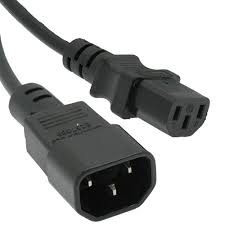
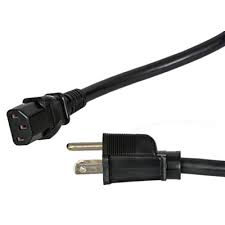
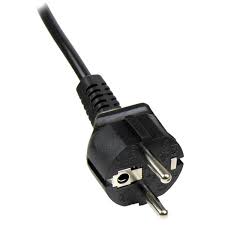
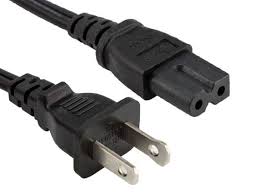
Power cables may be either fixed or detachable from the appliance.[1] In the case of detachable leads, the appliance end of the power cord has a female connector to link it to the appliance, to avoid the dangers from having a live protruding pin. Cords may also have twist-locking features, or other attachments to prevent accidental disconnection at one or both ends. A cord set may include accessories such as fuses for overcurrent protection, a pilot lamp to indicate voltage is present, or a leakage current detector. Power cords for sensitive instruments, or audio/video equipment may also include a shield over the power conductors to minimize electromagnetic interference.
A power cord or appliance coupler may have a retaining clamp, a mechanical device that prevents it from inadvertently being pulled or shaken loose. Typical application areas with stricter safety requirements include medical technology, stage and lighting technology, and computing equipment. For specialty equipment such as construction machinery, sound and lighting equipment, emergency medical defibrillators and electrical power tools, used in locations without a convenient power source, extension cords are used to carry the electric current up to hundreds of feet away from an outlet.
Cord sets must be distinguished from AC adapters, where the connector also contains a transformer, and possibly rectifiers, filters and regulators. Unwary substitution of a standard mains-voltage connector for the power supply would result in application of full line voltage to the connected device, resulting in its destruction and possible fire or personal injury.
See also
Energy portal
Extension cord
Power strip
Power supply
Additional Information
Port of DispatchCourier
Packaging DetailsPVC Packet
Delivery TimeTwo days
Interested in this product? Ask for more details & Latest Price from seller


 Member Since 5 Years
 Nature of Business Distributor
 GST No. 29JCRPS1544D1Z2









 For Buyer
  For Seller
  Help
Help 

 Gandhi Nagar, Bangalore, Karnataka

 Send Enquiry