
Company Information
 Member Since 14 Years
 Nature of Business Retailer Year of Establishment 1976
Ask for more detail from the seller
Contact Supplier
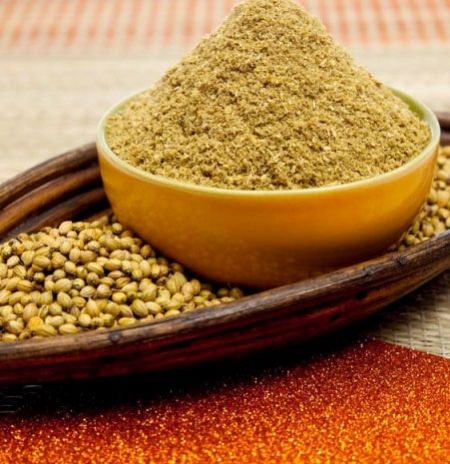
Coriander is probably native to the Middle East and southern Europe, but has also been known in Asia and the Orient for millennia. It is found wild in Egypt and the Sudan, and sometimes in English fields. The seed is now produced in Russia, India, South America, North Africa - especially Morocco - and in Holland. It was introduced to Britain by the Romans, who used it in cookery and medicine, and was widely used in English cookery until the Renaissance, when the new exotic spices appeared. Among ancient doctors, coriander was known to Hippocratic, and to Pliny who called it coriandrum for its 'buggy' smell, coris being a bug; or perhaps because the young seed resembles Cimex lectularius, the European bed-bug.ATTRIBUTED MEDICINAL PROPERTIESCoriander seed oil is an aromatic stimulant, a carminative (remedial in flatulence), an appetizer and a digestant stimulating the stomach and intestines. It is generally benefi- cial to the nervous system. Its main use is in masking foul medicines, especially purga- tives, where it has anti-griping qualities. Coriander cakes were once taken against 'St. Anthony's fire’, or 'Rose' a severe streptococcal skin infection called ‘erysipelas", which caused many deaths before the advent of antibiotics. In Asia the herb is used against piles, headache and swellings; the fruit in colic, piles and conjunctivitis; the essential oil in colic, rheumatism and neuralgia; the seeds as a paste for mouth ulceration and a poultice for other ulcers .Recent studies have supported its use as a stomach soother for both adults and colicky babies. Coriander contains an antioxidant that helps prevent animal fats from turning rancid. It also contains substances that kill meat-spoiling bacteria and fungi. These same substances in Cilantro also prevent infection in wounds. Coriander has been shown to improve tummy troubles of all kinds, from indigestion to flatulence to diarrhea. Weak coriander tea may be given to children under age 2 for colic. It's safe



Connect with us





 For Buyer
  For Seller
  Help
Help 
 Kanjikode, Palakkad, Kerala
 Send Enquiry