

Company Information
 Member Since 11 Years
 Nature of Business Retailer
 GST No. 27AABCL9949B1ZC
Ask for more detail from the seller
Contact Supplier
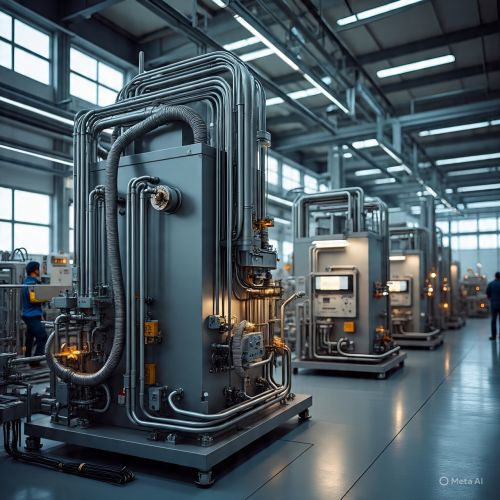
Industrial DCS Installations in Manufacturing & Process Automation A Distributed Control System (DCS) is a centralized yet distributed automation platform designed to monitor and control complex industrial processes. Used extensively in manufacturing plants, refineries, power plants, chemical units, water treatment, pharmaceuticals, food processing, and metallurgical industries, DCS improves process reliability, operational efficiency, safety, and scalability. leelavati automation In a DCS, intelligence is distributed across multiple controllers, field devices, operator stations, and servers — ensuring robust, real-time process control. 🧠 Core Functions of a DCS Continuous process control and regulation Collection and logging of plant data (real-time and historical) Alarm management and safety interlocks Recipe control and batch management Centralized operator monitoring and remote diagnostics Integration with PLCs, sensors, actuators, drives, and SCADA systems Typical Industries & Use Cases IndustryDCS Application Oil & GasRefinery operations, pipeline control, tank farm systems Power GenerationBoiler control, turbine regulation, grid synchronization Chemicals & PetrochemReactor control, distillation, flow and mixing operations Food & BeverageRecipe management, pasteurization, bottling lines PharmaceuticalsBatch control (cGMP compliant), HVAC, cleanroom controls Water & WastewaterPumping stations, filtration, chlorination Pulp & PaperPulping, drying, cutting, coating automation Steel & CementKiln control, rolling mill operations, material handling leelavati automation DCS Architecture Engineering Station (ES) – Design, configuration, and diagnostics Operator Workstation (HMI/OS) – For real-time monitoring, alarm handling, and control Controllers / Process Stations (PS) – Distributed logic processing units connected to I/O Field I/Os & Smart Devices – Interface with process variables (temperature, pressure, flow, etc.) Redundant Network / Bus – Ethernet-based communication (Profinet, Modbus TCP, FOUNDATION Fieldbus, etc.) Historian Server – Long-term data storage and reporting Remote I/O & Substations – For larger distributed systems over wide areas Key Features & Capabilities Real-time control with deterministic execution Redundancy at CPU, power, and network levels for fault tolerance Modular & scalable design to support small to large plants Integrated alarm management and safety protocols (SIL support) Multi-protocol compatibility (Modbus, OPC UA, Profibus, Ethernet/IP, HART) Batch management & recipe handling (ISA-88 compliant) Historian database for data analytics and audits Remote monitoring & control via SCADA and cloud platforms Technical Specifications (Typical) SpecificationValue / Range System RedundancyCPU, network, I/O redundancy (hot-standby) Communication ProtocolsModbus RTU/TCP, Profibus, EtherNet/IP, OPC, HART Supported I/O TypesAI, AO, DI, DO, RTD, Thermocouple, Frequency Scan Time1 ms – 100 ms (configurable) Data LoggingReal-time & historical with backup Alarm Response Time< 1 second Operating Environment–10°C to +60°C; IP20–IP65 enclosures available Power Supply24V DC, 48V DC, 110/230V AC Advantages of DCS Over PLC/SCADA FeatureDCSPLC/SCADA ArchitectureCentralized + DistributedModular (often standalone) Best forContinuous and batch process controlDiscrete/Sequential automation ScalabilityHigh – suitable for large plantsMedium – cost rises with scale RedundancyBuilt-in at multiple levelsOptional IntegrationSeamless integration with sensors, drives, MES/ERPCan require multiple bridges/interfaces Batch/Recipe SupportAdvanced, native support (ISA-88)Possible but complex leelavati automation Smart Features & IIoT Integration Cloud connectivity via MQTT, OPC UA Predictive maintenance using AI/ML algorithms Edge computing enabled I/O stations Real-time energy monitoring Advanced analytics dashboards Cybersecurity with encrypted protocols and firewa




Connect with us





 For Buyer
  For Seller
  Help
Help 

 Chembur, Mumbai, Maharashtra
 Send Enquiry