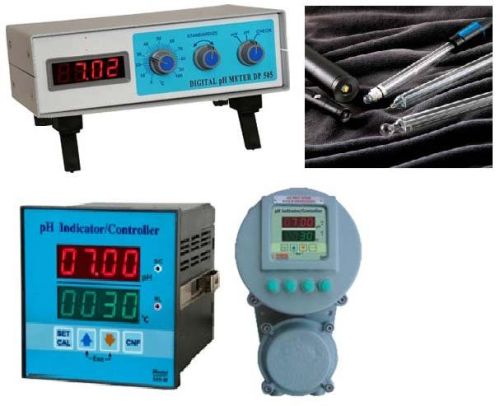
 18,000 - 76,500 / Piece
Company Information
 Member Since 18 Years
 Nature of Business Manufacturer
 GST No. 24**********Z2
Ask for more detail from the seller
Contact Supplier
A digital pH meter is an electronic instrument used to measure the acidity or alkalinity of a liquid. It measures the concentration of hydrogen ions (H+) in the liquid, which determines its pH level. A lower pH indicates a more acidic solution, while a higher pH indicates a more basic or alkaline solution. Here's a detailed explanation of digital pH meters with their specifications:
Components of a Digital pH Meter:
· Electrode: The most crucial component, it consists of a glass bulb that is sensitive to hydrogen ions. The bulb is filled with a reference solution and has a silver chloride (AgCl) reference electrode in contact with the solution. When the electrode is submerged in a liquid, an electrical potential is generated between the reference electrode and the hydrogen ions in the liquid.
Digital PH Meter Electrode
· Reference Electrode: Maintains a stable electrical potential within the meter.
· Converter: Converts the electrical signal from the electrode into a pH reading.
· Display: Shows the measured pH value in a digital format.
· Temperature Probe (Optional): Some meters have a built-in temperature probe to account for temperature variations that can affect pH readings.
· Calibration Solutions: Buffers with known pH values used to calibrate the meter for accurate readings.
Specifications to Consider When Choosing a Digital pH Meter:
· pH Range: The range of pH values the meter can measure (typically from 0 to 14 pH).
· Accuracy: The level of precision in the pH readings (usually specified in ±pH units).
· Resolution: The smallest difference in pH that the meter can detect (often 0.01 pH or 0.1 pH).
· Calibration: The number of calibration points the meter allows (typically 1 to 3 points). More calibration points generally improve accuracy.
· Temperature Compensation: Automatic or manual adjustment for temperature variations affecting readings.
· Data Logging and Memory (Optional): Some meters can store readings for later analysis or transfer to a computer.
· Electrode Type: Consider refillable, gel-filled, or solid-state electrodes depending on your needs and budget. Refillable electrodes offer higher accuracy but require more maintenance.
· Durability and Portability: Think about the meter's housing material, weight, and portability for your application.
Applications of Digital pH Meters:
· Hydroponics and Gardening: Monitoring nutrient solution pH for optimal plant growth.
· Swimming Pools and Spas: Maintaining proper pH levels for disinfection and swimmer comfort.
· Aquariums: Ensuring suitable pH levels for fish and aquatic life.
· Food and Beverage Industry: Monitoring pH during food processing and production to ensure quality and safety.
· Chemical Industry: Measuring pH levels in various chemical solutions for control and analysis.
· Environmental Monitoring: Testing the pH of water bodies to assess water quality.
· Scientific Research: Measuring pH in various experiments and investigations.
Using a Digital pH Meter:
1. Calibrate the meter with standard buffer solutions according to the manufacturer's instructions.
2. Turn on the meter and allow it to warm up if necessary.
3. Rinse the electrode with distilled water and blot it dry with a lint-free paper.
4. Immerse the electrode in the liquid to be measured.
5. Stir the liquid gently to ensure good contact with the electrode.
6. Wait for the reading to stabilize on the display.
7. Record the pH reading and rinse the electrode again for storage.
Here are some additional tips for using a digital pH meter:
· Always follow the manufacturer's instructions for your specific meter model.
· Use fresh calibration buffers regularly.
· Store the electrode properly in the recommended storage solution when not in use.
· Clean the electrode regularly according to the manufacturer's recommendations.
By understanding the specifications and proper use of digital pH meters, you can ensure accurate and reliable pH measurements in various applications.



Connect with us





 For Buyer
  For Seller
  Help
Help 

 Paldi, Ahmedabad, Gujarat


 Send Enquiry