
Company Information
 Member Since 13 Years
 Nature of Business Manufacturer
Ask for more detail from the seller
Contact Supplier
We are offering echinacea purpurea, ext.
synonyms:echinacea extract
cas number: 90028-20-9
botanical source: echinacea purpurea
appearance: fine yellow- brown powder
standard: polyphenols 4%, 7%
cichoric acid 4%
effectiveness: body balance/ antivirus
category: standard herbal extract
active ingredient:polyphenol, coffee acid derivatives and polysaccharide
test method: hplc
plant of origin: echinacea purpurea
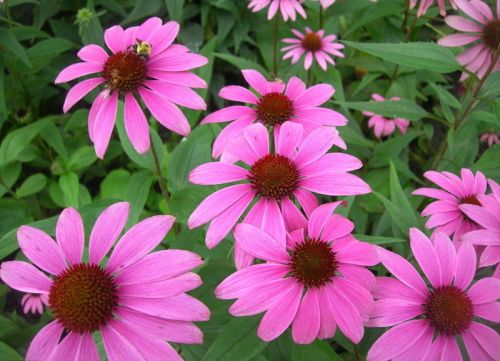
echinacea purpurea (eastern purple coneflower or purple coneflower) is a species of flowering plant in the genus echinacea. Its cone-shaped flowering heads are usually, but not always purple. It is native to eastern north america and present to some extent in the wild in much of the eastern, southeastern and midwest united states. It is also grown as an ornamental plant, and numerous cultivars have been developed for flower quality and plant form
suggested applications:
1.to stimulate the body's immune system against all infectious and inflammatory, conditions, counteracts pus, and stimulates digestion.
2.to strengthen the immune system against pathogenic infection by stimulating phagocytosis, t-cell formation, and by inhibiting the hyalurinadase enzyme secreted by bacteria to effect the breakdown of remedies against all kinds of bacterial and viral infections.
3. Immunomodulatory agents
echinacea stimulates the body's immune system against all infectious and inflammatory, conditions, counteracts pus, and stimulates digestion. It specifically strengthens the immune system against pathogenic infection by stimulating phagocytosis, t-cell formation, and by inhibiting the hyalurinadase enzyme secreted by bacteria to effect the breakdown of remedies against all kinds of bacterial and viral infections.
4. Resistance to infections
traditionally, it was highly valued as a remedy against various types of infections, in treating poisonous bites of snakes and insects, as a palliative agent in malignant conditions and for its wound-healing properties. It is now particularly used to increase resistance to infections.
evidence from at least a dozen clinical trials shows that echinacea is effective in either treating or preventing upper respiratory tract infections (urtis).
5.prevention and treatment of colds
a meta-analysis of all in-vivo clinical research studies regarding the mode of action, prevention and treatment of colds with echinacea are showing a new picture: those who took echinacea as a prophylactic treatment had, during the cold season, more than 50% less risk of catching a cold compared to those who did not take echinacea. Products with alcohol extracts of echinacea have shown better results compared to juices.
6. Tissue rebirth properties
echinacea extract inhibits hyaluronidase; stimulate fibroblast growth and manufacture of glucosaminoglycans; exerts cortisone-like effects and enhances secretion of adrenal cortex hormones.
7. Antibacterial & antiviral properties
mild antibacterial action due to echinacoside and caffeic acid derivatives.
echinacea extract inhibits influenza, herpes and resicular stomatitis virues; antiviral activity due to hyaluronidase inhibition; may block viral receptor on the cell surface.
8. Biological activity
echinacea extract can promote the bodys immune function, raise the bodys resistance to bacterial and viral infections, can be used to influenze, cold, urogenital infection, arthritis, snake bites and cancer.
side effects and cautions
if used orally, the herbal remedies made from the echinacea are essentially nontoxic in nature and produce no side effects. However, the use of echinacea by certain individuals must be under the supervision of a doctor or following consulting with a qualified physician, this is the case if such individuals are affected by any form of autoimmune illnesses, including the condition known as lupus, or even any other progressive diseases, including tuberculosis and multiple sclerosis especially, if the person has been affected by the condition over the long period of time. Echinacea must be used with extreme caution by all individuals who develop allergic reactions to the flowers of the daisy family - as the echinacea flowers might also trigger some allergic response for the body. Pregnant and lactating women can use the echinacea remedies in the same way as other people, and in similar doses to other safe herbs, as there does not seem to be any known contraindications with the therapeutic use of echinacea during a term of pregnancy or its use by nursing mothers.
* providing natural product research and product customization service.
eucommia ulmoides extract, chlorogenic acid 5%-98%
banaba leaf extract, crosolic acid 1%-98%
privet leaf extract, ursolic acid 15%-98%,25%
honeysuckle flowers extract, chlorogenic acid 5%-99%
bitter apricot seed extract, amygdalin 50%-98%
flax seed extract, secoisolariciresinol diglucoside 20%,40%
grape skin extract, resveratrol 50%-98%
rhubarb extract, emodin 50%,98%
ampelopsis gressedentata extract, dihydromyricetin 25%,98%
china bayberry bark extract, myricetin 25%-98%
grape seed extract, opc(oligomeric proantho cyanidins) 5%-98%
eurycoma longifolia extract, 4:1,10:1, 100:1
shorthorned epimedium extract, icariin 50%-98%
fructus lycit extract, lycium barbarum polysaccharides 20%-50%
chinese blueberry extract, opc(oligomeric proantho cyanidins) 10%, 15%,20%
magnolia bark extract, magnolol 20%-98%
hnokiol 20%-98%
magnolol+hnokiol 20%-98%
lotus leaf extract, nuciferine 2%
ginseng extract, total ginsenoside ginseng root 10%-80%
mulberry leaf extract, 1- deoxynojirimycin(1-dnj) 1%-20%,98%
tomato extract, lycopene 5%-90%
artemisia annua extract, artemisinin 98%
swertiapatens extract, swertiamarin 25%-98%
feverfew extract, parthenolide 25%-98%
polygonum cuspidatum extract, resveratrol 25%-98%
ligustrum lucidum ait extract, oleanic acid 98%
scutellaria root extract, baicalin 20%-85%
privet leaf extract, ursolic acid 25%-98%
bearberry leaf extract, β-arbutin 98%
privet leaf extract, alpha-arbutin 98%
grape seed extract, opc, 95%
privet leaf extract, oleanic acid 98%
ampelopsis grossedentata, dihydromyricetin dmy 98%
rhubarb extract, emodin 50%-98%
salvia root p.e, tanshinone iia 2%-98%
salvia root p.e, cryptotanshinone 2%-98%
olive leaf extract, hydroxytyrosol 5%-85%
olive leaf extract, olives bitter glycosides 18%-60%
gotu kola extract, asiaticoside 10%-90%
gotu kola extract, madecassoside 10%-90%
green tea extract, egcg 50%-998%
tomato extract, lycopene 5%-90%
rosehip extract, polypheol 10%,20%
rosemary extract, rosmarinic acid 2.5%-98%
peony extract, paeoniflorin 5:1,10:1,20:1 10%-95%
rosemary extract, rosmarinic acid 2.5%-98%
st john’s wort extract, hypericin 0.3% by uv
fructus momordicae extract, mogroside v 25%-80%
etc.



Connect with us





 For Buyer
  For Seller
  Help
Help 

 China
China  Send Enquiry