Input Voltage380 - 440 Volts, 3- Phase 50 Hz. AC supply or any other voltage
EfficiencyDepends on voltage current rating of rectifier
Output VoltageFixed Rated maximum DC voltage or variable from zero to maximum rated voltage
Insulation'A' class for oil cooled
Temperature RiseLess than 45° C above ambient at the top of the oil
Output CurrentFrom zero to max. rated DC current
Ripple ContentLess than 5%
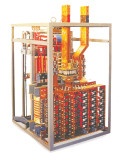
Indian Power brings you a wide range of rectifiers covering 0-500 volts and upto 15000 Amps capacity suitable for Electroplating, Anodising, Hydrogenation and many other Electrochemical processes. The entire manufacturing process is under one roof ensuring 100% quality control at every stage of production. We believe in quality & customers satisfaction.
Electroplating Rectifiers is an equipment that converts AC into DC supply. Indian Power make Silicon Rectifiers are widely used in Electroplating, Anodizing, Hydrogenation and all other electrochemical processes.
SALIENT FEATURES
Designed for 100% Continuous Duty Cycle
Compact Design for Space Saving
Lesser Power Consumption
Negligible Maintenance
Tested at Each & Every Stage of Manufacturing
Liberal Design & Rigorous Testing of the Equipment Enables Trouble Free Service for Long Life.
ADVANTAGES
Step-less On Load Voltage Regulator
Designed for 100% continuous load
Nil Waveform distortion
High Efficiency of up to 97%
Virtually zero maintenance
WHY THE REGULATOR CONTROL IS SUPERIOR TO THYRISTORISED CONTROL IN RECTIFIER
In plating application the regulator is better and technology is adopted in Germany and Europe because of as explained in advantage.
Other manufacturers of rectifiers have shifted to thyristors because they do not have the technology of rolling carbon roller regulators.
Manufacturers of electroplating power rectifiers claim that thyristor controlled rectifier has less losses than regulator. They compare thyristor with sliding carbon type regulator. In our case their claim is not true. We use vertical coil type rolling carbon regulator. The copper section is three times so the losses are almost 1/6 or 20%.
In our regulator the roller moves on both sides of the coil to give ± 440 V or ± 254 V output. We design the rectifier in 'Q' connection in which the regulator current is half the line current so losses are less and life is much more.
Efficiency
12 V Rectifier:
82%
24 V Rectifier:
90%
100 V Rectifier:
94%
200 V Rectifier:
96%
250 V and above:
>97%
APPLICATIONS
Electroplating / Electro-polishing
Anodizing plants
Effluent Treatment plants
Annealing processes
Furnace & Heating systems
Electrophoresis coating plants
Metal & glass melting
Heating Lehrs
Metal mining, refining & extraction
Etching
Variable speed drives
Production of Chlorine gas
Chemical electrolytic processes
Interested in this product? Ask for more details & Latest Price from seller

 Member Since 15 Years
 Nature of Business Retailer








 For Buyer
  For Seller
  Help
Help 

 Sector 82, Mohali, Punjab
 Send Enquiry