
Company Information
 Member Since 1 Year
 Nature of Business Manufacturer
 GST No. 29AAECT9804G1Z1
Ask for more detail from the seller
Contact Supplier
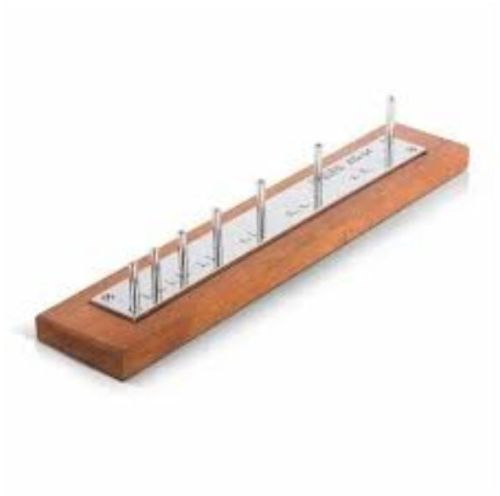
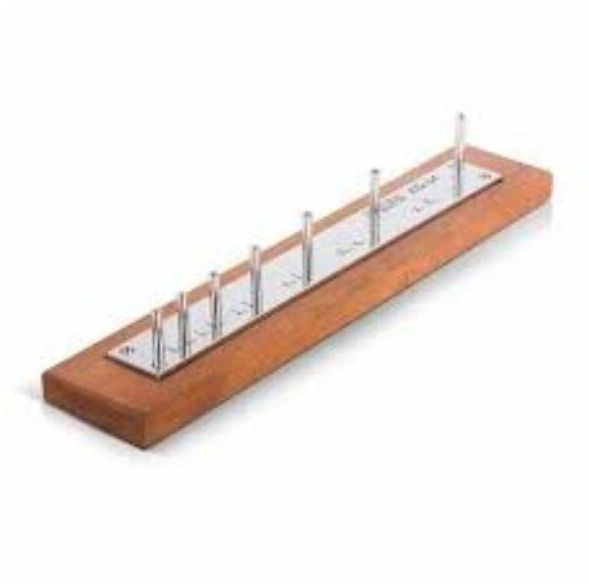
ELONGATION INDEX GAUGE
An Elongation Index Gauge is a device used in civil engineering and aggregate testing to determine the elongation index of coarse aggregates. This index helps assess the shape characteristics of aggregates, which directly influence workability, strength, and durability of concrete and asphalt mixtures.
Specifications of Elongation Index GaugeHere are standard specifications based on IS: 2386 (Part I) – 1963 and other international practices:
1. PurposeTo determine the elongation index of aggregates, which is the percentage by weight of particles whose greatest dimension (length) is greater than 1.8 times the mean sieve size.
Gauge Frame Material: Usually made of cast aluminum or mild steel with corrosion-resistant coating.
Measuring Slots: Steel or hardened metal with precision-cut openings.
The gauge consists of openings/slits corresponding to various standard sieve sizes.
Each slot has a length = 1.8 × mean sieve size for each range.
Typical sieve ranges and corresponding elongation lengths:
| 63 – 50 | 90 |
| 50 – 40 | 72 |
| 40 – 31.5 | 63 |
| 31.5 – 25 | 50 |
| 25 – 20 | 40 |
| 20 – 16 | 32 |
| 16 – 12.5 | 25.2 |
| 12.5 – 10 | 20 |
| 10 – 6.3 | 16 |
Handheld or Bench-Mounted version
Slot Width: Typically 1–2 mm to accommodate measurement precision
Labeling: Each slot is permanently marked with the corresponding size range
Compact & Portable for field and lab use



Connect with us





 For Buyer
  For Seller
  Help
Help 

 Yelahanka, Bangalore, Karnataka
 Send Enquiry