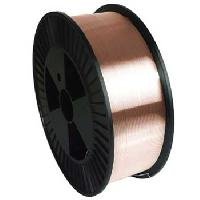
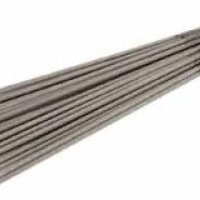
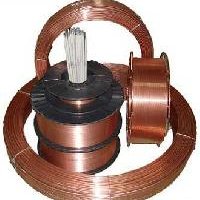
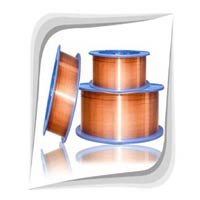
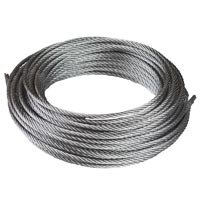
ER 312 saw wire (filler metal) is a high-alloy stainless steel wire known for its exceptional strength and crack resistance, creating a two-phase (austenite-ferrite) weld deposit ideal for joining dissimilar metals like carbon steel to stainless, or for welding high-nickel alloys, offering excellent corrosion resistance, high strength, and preventing hot cracking.
Key Features & Properties
- High Ferrite Content: Provides excellent resistance to cracking and fissures, making it a "universal" filler for difficult-to-weld combinations.
- Dissimilar Metal Welding: The go-to choice for joining stainless steel to carbon/mild steel, tool steels, and high-nickel alloys.
- High Strength: Produces welds with very high tensile strength, suitable for demanding applications like springs, gears, and forged shafts.
- Corrosion Resistance: Offers good resistance to corrosion and oxidation, especially at elevated temperatures due to its chromium content.
- Toughness: Provides toughness at cryogenic temperatures and good ductility.
Common Applications
- Joining stainless to carbon steel.
- Welding various cast and forged stainless steels.
- Repairing leaf springs, coil springs, and gear teeth.
- Hard-facing and surfacing for abrasion resistance.
Specifications (Typical)
- AWS Classification: ER312 (AWS A5.9).
- Composition: High Chromium (approx. 28-32%) and Nickel (approx. 8-10.5%).
- Weld Deposit: Two-phase (austenite + ferrite) microstructure.
Availability
- Available as TIG (tungsten inert gas) filler rods and MIG (metal inert gas) wire, in various diameters and spools/tubes.
ER 312 saw wire (filler metal) is a high-alloy stainless steel wire known for its exceptional strength and crack resistance, creating a two-phase (austenite-ferrite) weld deposit ideal for joining dissimilar metals like carbon steel to stainless, or for welding high-nickel alloys, offering excellent corrosion resistance, high strength, and preventing hot cracking.
Key Features & Properties
- High Ferrite Content: Provides excellent resistance to cracking and fissures, making it a "universal" filler for difficult-to-weld combinations.
- Dissimilar Metal Welding: The go-to choice for joining stainless steel to carbon/mild steel, tool steels, and high-nickel alloys.
- High Strength: Produces welds with very high tensile strength, suitable for demanding applications like springs, gears, and forged shafts.
- Corrosion Resistance: Offers good resistance to corrosion and oxidation, especially at elevated temperatures due to its chromium content.
- Toughness: Provides toughness at cryogenic temperatures and good ductility.
Common Applications
- Joining stainless to carbon steel.
- Welding various cast and forged stainless steels.
- Repairing leaf springs, coil springs, and gear teeth.
- Hard-facing and surfacing for abrasion resistance.
Specifications (Typical)
- AWS Classification: ER312 (AWS A5.9).
- Composition: High Chromium (approx. 28-32%) and Nickel (approx. 8-10.5%).
- Weld Deposit: Two-phase (austenite + ferrite) microstructure.
Availability
- Available as TIG (tungsten inert gas) filler rods and MIG (metal inert gas) wire, in various diameters and spools/tubes.



 Member Since 1 Year
 Nature of Business Manufacturer
 GST No. 27AABCS4962M1ZV
  Address 702, JAI ANTARIKSH BUILDING , MAROL , ANDHERI EAST, MUMBAI 400059, Mumbai, Maharashtra, 400059, IN






 For Buyer
  For Seller
  Help
Help 
 Twitter
 WhatsApp
 Facebook
 Linkedin


 120 -
120 -