
Company Information
 Member Since 14 Years
 Nature of Business Manufacturer Year of Establishment 1989
Ask for more detail from the seller
Contact Supplier
Features
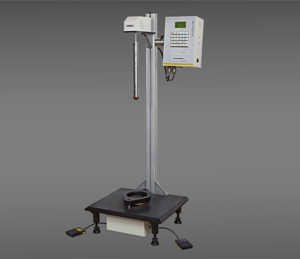
Micro-computer calculation, LCD display and menu interface
Integration of two test methods A & B
Built-in observation light
Pneumatic clamping and releasing of specimens
Electromagnetic suspension and automatic release of the falling dart
Two starting modes: manual and foot-pedal
Automatic determination of testing status
Multi-unit result display and printout
Mini-printer
RS232 portNetwork transmission interface for LAN data management and Internet data transmission
Principle
At the beginning of the test, choose test method, and estimate an initial mass and Δm. Start the test. If the first specimen fails, decrease the mass of the falling dart by Δm. If the first specimen is not a failure, increase the mass of the falling dart by Δm. Continue the test according to this rule. In brief, increase or decrease by Δm according to whether the former specimen is a failure or not. After 20 specimens, calculate the total number of failed specimens N. If N equals to 10, the test is over. If N is less than 10, add specimens and continue to test until N equals to 10. If N is greater than 10, add specimen and continue the test until the number of non-failure specimens reaches 10. Then the tester calculates the test results automatically according to specific formulas.
Technical Indexes
Test method: A, B (optional)
Test range: method A: 50~2000g
method B: 300~2000g
Accuracy: 0.1g (0.1J)
Specimen clamping: pneumatic
Pressure of compressed air: 0.6MPa (compressed air should be provided by users)
Compressed air inlet size: Ф8mm polyurethane pipe
Specimen size: >150mm x 150mm
Power: AC 220V 50Hz
Net weight: 70kg
Dimensions: method A: 500mm(L) x450mm(B) x1320mm(H)
method B: 500mm(L) x 450mm(B) x 2160mm(H)
Standards
ASTM D1709, ISO 7765-1, JIS K7124, GB 9639



Connect with us





 For Buyer
  For Seller
  Help
Help 

 Jinan
Jinan 
 Send Enquiry